Why Solar Alone Cannot Power Africa’s Industrial Future
Solar energy is expanding rapidly across Africa, reshaping how electricity is generated and delivered across the continent. Over the past few years, installations have accelerated, driven by falling technology costs, policy support and increasing demand for electricity access.
According to recent reports, Africa added approximately 4.5 gigawatts of solar capacity in 2025, marking one of the fastest growth rates globally.
At the same time, institutions such as the International Renewable Energy Agency continue to highlight Africa’s vast untapped solar potential, particularly across the Sahel and Southern Africa.
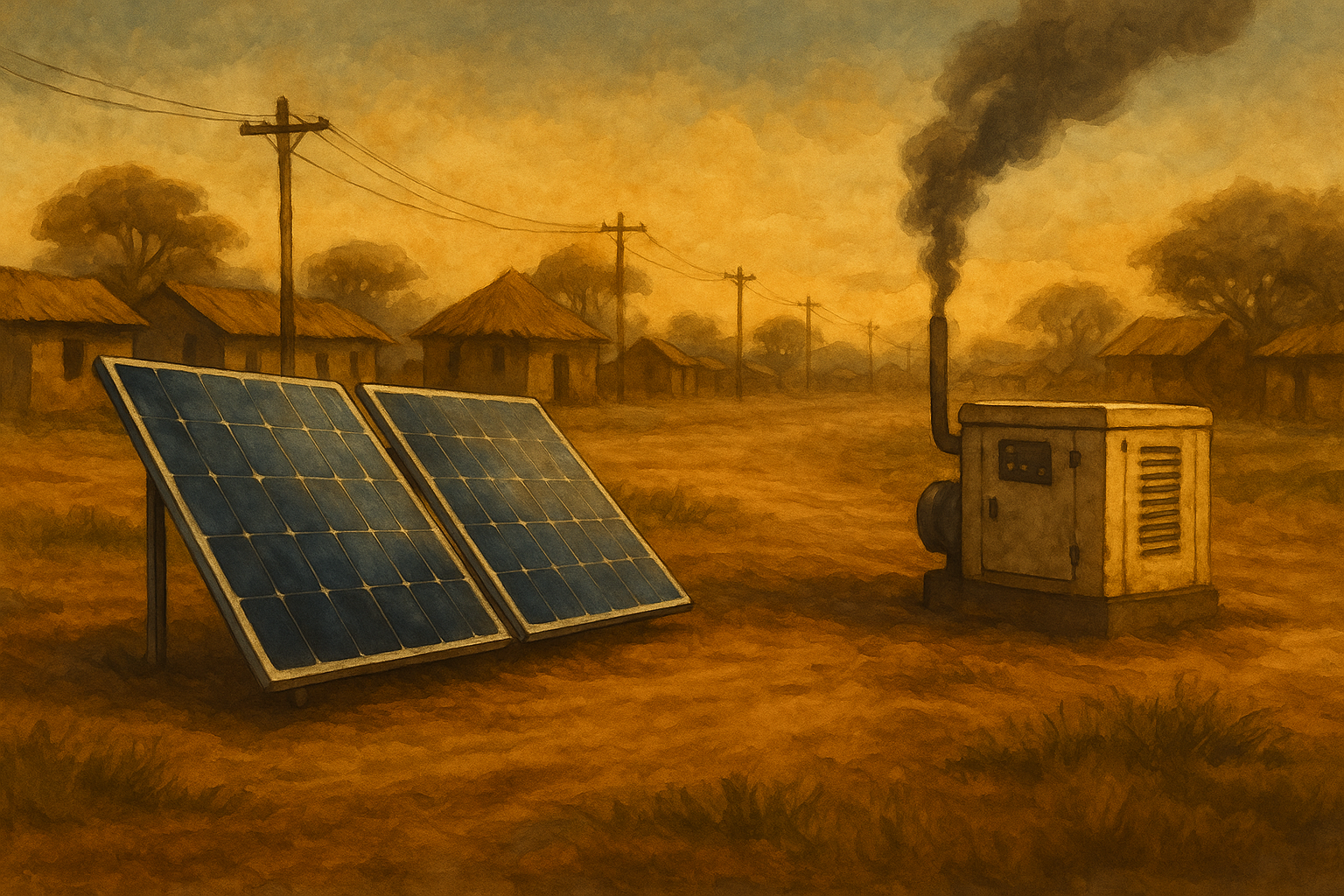
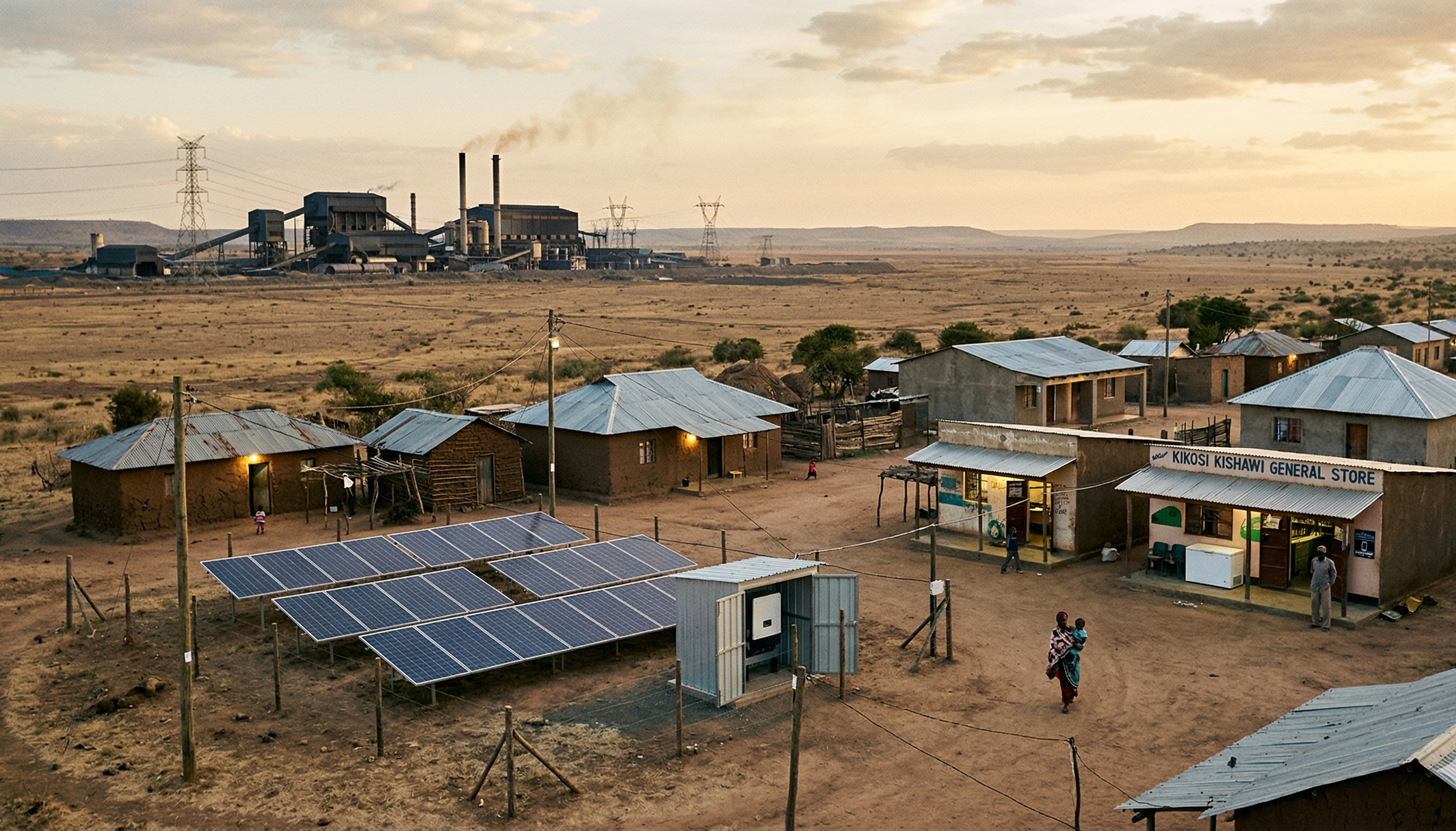
Solar has also become central to electrification strategies. Off-grid solar systems and mini-grids are providing electricity to communities that national grids have not reached, especially as they are faster to deploy and require less upfront infrastructure compared to traditional grid expansion.
This progress is significant; solar is improving access, reducing reliance on diesel generation and supporting energy inclusion across rural and peri-urban areas, and represents one of the most visible successes in Africa’s energy transition. Yet as solar capacity expands, a new set of questions is emerging about what it can realistically power.
What solar is designed to do
Solar energy is particularly effective in addressing one of Africa’s most persistent and immediate challenges: expanding access to electricity in underserved and unserved areas. Throughout the continent, millions of households remain beyond the reach of national grids, making decentralised solutions not only practical but necessary.
Distributed solar systems, including solar home systems and mini-grids, have emerged as one of the most effective tools for bridging this gap. These systems are designed to meet low to moderate electricity demand, powering lighting, mobile phone charging, refrigeration for small businesses and basic productive uses such as milling or irrigation at a limited scale.
The impact of these applications is significant. They improve quality of life, enable income-generating activities and reduce reliance on expensive and polluting fuels such as kerosene and diesel. Programmes supported by the World Bank have played a key role in scaling these systems across multiple African countries.
Solar also offers operational flexibility, as it can be deployed incrementally, tailored to local demand and integrated into decentralised energy systems without requiring large-scale infrastructure investments.
However, the characteristics that make solar effective for access, modularity, decentralisation and variability are not the same as those required for large-scale industrial electricity systems. Recognising this distinction is essential to understanding both the strengths and limitations of solar within Africa’s broader energy transition.
Not all electricity demand is the same
Electricity demand isn't uniform; it varies significantly with use, with important implications for the design and operation of energy systems. At one end of the spectrum is household consumption. This includes lighting, mobile devices, televisions and small appliances. Demand at this level is relatively low and can often be met with decentralised solutions such as solar home systems or mini-grids.
At the other end lies industrial demand. Factories, mineral processing facilities and manufacturing plants require large volumes of electricity delivered continuously and reliably. These operations depend on sustained high loads over long periods. Even short interruptions can disrupt production processes, damage equipment, and increase operational costs.
This distinction is fundamental. Electricity systems designed to expand access are not necessarily designed to support industrialisation. Solar systems deployed for rural electrification typically prioritise affordability and scalability, not the high-capacity, stable output required by industry.
The International Energy Agency emphasises that electricity systems must maintain a constant balance between supply and demand, a requirement that becomes more complex as demand increases in scale and intensity. This is where the difference between access and industrial power becomes critical. Providing electricity is one challenge, but making sure it can sustain industrial activity at scale is another entirely.
The core limitation: intermittency
The primary technical limitation of solar energy is intermittency. Solar generation depends entirely on sunlight. Output fluctuates throughout the day, peaks during midday and falls to zero at night, and can also be affected by weather conditions such as cloud cover, which can reduce generation unpredictably and without warning.
For households and small businesses, these fluctuations are manageable, and usage is adjusted to match periods of generation, and small-scale battery systems can provide short-term backup. But in industrial operations, the situation is more complex.
Many industrial processes require continuous and stable power. Smelting, refining and manufacturing operations can't easily adjust output in response to changes in sunlight, interruptions, or fluctuations, which can result in production losses, equipment damage or safety risks.
This creates a structural mismatch. Solar generation is variable and time-bound, while industrial demand is continuous and inflexible. Bridging this gap requires systems that can balance supply and demand across time and geography; these include storage, flexible generation and interconnected grids. Without these supporting systems, solar energy alone cannot meet the reliability requirements of industrial electricity use.
Can battery storage solve the problem?
Battery storage is frequently presented as the solution to solar intermittency, and in many respects, it plays an important role. In principle, battery systems allow excess solar energy generated during the day to be stored and used later, including during evening hours or periods of low generation. This can help smooth fluctuations and improve overall system reliability. However, several constraints remain.
First, cost: Large-scale battery systems require significant upfront investment, and while global prices have declined, deployment at scale in Africa remains limited, as financing, currency risks and infrastructure readiness continue to shape adoption.
Second, duration: Most battery systems currently deployed are designed for short-duration storage, typically ranging from one to six hours, yet industrial operations often require longer-duration reliability, particularly for continuous processes.
Third, integration: Storage systems must be integrated into broader electricity networks, and this requires technical expertise, system planning and operational coordination.
The International Energy Agency notes that storage is essential for renewable integration, but emphasises that it must function alongside flexible generation and grid infrastructure. In this context, battery storage improves system performance but doesn't eliminate the need for a broader, integrated electricity system.
Why grids still matter
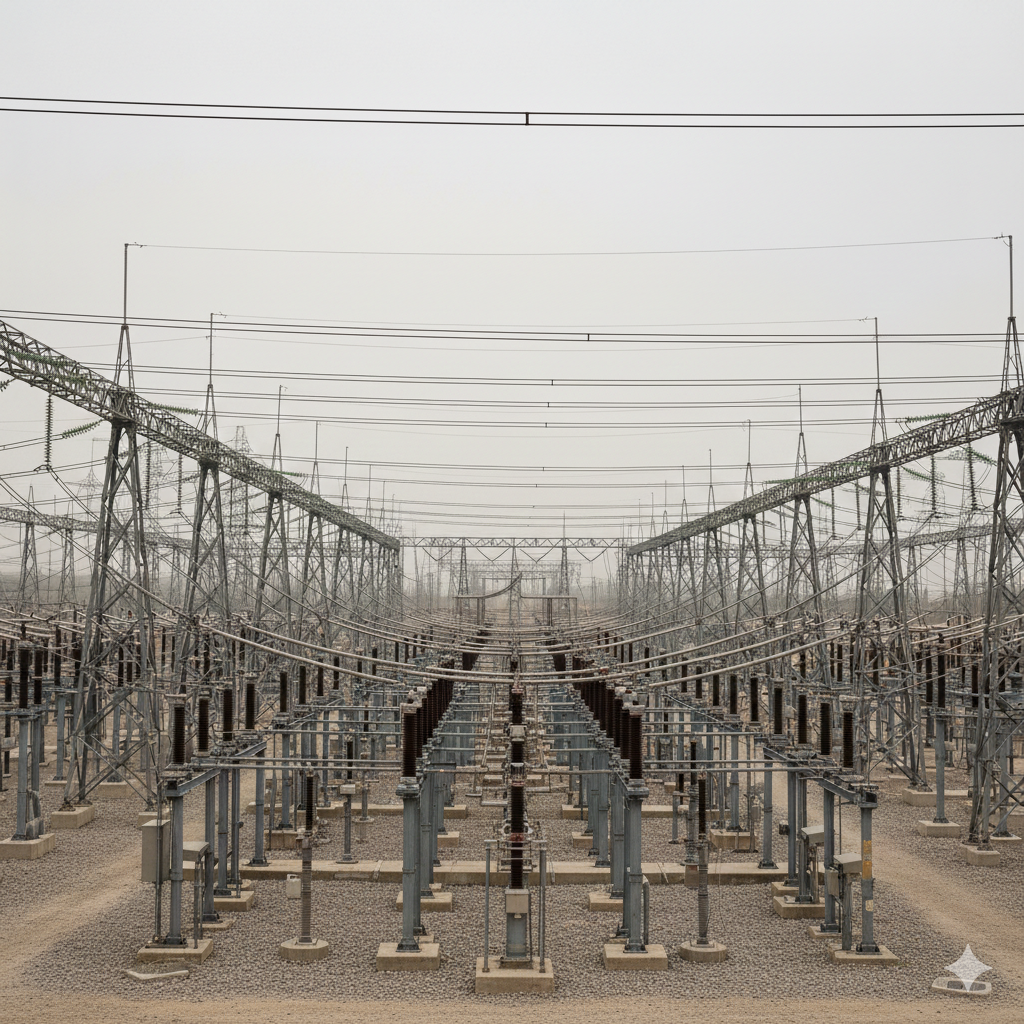
Electricity systems require power generation, and also how it is delivered, balanced and managed. Grids form the backbone of these systems; they enable electricity to move from generation sites to demand centres, connecting different regions and allowing power to be shared across networks.
This becomes particularly important in systems with high shares of renewable energy. Solar generation varies by location and time. Without grid connectivity, these variations must be managed locally. With interconnected grids, however, electricity can be balanced across wider areas, so when solar output declines in one region, power can be supplied from another source or location.
The International Energy Agency has identified grid expansion as one of the most critical constraints on electricity systems globally. In Africa, where transmission infrastructure remains underdeveloped in many regions, this challenge is particularly acute.
Without strong grids, solar systems operate in isolation, and with them, they become part of a coordinated system capable of supporting greater and more complex demand, including industrial use.
Why countries still rely on multiple energy sources
Despite rapid growth in solar energy, most countries continue to rely on a mix of energy sources to maintain energy stability.
Hydropower, gas, coal and diesel generation all play roles in providing what is often referred to as dispatchable power. Unlike solar, these sources can be controlled and adjusted to meet demand at any time.
Electricity systems must ensure that supply meets demand continuously. Variable renewable sources, such as solar, contribute to the system, but they don't replace the need for controllable generation. This is particularly important for industrial users, whose operations depend on a consistent and predictable power supply.
In many African countries, the transition isn't from fossil fuels to solar, but from single-source systems to diversified energy systems. This reflects a broader reality; energy transitions aren't linear substitutions, but are system transformations.
Why this matters for Africa
Understanding the capabilities and limitations of solar energy is essential for effective policy design and investment decisions. If solar is viewed as a complete solution, there is a risk that other critical components of the electricity system, including grid infrastructure, storage and system management, may be underprioritised.
For Africa, this has direct implications for economic development. Electricity systems must do more than expand access. They must support productivity, industrialisation and value addition, and this requires power that is available,, reliable and scalable.
Solar energy will play a central role in achieving these goals. But its effectiveness depends on how it is integrated into broader systems. Recognising this helps ensure that energy strategies are aligned with the realities of electricity systems, rather than expectations based solely on resource availability.
Conclusion: solar as part of the system, not the system itself
Solar energy is one of the most important components of Africa’s energy transition. It is expanding access, reducing costs in certain contexts and providing new pathways for electrification. Its role will continue to grow as technology improves and investment increases.
But solar alone can't meet all of Africa’s energy needs. Industrial systems require scale, stability and integration. Meeting these requirements depends on broader electricity systems that combine generation, storage, transmission and system management.
The question isn't whether solar works. It clearly does. It is how it fits within the wider system needed to power Africa’s future. And the answer is clear: solar is part of that system, and not the system itself.