The Lobito Corridor Is Europe’s Answer to China. Africa Is Still Waiting for Its Own
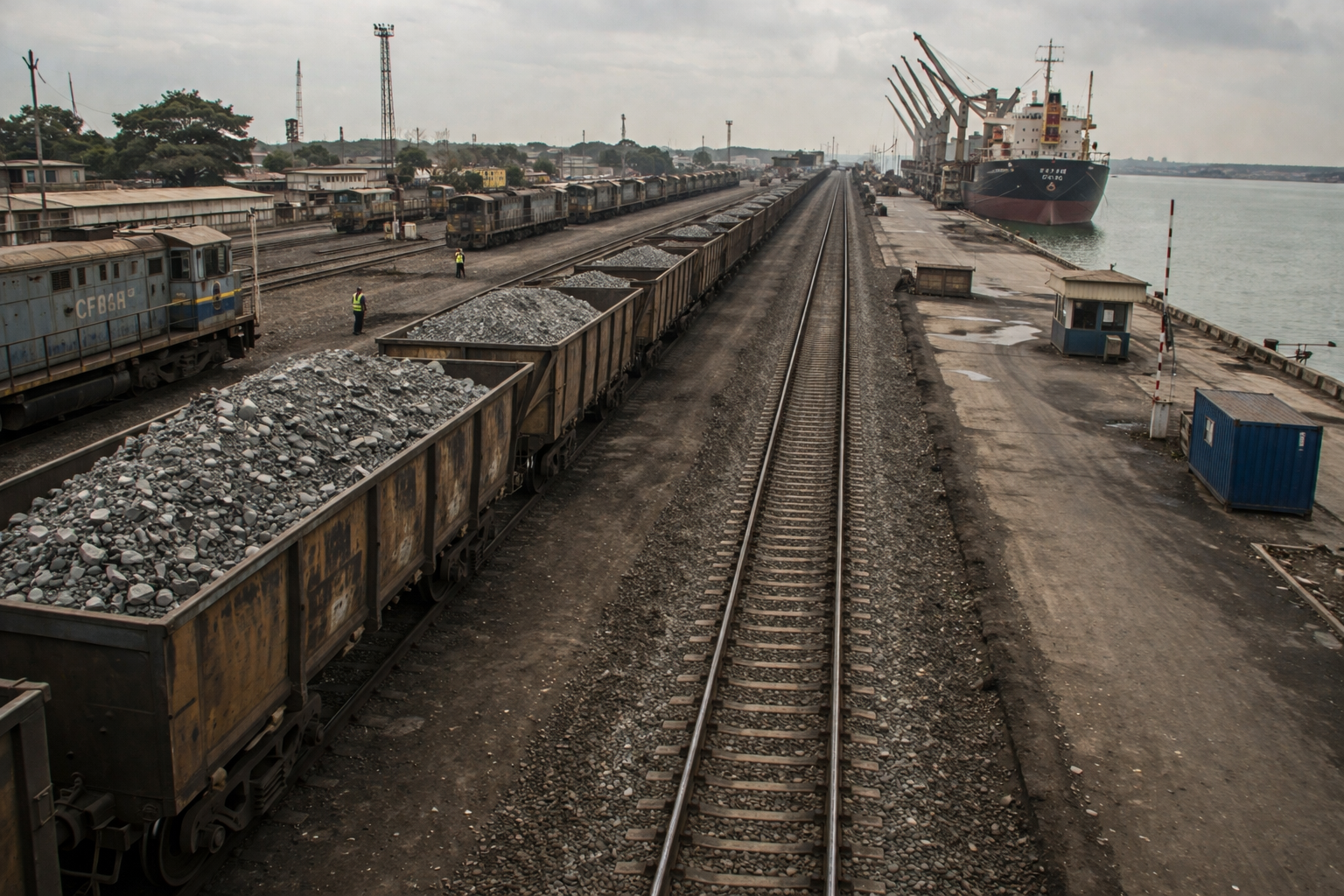
The Lobito Corridor has a history that its current promoters rarely lead with. Developed in 1902 as a colonial trade corridor to extract raw minerals from African hinterlands to international markets in Europe and the Americas, the Benguela Railway, the corridor's Angolan backbone, has been moving copper and cobalt to Atlantic ports for over a century.
It was refurbished between 2006 and 2014 using a Chinese loan. Now it is being expanded, upgraded, and repackaged as a flagship of the EU's Global Gateway and the US Partnership for Global Infrastructure and Investment, a Western answer to China's infrastructure influence in Africa. This framing isn't wrong, but it is incomplete.
The Lobito Corridor is often discussed in terms of geopolitical competition with the EU and the US on one side and China on the other, while African agency is largely overlooked. The corridor is simultaneously Africa's most consequential minerals infrastructure project and a project whose strategic framing has been constructed almost entirely by external actors.
Understanding what it might deliver for Africa requires separating the geopolitical narrative from the project's actual design and asking a question the promoters consistently elide: whether this corridor is being built to extract Africa's minerals more efficiently, or to give Africa more control over what happens to them.
What is actually being built and what is not
The Africa Finance Corporation is in talks with at least ten African and foreign financiers, including Standard Bank, Absa, Ecobank, and Citi, to raise $3 to $5 billion for the project. The AfDB and AFC have each committed $500 million, with Italy contributing approximately $320 million. Financial close is currently targeted for the fourth quarter of 2027, with construction completion aimed at 2030.
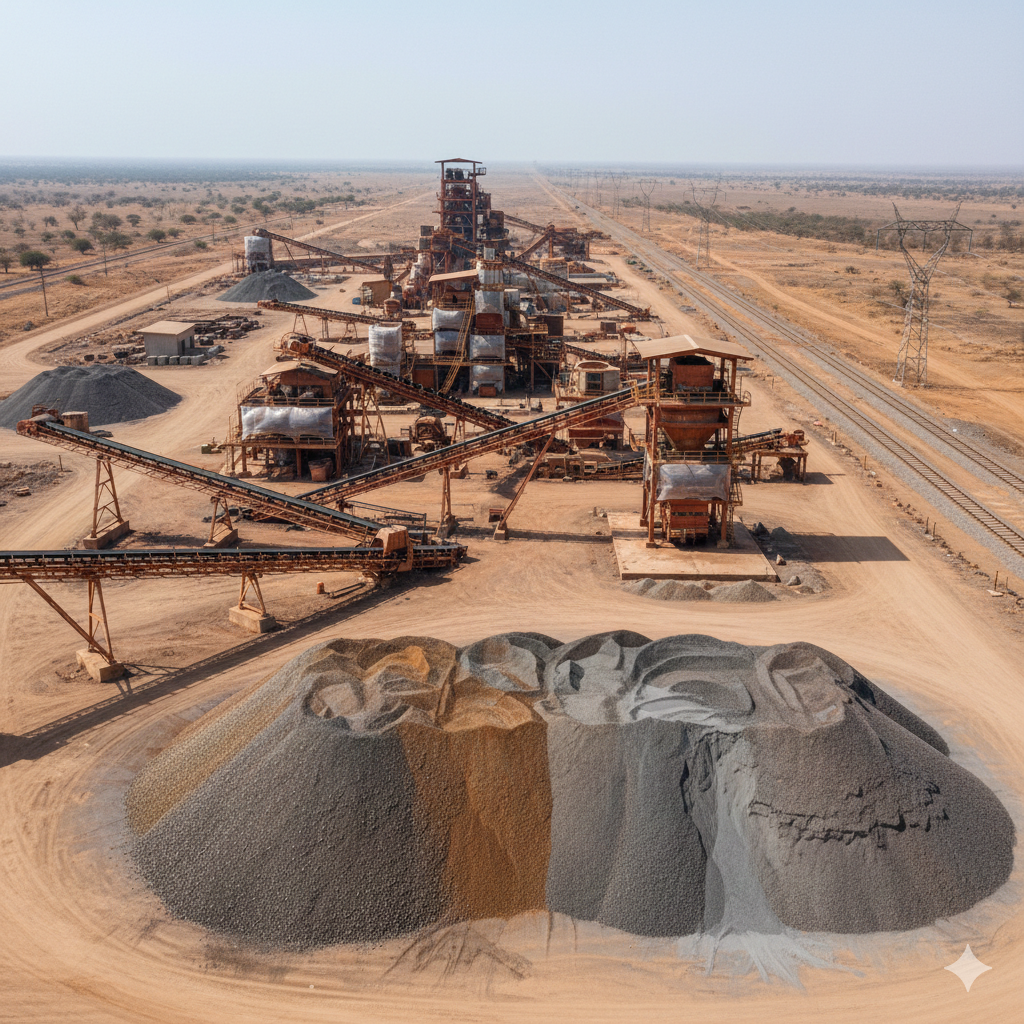
The physical scope is significant. The corridor involves rehabilitating the existing Benguela Railway from Lobito to the Angola-DRC border, refurbishing the Congolese section to Kolwezi, and constructing approximately 830 kilometres of new rail line through Zambia's North-Western Province and Copperbelt, the most ambitious new rail construction in Zambia since the 1970s. Nine engineering, procurement, and construction contractors visited the Zambian project site in April 2026, with bids expected in May.
But what is being built at the infrastructure level and what is being built at the value chain level are two different questions. Despite the rhetoric on the EU's pursuit of critical raw materials through the Lobito Corridor as an alternative to reliance on China, in reality, there is limited clarity on actual investments along the corridor. Moreover, strong Chinese presence and firm capabilities, combined with the fact that European and Chinese businesses are in practice deeply intertwined, make China's involvement difficult to avoid.
The corridor's operating consortium, the Lobito Atlantic Railway, is primarily focused on mineral transport. The commitment to broaden its use to agriculture, energy, and other sectors aligned with the development aspirations of corridor countries remains largely rhetorical, because the infrastructure being financed is an export route. Whether it becomes an industrialisation platform depends on decisions that haven't yet been made, and by actors whose interests are not identical to Africa's.
The timeline problem
Africa Finance Corporation plans to launch its fundraising round for the Zambian section in the third quarter of 2026, and financial close is targeted for the fourth quarter of 2027. This nearly two-year timeline raises questions about feasibility, as meeting the 2030 construction deadline depends entirely on the success of that preliminary financing phase.
Two scenarios are now in circulation among analysts tracking the project. The first assumes financing is secured within the announced timeframe and construction proceeds on schedule. The second anticipates delays beyond 2027, driven by constraints in financial structuring and investor risk perceptions, with cascading effects on the construction window. The European Centre for Development Policy Management (ECDPM) identifies overly optimistic forecasts for copper and cobalt export growth, as well as projected traffic volumes at the port of Lobito, as risk factors. It also points to competition from the Chinese-backed TAZARA corridor linking Zambia to Tanzania's Dar es Salaam port as pressure on utilisation rate assumptions.
The timeline risk isn't purely financial. Upcoming elections in Zambia in 2026 and in Angola in 2027 pose latent risks of policy shifts or renegotiations. Persistent governance challenges, currency volatility, and competing mining reforms strain the trilateral cooperation between Angola, Zambia, and the DRC that the corridor's delivery requires. The M23 conflict in eastern DRC, while geographically distant from the corridor's core route, has already undermined supply chain confidence and delayed ministerial-level coordination meetings scheduled for 2025 and rescheduled to 2026.
A project that requires sustained trilateral political alignment, financial close across a fragmented lender group, and construction completion in three years isn't a project whose 2030 target should be treated as a baseline.
The China problem that Western framing cannot solve
The Lobito Corridor is officially framed as a Western alternative to Chinese infrastructure influence in Africa. Under Trump, the corridor has been reimagined as a geoeconomic instrument designed to dilute China's dominance over African logistics, diversify global mineral supply chains, and strengthen US leverage over critical materials. This framing shapes the political will and financing momentum behind the project.
It also obscures a structural reality that the ECDPM analysis identifies directly. European and Chinese commercial interests in the Central African mining sector are not cleanly separable. The companies extracting cobalt and copper in Lualaba and the Copperbelt operate within a supply chain architecture in which Chinese processing capacity is the dominant downstream destination. A new Western-built export route does not change who refines the material that travels along it. The motivations of different African actors vary widely, raising concerns that the political prioritisation of the steps needed to make the corridor a success will vary between countries.
Angola's position is the most strategically complex. Angola is determined to maximise leverage in a multipolar environment. If the EU wants to be taken seriously beyond hydrocarbons, it must move from strategy to delivery, deploying capital faster, accepting greater risk, and recognising that Angola's determination to play multiple partners simultaneously is not an obstruction but strategic positioning. The Lobito Corridor will be the test of whether Western infrastructure investment in Africa produces a genuine partnership or a more sophisticated version of the extraction it claims to replace.
The value capture question that the corridor cannot answer alone
The Lobito Corridor's case for transformative impact rests on a value chain argument: if copper and cobalt can reach global markets more efficiently and at lower cost, African producers benefit from improved margins and greater bargaining power. That argument is directionally correct and insufficient.
Infrastructure determines how efficiently minerals move, but don't determine how much of the value those minerals generate stays in the countries that produce them. That question is answered by processing investment, by the terms of mining agreements, by the regulatory frameworks governing royalties and equity participation, and by the industrial policy that decides whether a corridor carries raw ore or refined cathode.
The Lobito Atlantic Railway operating consortium is currently focused on mineral transport. Processing investment along the corridor, the refineries, smelters, and battery precursor facilities that would allow DRC and Zambia to capture a larger share of the mineral value chain, is not yet part of the project's funded scope. The EU's commitment to broaden the corridor's use case is documented in policy language. It is not yet reflected in capital commitments at the scale that would change the mineral processing architecture of the region.
This is where the corridor's genuine strategic significance diverges from its promotional framing. Framed as Africa's first open-access transcontinental railway and a clean corridor for critical raw materials, the Lobito Corridor is presented by the EU and the US as a driver of regional integration and development. These ambitions sit alongside wider concerns about who will ultimately benefit, and whether promised development gains will extend to communities living along the corridor.
The corridor being built now will move minerals. Whether it will capture value is a different question, one that depends on decisions currently being made by DRC, Zambia, and Angola about processing requirements, equity mandates, and industrial policy, not by the infrastructure consortium financing the railway.
What Africa's corridor countries should be demanding
The Lobito Corridor gives Angola, Zambia, and the DRC a specific and time-limited form of leverage. Geopolitical competition for African mineral supply chains between the United States, the European Union, and China is at its most intense precisely now, before the corridor is operational and before the supply chain architecture is locked. Once the railway is built and the export route is established, the negotiating position of corridor countries will be different.
The time to demand processing investment, technology transfer, equity participation in downstream manufacturing, and benefit-sharing structures for corridor communities is before financial close, not after. The ECDPM's finding that African agency has been largely overlooked in the corridor's design isn't a permanent condition. It is a political choice that the governments of Angola, Zambia, and the DRC can reverse, but only if they coordinate their negotiating positions before the infrastructure determines the terms.
The Lobito Corridor will move copper and cobalt to Atlantic ports faster than any existing route. Whether that is the beginning of Africa's industrial transformation or another century of efficient extraction will depend entirely on what corridor countries negotiate before the first train runs.