Africa Controls the Cobalt. It Doesn't Control What Happens to It Next.

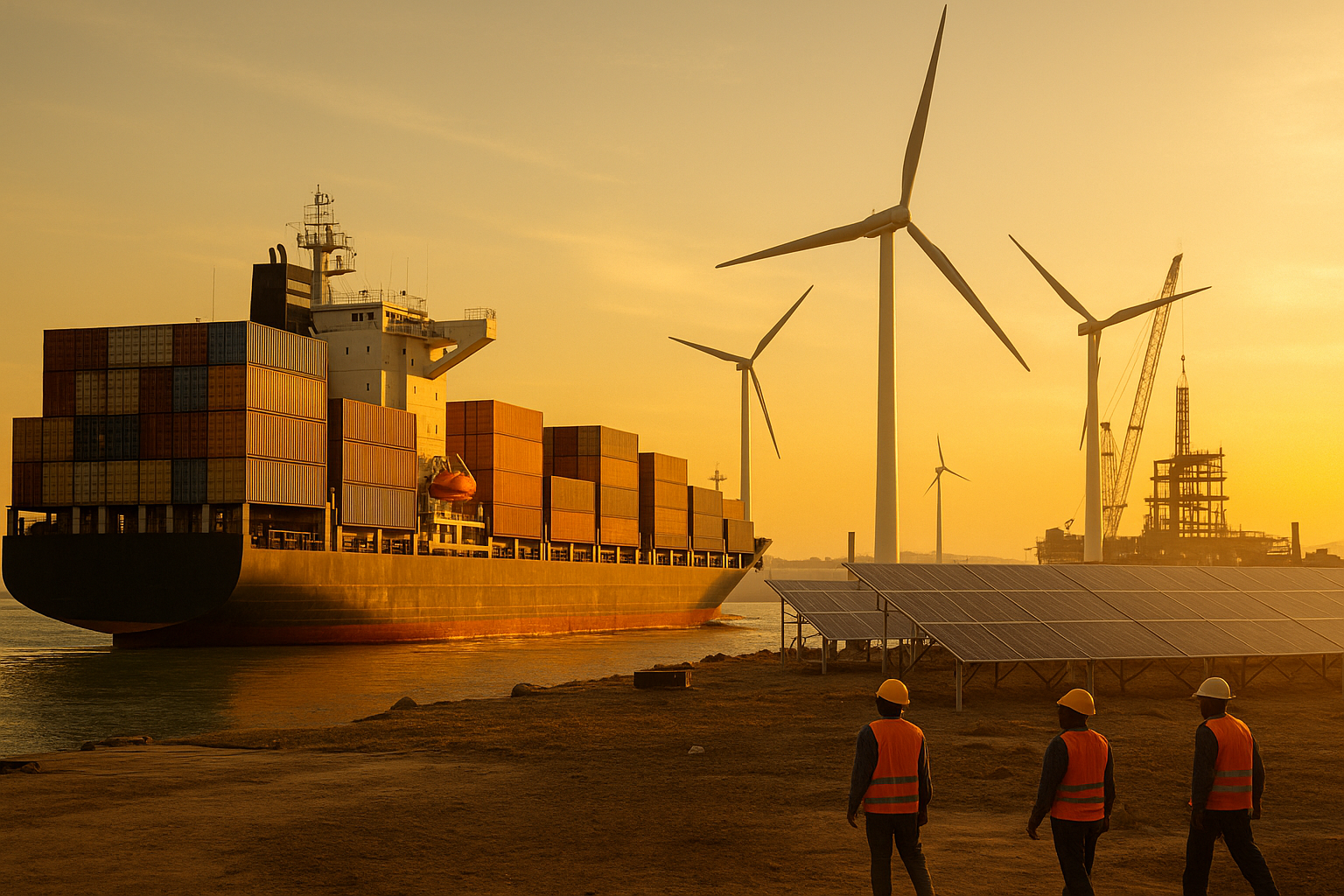
A particular story has become embedded in global energy transition discourse over the past three years: Africa is mineral-rich, holds the resources the clean energy economy needs, and its moment has arrived.
This narrative rests on genuine geology. But a new report published at the OECD Critical Minerals Forum in Istanbul, the most authoritative annual tracking of critical raw materials trade and restrictions, shows that the gap between what Africa holds and what Africa controls is wider than the narrative suggests, and that the strategic window for closing it is narrowing faster than most African governments appear to recognise.
Export restrictions on critical raw materials have increased steadily for fifteen years, reaching an all-time high in 2024. New restrictions introduced last year were implemented by a wider range of countries than in previous years, particularly in Africa and Asia. That sounds like African agency in part. But it is also a description of a global system in which the tool Africa is using, export restrictions, is being used simultaneously by a growing number of competitors, which progressively erodes the leverage any single user can extract from it.
The picture that emerges from the OECD's data is of a continent with genuine but concentrated mineral power, deploying a strategy that is becoming less distinctive as it becomes more common, in a value chain whose most lucrative stages remain structurally beyond its current reach.
Where Africa's mineral power actually sits
Despite supplying over 10 percent of global critical mineral exports, Africa exports overwhelmingly raw or semi-processed materials, leaving refining, manufacturing, and profits concentrated elsewhere, particularly in China. The continent's geological endowment is not in question. What is in question is the relationship between that endowment and economic power.
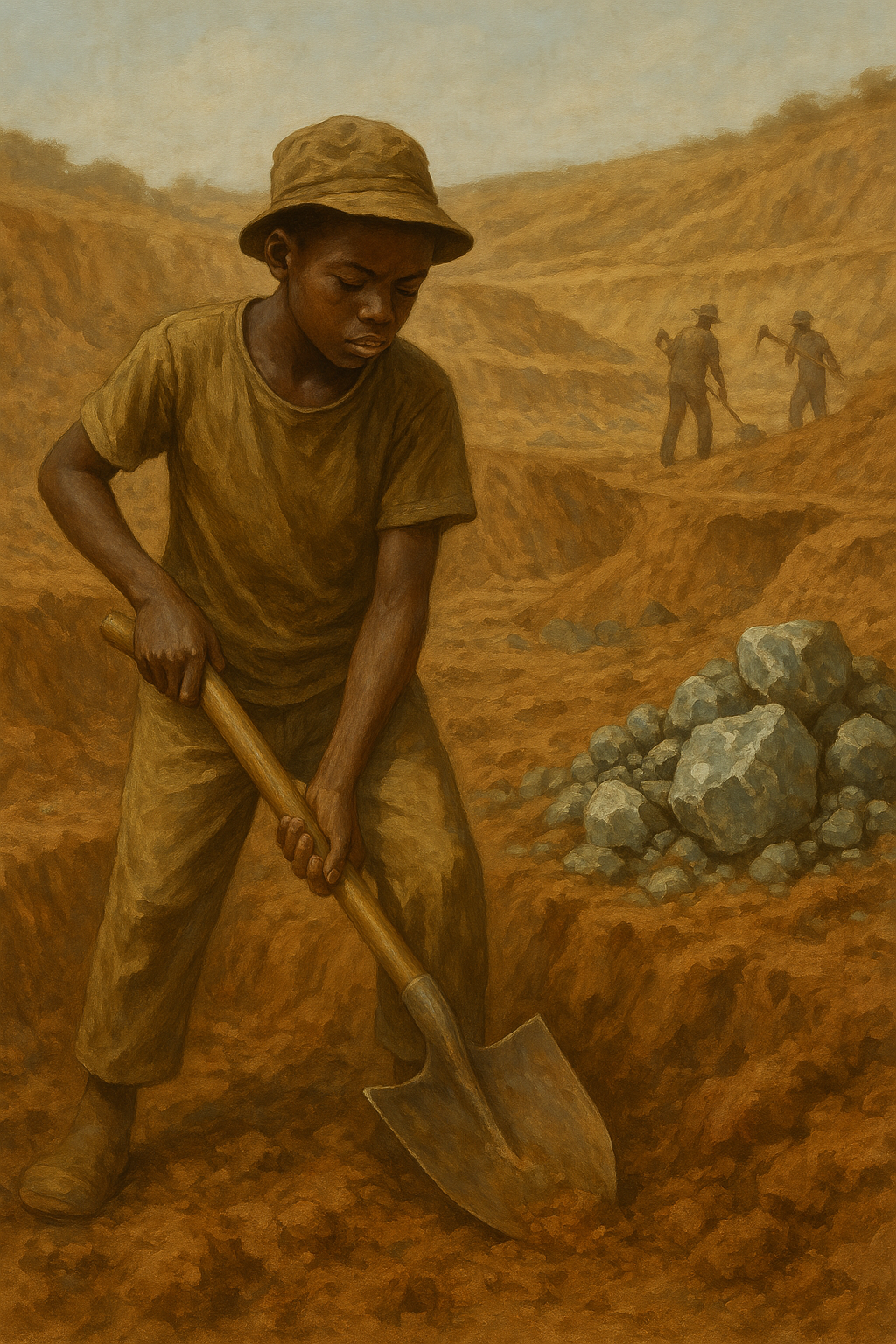
Africa's leverage in critical minerals is real in two specific places. Roughly 70 percent of global exports of cobalt and manganese were subject to at least one export restriction between 2022 and 2024. The Democratic Republic of Congo alone accounts for approximately three-quarters of global cobalt production. That is structural dominance in a single material, not marginal influence, and it gives the DRC a degree of market power that very few countries in any sector possess.
But cobalt and manganese are not the transition. Export restrictions also cover 47 percent of graphite exports and 45 per cent of rare earth elements, but African producers aren't the dominant actors in those markets. In lithium, which underpins the battery economy, Africa's production share remains limited despite significant reserve estimates. In nickel, processing capacity sits overwhelmingly in Indonesia and China. In the rare earth elements that underpin permanent magnets for wind turbines and EV motors, the top three producing countries account for nearly 90 percent of global output, and Africa is not among the leading three.
The energy transition requires a system of minerals, and Africa's structural leverage within that system is concentrated in a narrow band. The policy architecture being built around the assumption of broad mineral dominance is running ahead of what the production data currently supports.
The export restriction trap
African governments have increasingly turned to export restrictions: processing requirements, export taxes, licensing regimes, and outright prohibition of raw material exports, as the primary instrument for capturing more value from their mineral resources. The logic is straightforward: if you cannot export raw materials, foreign investors must process them locally, transferring technology, building industrial capacity, and generating economic value beyond extraction.
Export restrictions on upstream supply chains, ores and minerals grew tenfold between 2009 and 2024. Highly restrictive measures, such as export prohibitions and quotas, now account for more than one-third of new measures. Revenue generation has become the most cited rationale, accounting for nearly half of the measures introduced in 2024.
The problem is systemic dilution. When export restrictions were deployed by a small number of dominant producers, they carried significant leverage. As new restrictions have been introduced by a more diverse group of countries, particularly in Africa and Asia, the concentration of that tool has reduced. A processing requirement imposed by the DRC on cobalt carries weight because the DRC's market share is irreplaceable. A processing requirement imposed by a country that holds two percent of a given mineral's global production carries considerably less and can be bypassed by sourcing elsewhere at marginal additional cost.
By tightening supply and increasing price volatility, restrictions risk amplifying concentration and market distortions rather than resolving them. The OECD's analysis doesn't oppose export restrictions in principle, but it identifies a structural risk that African policymakers should take seriously: a tool used by everyone is a tool that belongs to no one.
The intermediary problem Africa has not yet fully named
A third dynamic is emerging that the dominant African minerals narrative has not yet fully absorbed. Gulf states are increasingly positioning themselves as intermediaries, leveraging strengths in commodity trading, port infrastructure, and financial intermediation to position themselves as pivotal connectors between African mineral producers and Asian and Western markets.
This isn't straightforwardly hostile to African interests. Gulf investment brings capital, logistics capacity, and market access. It integrates African producers more deeply into global supply chains and can improve the terms on which African minerals reach end markets.
But it also raises a precise question about where value is captured. This model doesn't necessarily prioritise local industrialisation in Africa; it prioritises efficient intermediation. The minerals move from extraction in Africa through processing and trading hubs elsewhere before reaching the battery factories and clean energy manufacturers that constitute the end market. The geography of the supply chain shifts, but the distribution of value along it doesn't.
This is the beneficiation problem in its current form. The obstacle to African value capture is no longer simply that Chinese processors dominate the midstream. It is that a new intermediary layer is forming between African producers and global markets, one that offers genuine benefits in terms of market access but captures a portion of the value that African processing and refining would otherwise retain.
The structural conditions that determine whether leverage translates
The gap between holding minerals and capturing their value is not primarily a negotiating problem, but that of infrastructure.
Processing minerals at an industrial scale requires reliable electricity at a competitive cost. It requires industrial infrastructure, skilled technical labour, stable regulatory frameworks, and access to capital at rates that make investment viable. These are the same constraints that shape the broader energy transition, and they aren't resolved by export restrictions or diplomatic positioning alone.
Africa accounts for 10.6 percent of global critical mineral exports, but the sector constitutes 8.8 percent of GDP on average in mineral-rich African countries and generates over half of export revenues in those economies. That concentration, minerals as the dominant export and a significant share of economic output mean that the stakes of getting the value capture question right are fiscal.
A country whose government revenues depend substantially on mineral exports and which is simultaneously trying to industrialise around those minerals faces a sequencing challenge: it needs the revenue to build the infrastructure, and it needs the infrastructure to generate more revenue. Breaking that cycle requires external capital under conditions that African mineral economies don't currently receive, the same cost-of-capital problem that constrains the energy transition, applied to the industrial transition.
The window is real. So is its limit.
None of this argues that Africa's critical minerals position is illusory. The DRC's cobalt dominance is real, the continent's aggregate reserve base across multiple minerals is genuine, and the geopolitical attention Africa is receiving from the United States, the European Union, Japan, South Korea, India, and the Gulf states reflects a sincere assessment of its strategic importance, not courtesy.
The OECD report frames this as a window of opportunity, and it is. But windows close. While demand for critical raw materials is rising rapidly, supply remains slow to adjust and highly concentrated and the top three countries for each of cobalt, lithium, and nickel account for over two-thirds of global production.
Technological change, sodium-ion batteries that require no cobalt, direct lithium extraction that shifts the competitive landscape for lithium production, recycling programmes that reduce primary demand — could materially alter the demand profile for specific minerals within a decade.
Africa's mineral power isn't defined by what the continent holds in the ground but by how quickly it can translate geological endowment into industrial capacity, processing infrastructure, and the institutional conditions that attract capital at competitive cost. The OECD's data makes the urgency of that translation more legible than the policy rhetoric usually permits.
The continent controls the cobalt. What happens to it next is still being decided by someone else.