Africa's Grids Are Holding Back 1,600 GW of Stalled Energy Projects. The Tools Already Exist.
The IEA's Electricity 2026 report, published in February 2026, identified the grid, not generation, as the energy transition's binding constraint. More than 2,500 gigawatts of renewable, storage, and large-load projects are stalled in grid connection queues worldwide. ETA covered the demand growth and structural implications of that finding for Africa when the report was released.
This piece focuses on a specific finding within the report that received almost no attention in African energy policy discussions: the IEA's analysis of grid-enhancing technologies and regulatory reforms that could unlock between 1,200 and 1,600 gigawatts of advanced-stage queued projects globally without waiting for new transmission infrastructure to be built. It explains what these tools are, why they are not being used at scale in Africa, what the regulatory gap preventing their deployment looks like, and what African governments and utilities would need to do differently to capture their potential.
The tools that could shorten the grid queue
The standard response to grid congestion is new infrastructure: build more transmission lines, upgrade substations, expand grid capacity. That is the right response over a 10 to 20-year horizon. It is not a useful answer for the projects that are financed, approved, and technically ready to generate electricity today, but cannot connect because the queue in front of them stretches years into the future.
The first is grid-enhancing technologies, a family of hardware and software tools that increase how much electricity existing transmission lines can safely carry and how efficiently power moves across an existing network. The IEA estimates these could connect 450 to 700 gigawatts of advanced-stage queued projects globally.
The second is conditional non-firm connection agreements, a regulatory instrument that allows new projects to access the grid faster, with the understanding that output may occasionally be curtailed during periods of peak congestion. These agreements could enable a further 750 to 900 gigawatts globally.
Together, the IEA calculates that deploying both categories simultaneously could free enough hosting capacity to connect between 1,200 and 1,600 gigawatts of projects currently stuck in queues worldwide. To put that in context: Africa's entire installed renewable capacity at the end of 2025 was 82 gigawatts. The global capacity that could be unlocked through these tools is nearly twenty times that figure.
What grid-enhancing technologies actually do
The term covers several distinct tools, each operating at a different point in the electricity system. None of them is experimental. All are in operational use in electricity systems across North America, Europe, and parts of Asia.
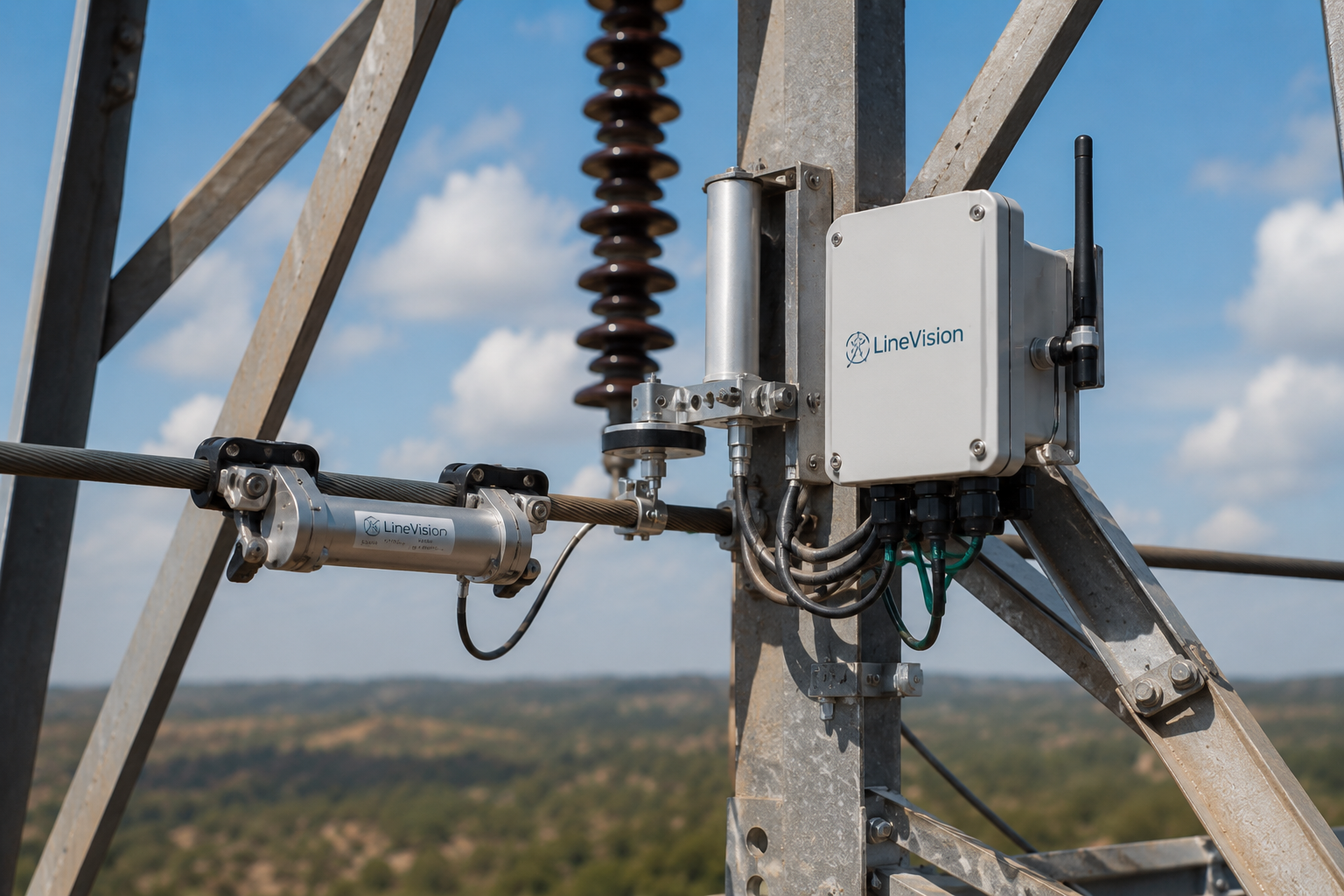
Dynamic line rating replaces the fixed-capacity assumptions under which most transmission lines are operated with real-time assessments of actual line capacity. Transmission lines are typically rated at a conservative fixed capacity based on worst-case temperature and weather conditions, a hot, calm summer day when the line has minimal cooling and maximum electrical resistance. In practice, most lines can carry significantly more electricity most of the time because ambient temperatures are lower, wind provides cooling, and resistance is reduced. Dynamic line rating uses sensors and real-time environmental data, such as wind speed, ambient temperature, solar radiation, and line sag, to determine actual available capacity moment by moment. Studies across multiple grid systems have found that dynamic line rating increases usable line capacity by 10 to 40 per cent on average, with higher gains in windier or cooler conditions. No new infrastructure is required. Only sensors, data systems, and the operational authority to act on what they show.
Advanced power-flow control optimises how electricity moves across a network. Electricity does not flow where grid operators want it to it flows according to the path of least resistance, which often means congested lines carry more than their share while parallel lines carry less. Power-flow control devices, including phase-shifting transformers and power electronics, redirect flows to use available capacity more efficiently, reducing congestion without physical expansion of the network. Reconductoring, replacing older transmission cables with higher-capacity conductors made from advanced composite materials, substantially increases line capacity at a fraction of the cost of building new transmission corridors. A reconductored line can carry two to three times its previous capacity using the same towers and rights of way, simply with a different cable.
Voltage uprating increases the operating voltage of existing transmission infrastructure, which increases its power-carrying capacity. Like reconductoring, it uses existing physical assets more intensively rather than requiring new ones.
Each of these tools can be deployed in months rather than years. Combined, they can substantially increase the hosting capacity of existing grid infrastructure before a single new pylon is erected.
Why Africa is not using them
The barrier to deploying grid-enhancing technologies in Africa is not primarily technical. Several African utilities already possess the basic technical capability to implement at least some of these approaches. The barriers are regulatory and institutional, and they are specific enough to name precisely.
Most African grid connection frameworks were written for a simpler electricity system: centralised generation connecting to high-voltage transmission at a small number of fixed points, operating at stable and predictable output levels. Those frameworks define connection terms, capacity allocation, and access rights in ways that assume static line ratings, fixed capacity limits, and firm connection commitments. Dynamic line rating requires the regulatory authority to operate lines above their fixed ratings. Power-flow control requires operational frameworks for managing redirected flows across interconnected systems. Non-firm connection agreements require regulatory provisions that most African grid codes do not currently contain.
This is a regulatory gap, not a capability gap. It is the kind of gap that can be closed through targeted reform of grid codes, connection regulations, and system operator mandates reforms that are less expensive and faster to implement than new transmission infrastructure, but that require deliberate political and institutional attention that grid regulation rarely receives.
The institutional dimension compounds the regulatory one. Operating dynamic line rating systems, managing non-firm connection portfolios, and optimising power-flow across complex networks require grid operators with the technical capacity, data systems, and operational authority to make real-time decisions at a level of sophistication that many African transmission system operators do not yet possess. Building that capacity is a workforce and institutional development challenge, one that sits adjacent to the grid skills crisis that ETA has previously documented in separate analysis.
What conditional non-firm connection agreements would change
The non-firm connection instrument deserves specific attention because it is the most immediately deployable of the three categories and the one with the most direct application to Africa's current project pipeline.
Under a firm connection agreement, the standard model in most African grid codes requires a generation project to wait until sufficient firm transmission capacity exists to carry its full output before it can connect. In markets with long planning and construction cycles for transmission, this means projects wait years. Under a conditional non-firm connection agreement, the project connects as soon as any transmission capacity is available, with the contractual understanding that output will be curtailed during periods when the system is congested. The project accepts occasional curtailment in exchange for earlier grid access.
For most renewable energy projects, occasional curtailment, particularly at off-peak hours when generation would otherwise be highest and demand lowest, is economically preferable to years of delay. The project generates revenue sooner. The grid receives clean electricity sooner. Consumers benefit sooner. The curtailment, when it occurs, is a manageable cost rather than an indefinite barrier.
The IEA's finding that non-firm connection agreements could enable 750 to 900 gigawatts of additional connections globally is based on grid systems that have already implemented this instrument. In the United Kingdom, Ireland, and several US markets, non-firm agreements have substantially reduced average connection timelines without materially degrading renewable energy output or grid reliability. African regulators have the evidence base to design and implement equivalent frameworks. What most lack is the regulatory infrastructure, the grid code provisions, the curtailment compensation frameworks, and the system operator operational capacity to implement them.
The specific reforms that would make the difference
For African governments and utilities seeking to deploy these tools, the reform sequence is more specific than a generic call for "regulatory modernisation."
Grid codes need to be updated to define dynamic line rating as a permissible operational mode and to specify the data, sensor, and operational systems required to implement it. Connection regulations need to include provisions for non-firm access, including curtailment thresholds, compensation mechanisms, and priority rules for managing congestion when multiple non-firm projects share a constrained corridor. System operator mandates need to be expanded to include real-time capacity optimisation as a core operational function, not an exceptional one. Regional power pool agreements need to accommodate power-flow control across interconnected national systems, which requires coordination between transmission operators that most existing bilateral grid agreements do not provide for.
Africa's $40 billion annual grid investment requirement through 2030, identified by the IEA, must be met through a combination of new infrastructure investment and grid optimisation. The two are complements, not alternatives. New transmission lines and substations are necessary over a decade-long horizon. Grid-enhancing technologies and regulatory reform are necessary for the projects that are ready now. Africa's grid policy conversation has focused almost entirely on the first category and largely ignored the second.
The 1,200 to 1,600 gigawatts of projects the IEA says could be connected through these tools globally represents a mobilisation opportunity that is sitting unutilised. Africa's share of that opportunity in a continent that added 11.3 gigawatts of renewable capacity in 2025 and has a project pipeline far exceeding its current grid hosting capacity is not small. Capturing it requires regulatory reform that is faster, cheaper, and more immediately achievable than the infrastructure investment conversations that currently dominate Africa's grid policy agenda.
The tools exist. The evidence base exists. The regulatory gap is the problem, and regulatory gaps are among the most tractable infrastructure problems a government can choose to solve.