Critical Minerals Beneficiation in Africa: Can It Scale Without Reliable Electricity?
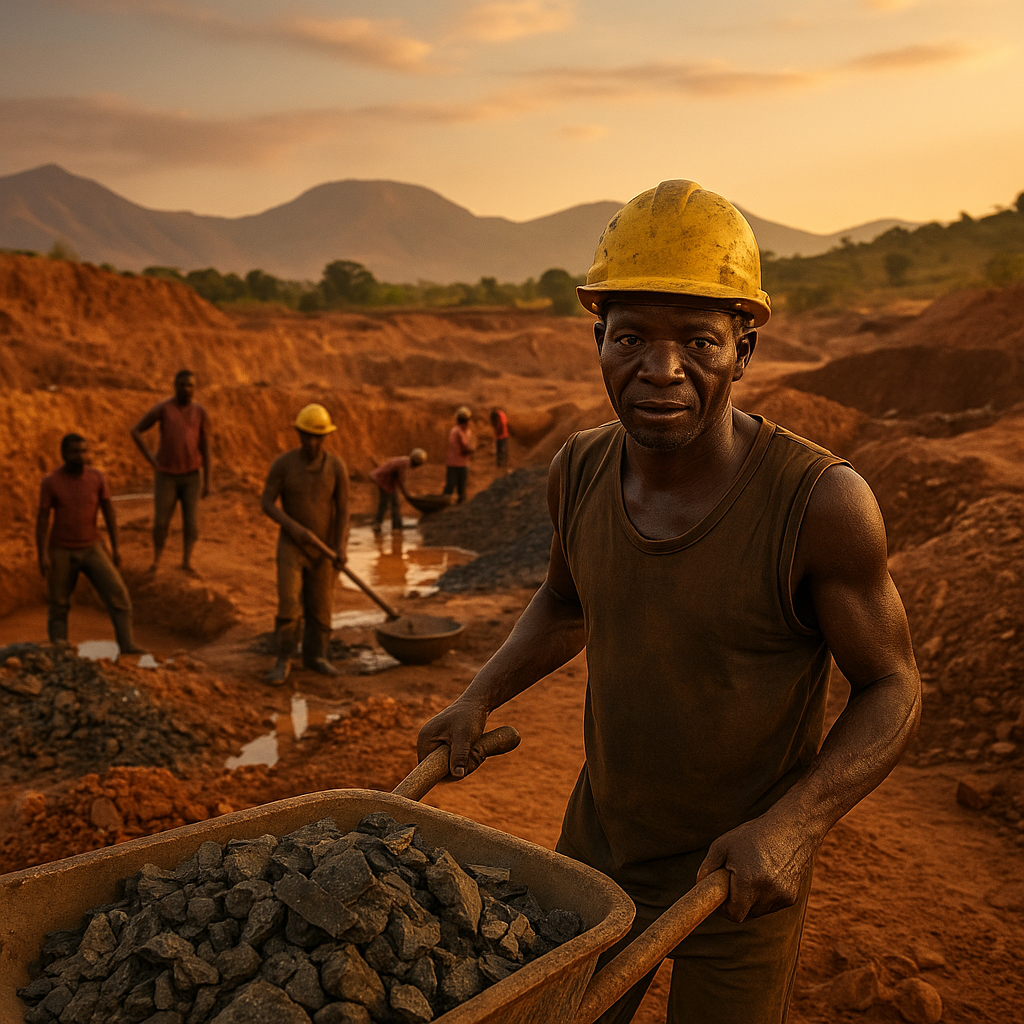
Africa’s role in the global energy transition is being redefined. For decades, the continent has largely participated in global commodity markets as a supplier of raw materials. Agriculture, oil, gas and minerals have been extracted and exported, while the higher-value stages of processing, refining and manufacturing have taken place elsewhere.
That model is now under scrutiny. As demand for critical minerals accelerates, driven by electric vehicles, battery storage and renewable energy technologies, African governments are increasingly seeking to capture more value domestically. Lithium, cobalt, manganese and graphite are no longer viewed simply as export commodities, but now seen as strategic assets capable of anchoring industrialisation.
This shift is reflected in the continental policy direction. The African Development Bank and the African Union have both emphasised the need to build integrated mineral value chains that move beyond extraction. The ambition is clear: Africa shouldn't only supply the raw inputs of the energy transition but participate in the industries that those inputs enable.
This marks a significant evolution in thinking. The question is no longer whether Africa can mine, but whether it can manufacture.
Why beneficiation is economically and politically attractive
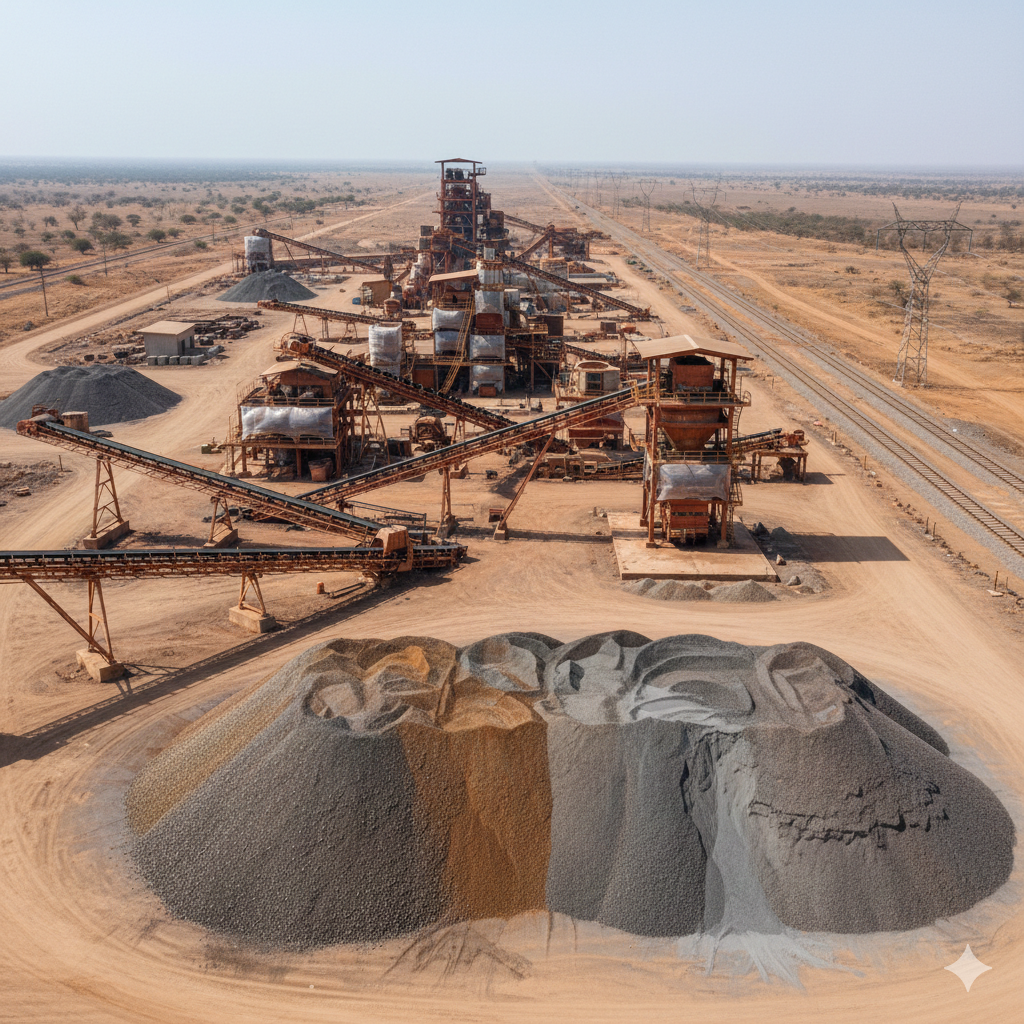
The case for beneficiation, processing minerals locally before export, isn't difficult to make. At a basic level, value addition increases economic returns. Processing minerals into intermediate or finished products captures more revenue than exporting raw ore, creates jobs, builds industrial capacity and strengthens domestic supply chains.
But the argument has become more urgent in the context of global competition. Countries such as China have built vertically integrated mineral supply chains, controlling everything from mining to refining to manufacturing. Western economies, meanwhile, are increasingly seeking secure supply chains for critical minerals.
This geopolitical competition has shifted the bargaining power of mineral-rich countries. African governments are beginning to recognise that mineral resources can be leveraged for both export revenues and industrial development.
Yet ambition alone does not create industry. The key question is whether the underlying systems required for beneficiation, particularly electricity, are strong enough to support it.
The power reality beneath the ambition
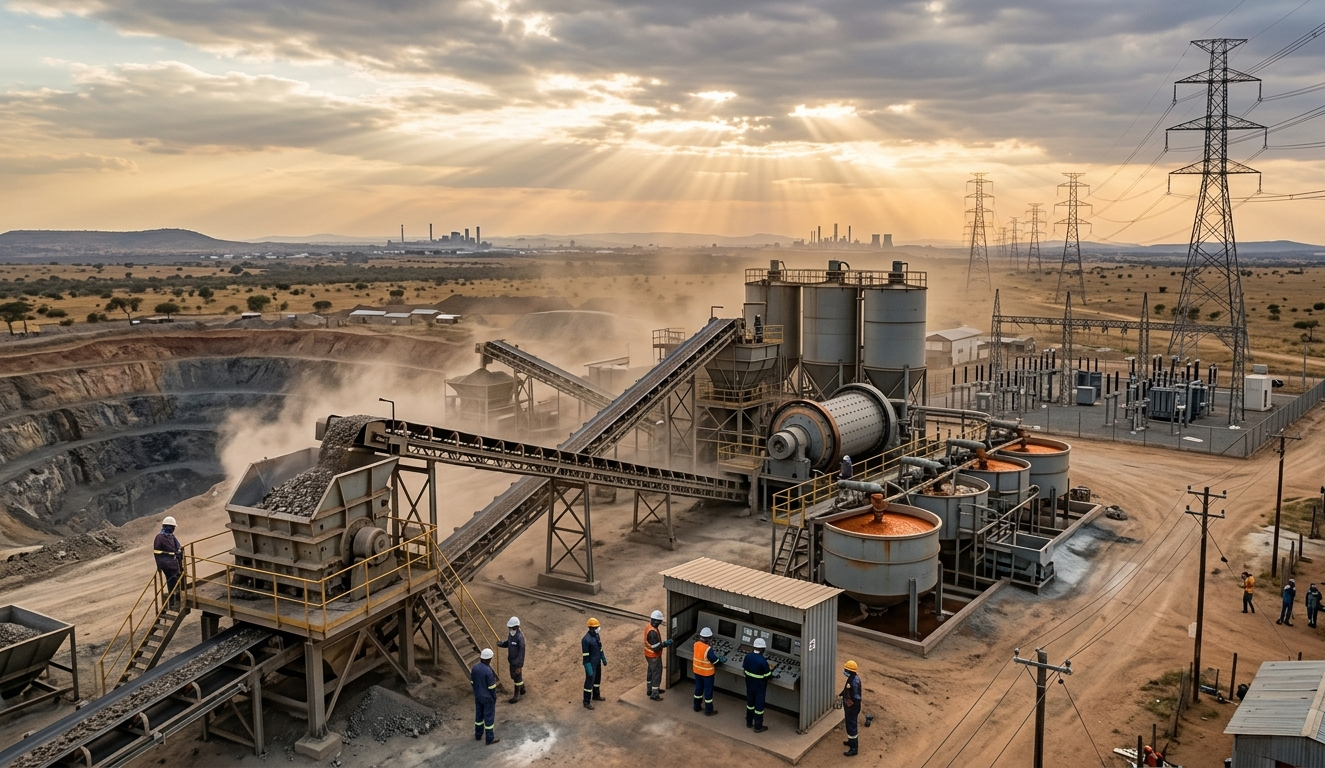
Beneficiation isn't simply an extension of mining. It is an industrial activity that requires energy. Processing, refining, and smelting minerals are energy-intensive processes that require large volumes of electricity delivered continuously at stable voltage and at competitive cost.
This is where Africa’s energy reality becomes central. Across much of the continent, electricity systems remain constrained by:
limited generation capacity
weak transmission networks
high system losses
frequent outages
high tariffs for industrial users
These challenges aren't marginal. They are structural. The Africa Finance Corporation notes that power cost and reliability effectively set the ceiling for industrial activity, including mineral processing.
This framing is critical. Electricity isn't just an input into beneficiation; it determines whether beneficiation is economically viable at all. Without reliable and affordable power, mineral processing facilities cannot operate efficiently, equipment can't run continuously, costs increase, and investors hesitate. The result is a disconnect between policy ambition and operational reality.
Why renewable growth does not automatically solve the problem
There is progress in Africa’s power sector. Renewable energy deployment is increasing, particularly in solar. Several African countries have expanded solar capacity rapidly in recent years, supported by falling technology costs and international financing.
This trend is important. It improves electricity access, diversifies energy sources and supports climate goals. But it doesn't automatically translate into industrial readiness, and beneficiation requires more than generation capacity.
It requires:
firm, dispatchable electricity supply
grid stability and frequency control
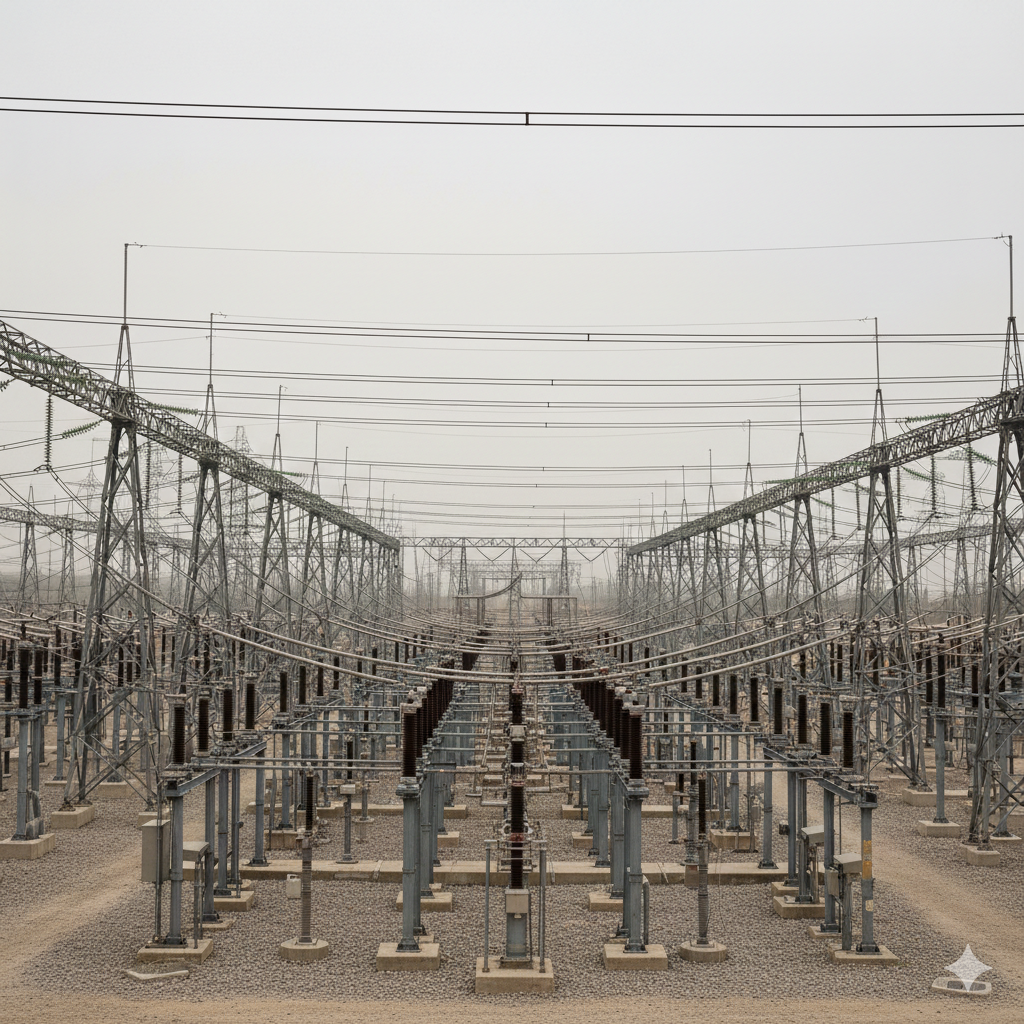
transmission infrastructure linking generation to industrial zones
storage or backup systems to manage variability
Solar capacity additions, while significant, do not guarantee these conditions. Electricity for industry must be available at all hours, not only when the sun is shining. And it must be delivered reliably to specific locations where processing facilities operate.
This means that renewable growth, while necessary, isn't sufficient. The constraint isn't simply how much electricity is generated, but how well electricity systems function.
The sequencing problem in industrial policy
The most important issue may not be ambition, but sequencing. African governments are increasingly introducing policies aimed at encouraging local beneficiation. These include export restrictions on raw minerals, local processing requirements and incentives for downstream investment.
The intention is clear: to accelerate value addition. But the effectiveness of these policies depends on whether enabling infrastructure already exists.
If electricity systems, transport networks and industrial zones are not in place, such policies may struggle to deliver their intended outcomes. Investors evaluating beneficiation projects consider:
energy reliability
electricity costs
logistics infrastructure
regulatory stability
If these conditions are not met, capital may not flow, regardless of policy mandates. The International Energy Agency has highlighted that moving up the value chain requires not only mineral resources but also infrastructure, energy systems and industrial capabilities. In other words, beneficiation cannot be legislated into existence. It must be built.
What scalable beneficiation would actually require
For beneficiation to scale meaningfully in Africa, several conditions must converge.
Second, transmission infrastructure must connect mineral-rich regions to industrial zones. Processing facilities are often located far from generation sites. Without transmission corridors, electricity cannot reach them at scale.
Third, industrial policy must align with infrastructure development. Rather than imposing immediate processing requirements, governments may need to sequence reforms, building power systems and industrial ecosystems before mandating large-scale beneficiation.
Fourth, regional integration could play a role. Cross-border electricity trade through regional power pools could help stabilise supply and reduce costs, particularly for energy-intensive industries.
These are not small adjustments. They represent a systems-level approach to industrialisation.
The strategic choice for Africa
Africa’s critical minerals moment presents a genuine opportunity, but it is also a structural test.
The continent holds resources that are essential to the global energy transition. Demand is rising rapidly as electric vehicles, battery storage and clean technologies scale. At the same time, geopolitical competition for secure mineral supply is intensifying, and African governments are responding with growing policy ambition around value addition and industrialisation.
But mineral abundance alone will not determine outcomes. The success of beneficiation will depend on whether Africa can build the systems required to support industrial activity. Chief among these is electricity. Processing minerals is not a marginal extension of extraction; it is a power-intensive industrial process that requires continuous, stable and affordable energy.
Without reliable electricity, beneficiation risks remaining a policy aspiration, articulated in strategies but difficult to implement at scale. Investors will hesitate, costs will rise, and processing facilities will struggle to operate efficiently.
With reliable power, however, the equation changes. Electricity becomes an enabler of industrial ecosystems supporting not just processing plants, but supply chains, logistics and manufacturing clusters. In that scenario, the continent can begin to capture a much larger share of the value created by its resources and translate mineral wealth into broader economic transformation.
Conclusion: the grid, not the mine, will decide
Africa does not lack mineral ambition. Across the continent, governments are increasingly aligned around the goal of moving up the value chain, shifting from raw material exports to local processing and industrial production. The policy direction is clear, and the economic rationale is strong.
But ambition alone is not sufficient. The debate around critical minerals often focuses on geology, where resources are located and how much exists. Yet the more decisive factor may lie elsewhere. The ability to beneficiate minerals at scale depends not only on what lies beneath the ground, but on the infrastructure above it.
In particular, it depends on electricity. The future of value addition will be shaped less at the mine than on the grid. If electricity systems remain constrained, unreliable, expensive or insufficient, beneficiation will struggle to scale beyond isolated projects.
If they are strengthened, however, the continent’s industrial ambitions could begin to materialise in a meaningful way. The question is no longer whether Africa should move up the value chain. It is whether it can build the power systems required to get there fast enough to match the pace of the global energy transition.