China’s Solar Subsidies Powered Africa’s Boom but Support Is Now Fading
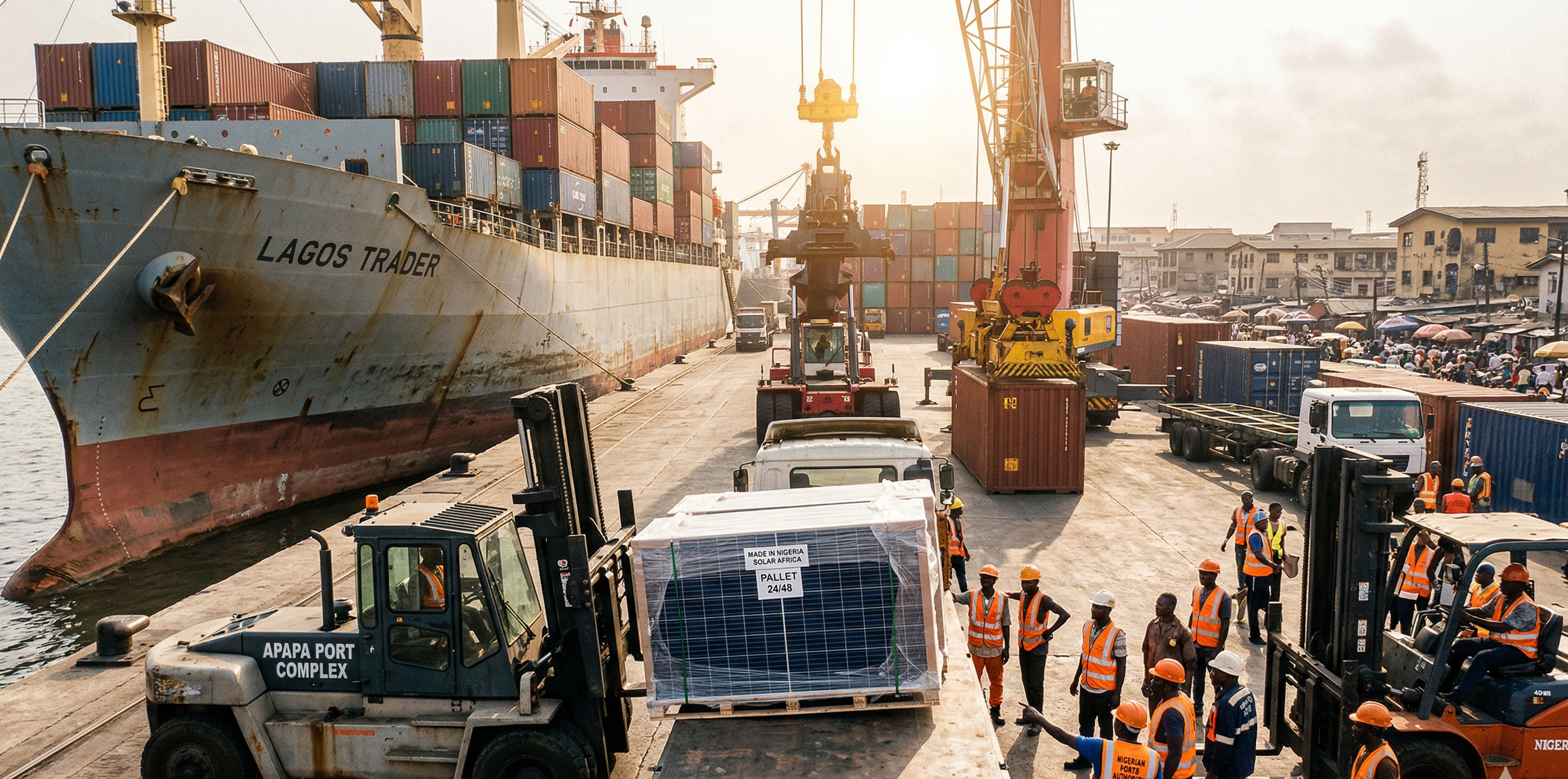
Over the years, Africa’s solar expansion has been framed as a story of falling costs and accelerating deployment. Module prices declined from around $0.25 per watt in 2022 to as low as $0.07 per watt by 202, unlocking project pipelines that had previously struggled to reach financial close. The prevailing explanation has been: technological progress, manufacturing scale, and intensifying competition among Chinese producers.
That explanation, though correct, was incomplete, because embedded within that price collapse was a fiscal mechanism that remained largely unacknowledged across African energy markets: China’s value-added tax (VAT) export rebate. Under China’s tax system, goods sold locally attract a 13 percent VAT. Exports are exempt, allowing manufacturers to reclaim that tax when products are shipped abroad. For solar modules, the rebate was initially set at 13 percent, reduced to 9 per cent in December 2024, and abolished entirely from 1 April 2026.
What matters isn't the policy itself, but how it was used. According to the China PV Industry Association, many manufacturers incorporated the rebate directly into export pricing. Rather than retaining the fiscal benefit, they passed it through to overseas buyers.
In practical terms, this meant that African developers were purchasing solar modules at prices partially underwritten by Chinese fiscal policy, often without explicitly recognising that fact. The result was a solar boom supported, in part, by a subsidy that sat outside Africa’s own policy frameworks.
How African project economics absorbed the subsidy without naming it
The practical consequences of this mechanism varied depending on which segment of Africa's solar market is being examined, but in every segment, the subsidy was load-bearing in ways that project developers rarely articulated.
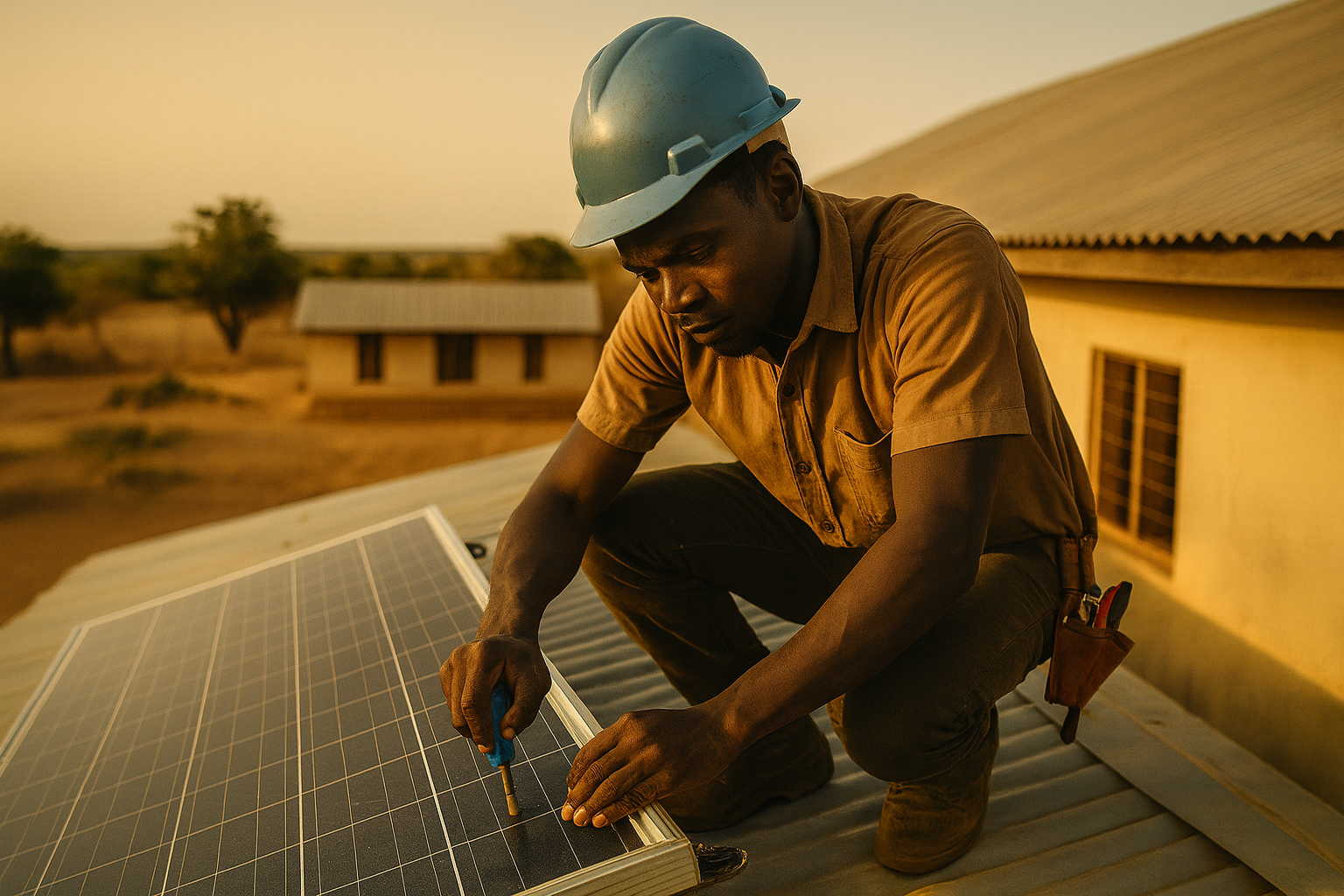
For utility-scale developers operating across markets such as South Africa, Egypt, Morocco, and Nigeria, the rebate played a stabilising role in project economics that were otherwise structurally fragile. Capital costs for solar projects in Africa remain significantly higher than in developed markets, often three to seven times higher, driven by sovereign risk premiums, currency exposure, underdeveloped capital markets, and logistical constraints.
Within that cost structure, module pricing was one of the few variables moving consistently in a favourable direction. Lower hardware costs reduced upfront capital requirements and improved internal rates of return, allowing projects in higher-risk environments to become bankable. In many cases, what appeared to be improving competitiveness was, in part, a function of external fiscal support embedded in pricing.
For commercial and industrial users, the relationship was even more direct. Factories, office parks, and retail centres that install rooftop solar operate with far less financial cushion. They typically rely on balance sheet financing and expect relatively short payback periods, often within three to six years. Their investment decisions are highly sensitive to upfront equipment costs.
In this context, lower module prices, partly shaped by the VAT rebate, were not a marginal benefit but central to the viability of adoption. At the off-grid and mini-grid level, the dependency was even more pronounced. Serving low-income communities leaves little room for absorbing cost increases. Where end users earn only a few dollars a day, hardware cost becomes the binding constraint.
The price adjustment now underway
The removal of the VAT rebate doesn't introduce a sudden shock, but it does establish a new baseline. Analysts broadly expect module prices to rise from approximately $0.086 per watt in late 2025 to between $0.095 and $0.098 per watt by the end of 2026, an increase of around 10 to 14 percent. Others argue this shift could reduce the internal rate of return on solar projects by roughly 2.25 percentage points.
In markets where project returns are already compressed, that adjustment is consequential. Projects that were marginally viable under previous pricing assumptions may no longer meet financing thresholds without additional support. For developers operating in higher-risk environments, even modest cost increases can shift projects from feasible to unbankable.
At the same time, the trajectory is not entirely fixed. Manufacturers retain some flexibility. They may absorb part of the cost increase, reduce margins, or accelerate industry consolidation to stabilise pricing. External factors add further uncertainty, as the cost of key inputs, including silver, which rose more than 130 per cent through 2025, continues to exert upward pressure on module pricing.
Battery storage introduces an additional layer. Export rebates for storage technologies have been reduced from 9 per cent to 6 per cent and are scheduled for full removal by January 2027. This creates a compounded effect: at precisely the moment when storage integration is becoming essential for renewable systems to deliver reliable power, the cost of that integration is rising. The result is a sequence of cost shifts unfolding over a relatively short period.
A structural exposure revealed at scale
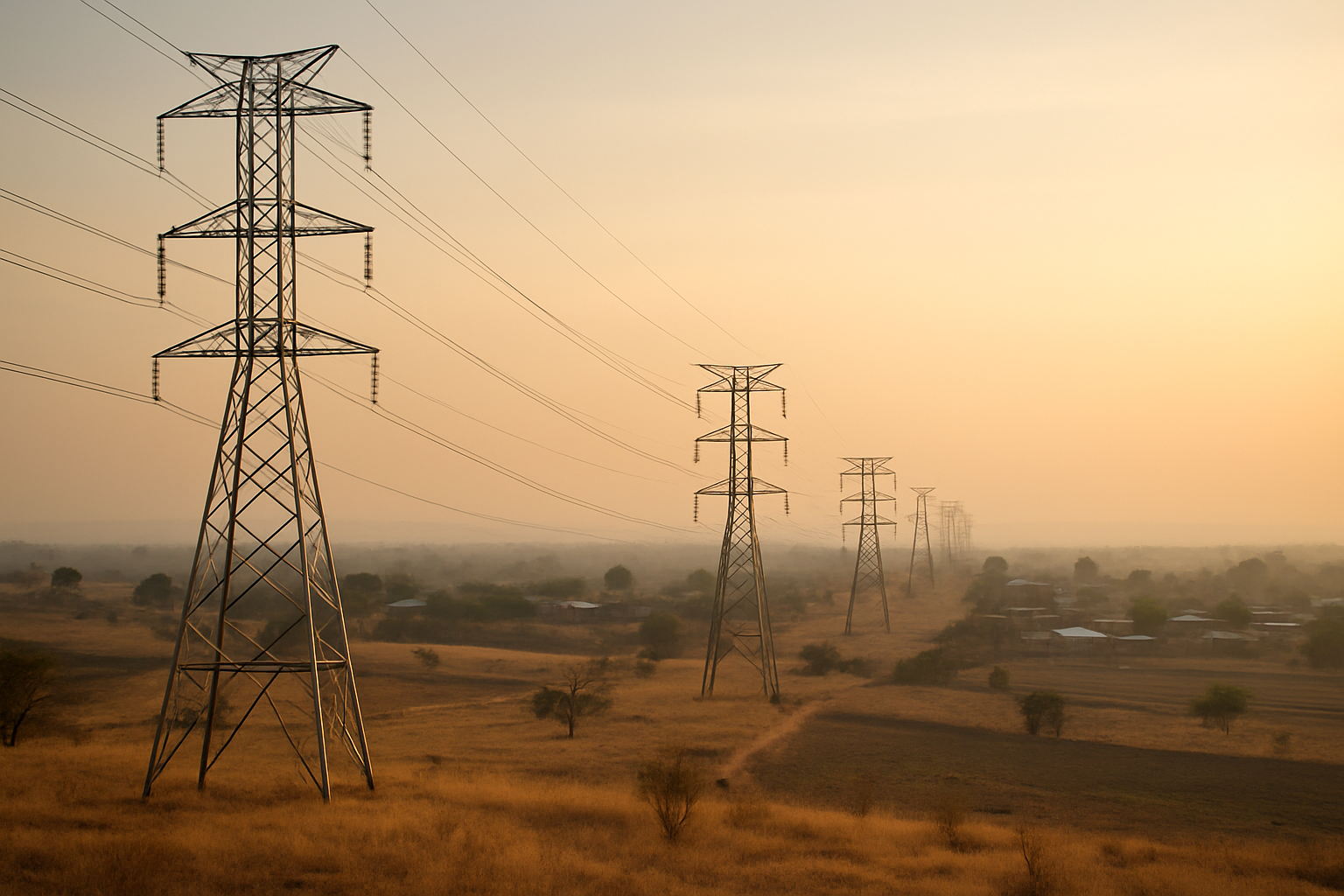
The timing of the rebate removal highlights a deeper structural reality. According to Ember, Africa imported a record 15,032 megawatts of solar panels in the twelve months to June 2025, a 60 percent increase on the previous year. Twenty countries recorded new import highs. Nigeria overtook Egypt as the second-largest importer, while Algeria’s imports expanded dramatically.
This surge was driven, in part, by the same pricing dynamics now being reversed. Artificially low prices increased demand, and increased demand deepened reliance on imported modules. That reliance is now the context within which prices are adjusting.
This is not coincidental. It reflects the underlying logic of how the rebate operated. The China PV Industry Association has acknowledged that export rebates were effectively embedded in overseas pricing strategies, transferring fiscal value to foreign buyers. From Beijing’s perspective, the policy served domestic industrial objectives, managing overcapacity, sustaining manufacturing output, and expanding global market share.
Africa benefited, but not by design. The subsidy wasn't structured as development assistance, but an outcome of Chinese industrial policy. And as that policy shifts, so too do the conditions under which Africa’s energy transition operates.
The broader question: who sets the terms of the transition?
What the removal of the VAT rebate ultimately exposes isn't just a pricing adjustment, but a structural dependency. Africa’s solar expansion has been shaped, in part, by decisions made outside its own policy environment, decisions driven by industrial dynamics in China rather than by African development priorities.
This isn't unique to solar. Across multiple sectors, African economies operate as price-takers within global systems they don't control. The cost of inputs, the availability of technologies, and the structure of supply chains are often determined elsewhere.
The energy transition doesn't automatically alter this dynamic. If anything, it intensifies it. The question, then, isn't simply how Africa responds to this particular adjustment, but whether it can reduce its exposure to similar shifts in the future.
That demands more than a procurement strategy, and requires:
domestic and regional manufacturing capacity
diversified supply chains
financing structures that do not depend on externally driven price cycles
Without these, each adjustment in global industrial policy will continue to transmit directly into African project economics.
A transition built on coincidence, now facing reality
The VAT rebate functioned as a subsidy that lowered costs, accelerated deployment, and supported a narrative of rapidly improving solar economics across the continent.
But it was never a foundation. It was a convergence of interests: Chinese manufacturers managing overcapacity, global markets absorbing output, and African developers benefiting from lower prices.
That convergence has now shifted. Prices are rising, modestly but meaningfully, project economics are tightening, and the assumptions that underpinned recent expansion are being tested.
What happens next depends on how this moment is interpreted. It can be treated as a short-term adjustment absorbed within existing frameworks, managed through incremental financing changes, and largely unexamined. Or it can be understood as a signal.
That Africa’s energy transition, as currently structured, remains exposed to decisions made elsewhere.
The difference between those interpretations is strategic.
Conclusion: what remains after the subsidy disappears
From April 2026, those conditions have changed. The question isn't whether the continent can continue deploying solar. It can. The resource base remains strong, and the need for expansion is undeniable. The question is whether the next phase of that expansion will be built on more durable foundations.
An energy transition that depends on external pricing distortions is not a system. It is a moment.
And moments, by definition, pass. What replaces them is what determines whether progress becomes transformation.