Africa is not going to Santa Marta. That is a choice it will have to live with
There is a temptation, whenever a new climate conference emerges, to think of it as more of the same; another gathering of ministers, another round of communiqués, or a set of commitments that will eventually dissolve into the familiar architecture of UN process diplomacy.
Santa Marta is not that. It exists because that process failed.
At COP30, over half the nearly 200 countries present blocked even non-binding language on fossil fuel phase-out. The negotiations stalled in the manner that has become structurally familiar, with broad alignment on climate ambition, no consensus on the mechanisms that would make that ambition operationally real. Colombia's environment minister, Irene Vélez Torres, walked out of Belém and announced the response: a first international conference on the just transition away from fossil fuels, co-hosted with the Netherlands, in Santa Marta from 24 to 29 April 2026.
Santa Marta is a deliberate attempt to move outside consensus diplomacy and build something different: a coalition willing to advance fossil fuel phase-out without waiting for universal agreement. The location reinforces the intent: Santa Marta is Colombia's largest coal export port. A fossil fuel phase-out conference hosted in a coal town is a signal, not an accident. But signals travel differently depending on where you stand.
Who is in the room, and what Africa's presence reveals
Neither country is attending because it is ready to phase out fossil fuels, but because something consequential is being built, and it is more strategically useful to be inside the architecture as it forms than to observe it from outside. Angola's presence in particular deserves to be read carefully, because it is an acknowledgement that the conversation about oil's future is already underway and that presence is a form of leverage that absence forfeits.
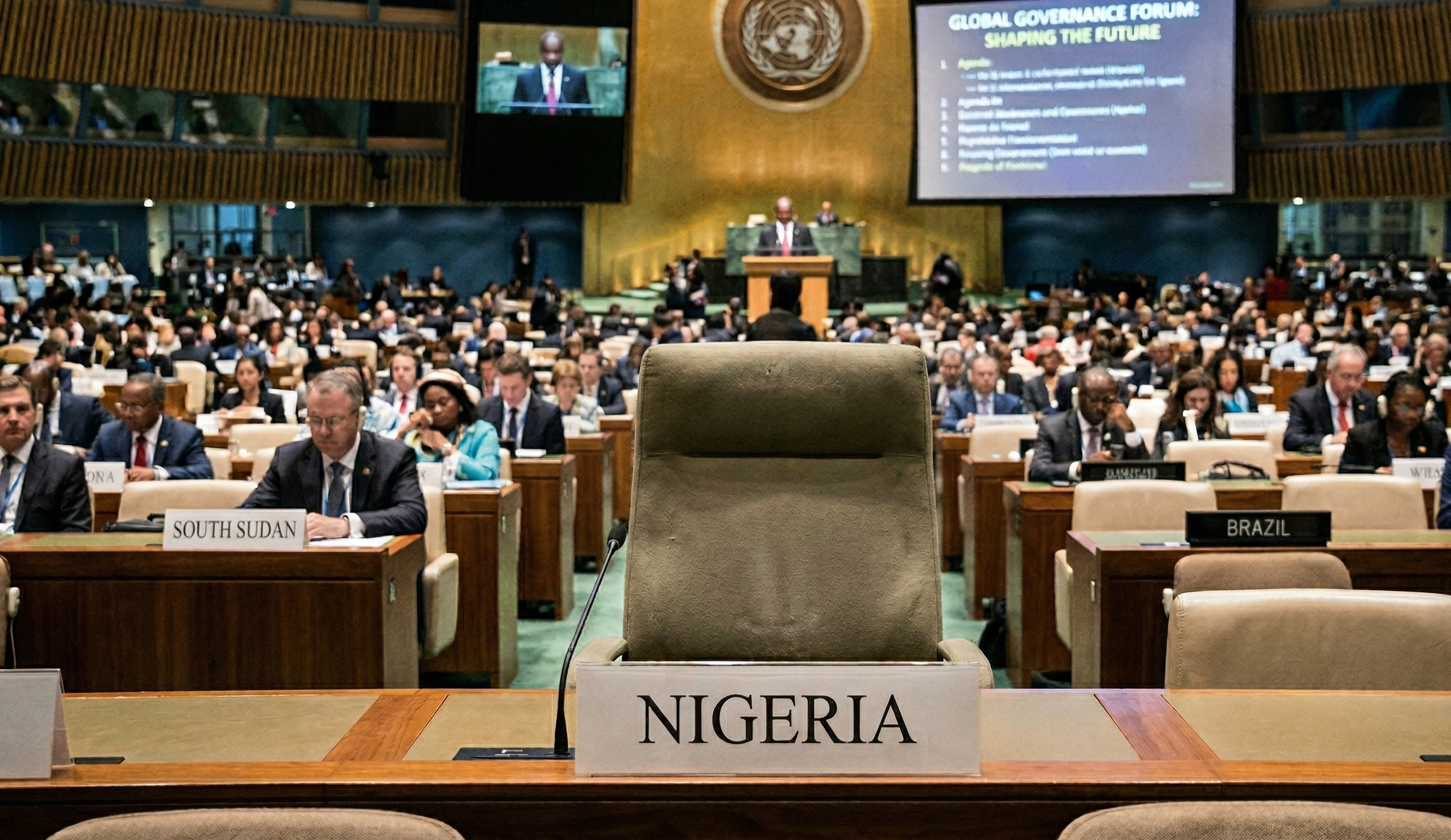
What is more instructive, however, is who isn't there. Nigeria, Algeria and Equatorial Guinea are absent. These are not peripheral players in African hydrocarbons; they are its fiscal backbone. In Nigeria's case, oil revenues underpin the structural architecture of the state. Their absence isn't a rejection of climate ambition. The question of what replaces fossil fuel revenue at scale remains unresolved, and until it is answered, participation in a phase-out conversation carries costs that are immediate.
What Santa Marta reveals about Africa is a fragmentation that mirrors the continent's broader energy transition challenge, different countries facing structurally similar pressures, making divergent strategic calculations about how to engage with a transition they do not fully control.
What the conference can and cannot do
Santa Marta has no enforcement mechanism. It can't compel a single African government to shut down an oil field, revise a production sharing agreement, or abandon a gas project already in its financing pipeline. No delegation attending will leave with a legally binding obligation to anything.
That framing of what it can't do, however, misses what it actually produces. The conference shapes the narrative ahead of COP31, where a transition roadmap drafted by the Brazilian COP30 presidency team will be expected. Countries that participate will have shaped the language, the framing, and the expectations that inform those negotiations. Countries that didn't attend will find themselves responding to a framework they had no hand in constructing.
Beyond narrative, it begins forming a bloc, a group of governments that, over time, may align their investment policies, procurement decisions, and financing conditions in ways that progressively disadvantage fossil fuel assets. This is how transitions happen: through the gradual coordination of policy and capital that makes certain investment decisions increasingly costly and others increasingly obvious.
Then there is the record. Who attended. Who spoke. Who stayed silent. These things are read not just by diplomats but by rating agencies, institutional investors, and the multilateral financing institutions that determine the cost and availability of capital for African energy systems.
The question African governments are not being asked
The fossil fuel debate in Africa is persistently framed as a binary: either commit to a phase-out and risk losing revenue, or resist and preserve it. I have sat through versions of this framing in policy forums, donor meetings, and conference rooms across the continent, and it consistently misrepresents the actual choice on the table.
It assumes that the timing and terms of the transition are fully within the control of African governments, when they aren't. The signals from global finance are now unambiguous in their direction. Major African banks, Standard Bank, Nedbank, and FirstRand have already set 2026 limits on fossil fuel exposure.
The Iran conflict's impact on oil prices has reinforced the clean energy security argument for every net oil-importing African economy. The long-term trajectory away from fossil fuels isn't a hypothesis, but a convergence of market, policy, and geopolitical forces that no single African government can reverse by declining to attend a conference in Colombia.
The real question isn't whether Africa phases out fossil fuels, but if it writes the terms of that phase-out, or inherits the version written by others.
Angola's decision to attend begins to look very different through that lens. Nigeria's absence carries a different implication, one whose long-term costs may not be visible in next year's budget, but will accumulate in every subsequent negotiation over transition finance, stranded asset liability, and preferential investment frameworks that it had no hand in designing.
What is at stake beyond the conference itself
Santa Marta is a visible expression of a structural shift in how climate governance is being conducted. When consensus proves impossible, coalitions form, and when global agreements stall, smaller groups move ahead and establish precedents. This has happened in trade, in security, in finance. It is now happening in energy.
The First Conference isn't a standalone moment, but a first in a series, with a follow-up convening hosted by Pacific island states already committed. A Fossil Fuel Treaty negotiation mandate is the intended destination, and the architecture is being constructed sequentially, outside the UN framework, by a coalition of governments that have concluded they can't wait for universal agreement.
For Africa, this creates both a structural risk and a concrete opportunity. The risk is that decisions shaping the transition, on finance, on liability, on timelines, on what counts as a just transition, are being taken by a coalition in which Africa's largest hydrocarbon producers aren't present.
The opportunity is that engagement, even without full ideological alignment, allows governments to understand the direction of travel, build relationships at the margin, and introduce African economic realities into conversations that will otherwise proceed without them.
The choice isn't between agreeing with everything Santa Marta produces and total resistance to its agenda, but being present when ideas are being shaped, and absent when they are being implemented.
The conversation is happening regardless
In two weeks, ministers, negotiators, and civil society delegations will gather in Santa Marta to debate timelines, financing mechanisms, and the architecture of a fossil fuel phase-out that will unfold across decades. They will form alliances, shape language, and sketch the outlines of a framework that will inform every subsequent major climate negotiation.
That conversation will happen, whether or not African governments are in the room for it. The coalition will form, the narrative will solidify, and the signals will be read by every institution that determines what it costs Africa to finance its energy future.
I am not arguing that Santa Marta is without contradictions. Canada is attending while its oil industry expands production. Norway is attending while supplying gas to Europe at scale. The conference carries the familiar tensions of climate diplomacy; ambition and interest are never fully resolved.
But those tensions are for participants to press on. The choice isn't between participating in the transition and avoiding it, but helping to write its terms, or being written into them. And that is a choice that can't be deferred without consequence.