Africa Is Building a Clean Energy Future It Cannot Afford to Use
I once had a chat with a textile manufacturer in West Africa who showed me two documents side by side. One was a government press release celebrating a new solar installation in his region, renewable energy arriving, the transition advancing, progress being made. The other was his most recent electricity bill.
The numbers on the bill had doubled in three years. He wasn't connected to the solar project, as he was using a utility whose tariffs kept rising to cover losses that had accumulated over decades of politically managed pricing. He pointed to the press release and said, simply: "This is not for me."
That moment sits at the heart of something that Africa's energy transition discourse has been reluctant to confront directly. The continent isn't short of energy ambition, renewable announcements, financing frameworks, or international climate commitments.
What it is increasingly short of is electricity that businesses and industries can actually afford to use, and the political will to address the structural reasons why. The global conversation about Africa's energy transition tends to move in the register of gigawatts, emissions, and access rates. But on the factory floors and in the industrial estates where the transition either delivers or fails, the conversation is about something far more mundane and far more consequential: the monthly electricity bill, and whether paying it still makes economic sense.
Utilities trapped between politics and solvency
To understand why electricity is expensive in most of Africa's industrial landscape, it is necessary to look honestly at what has happened to the utilities that deliver it. For decades, electricity tariffs in the continent were set not to recover costs but to manage political relationships.
Power was priced cheaply, sometimes freely, as a form of social contract between governments and populations. The consequences of that arrangement were predictable and are now deeply embedded in the systems that remain. Utilities accumulated losses, infrastructure investment was deferred, and grid maintenance was underfunded. The ageing plant stayed online because there was no capital to replace it, and transmission systems that should have been upgraded in the 1990s are still carrying load today.
The financial position of many African state utilities is, to use the technical term, structurally insolvent. They can't recover their costs at current tariff levels, which means they can't invest in the infrastructure improvements that would lower their operating costs, so costs stay high, which means tariffs must rise, making industries leave, and thereby the customer base that was supposed to underpin cost recovery shrinks. A spiral that is difficult to arrest through any single policy intervention.
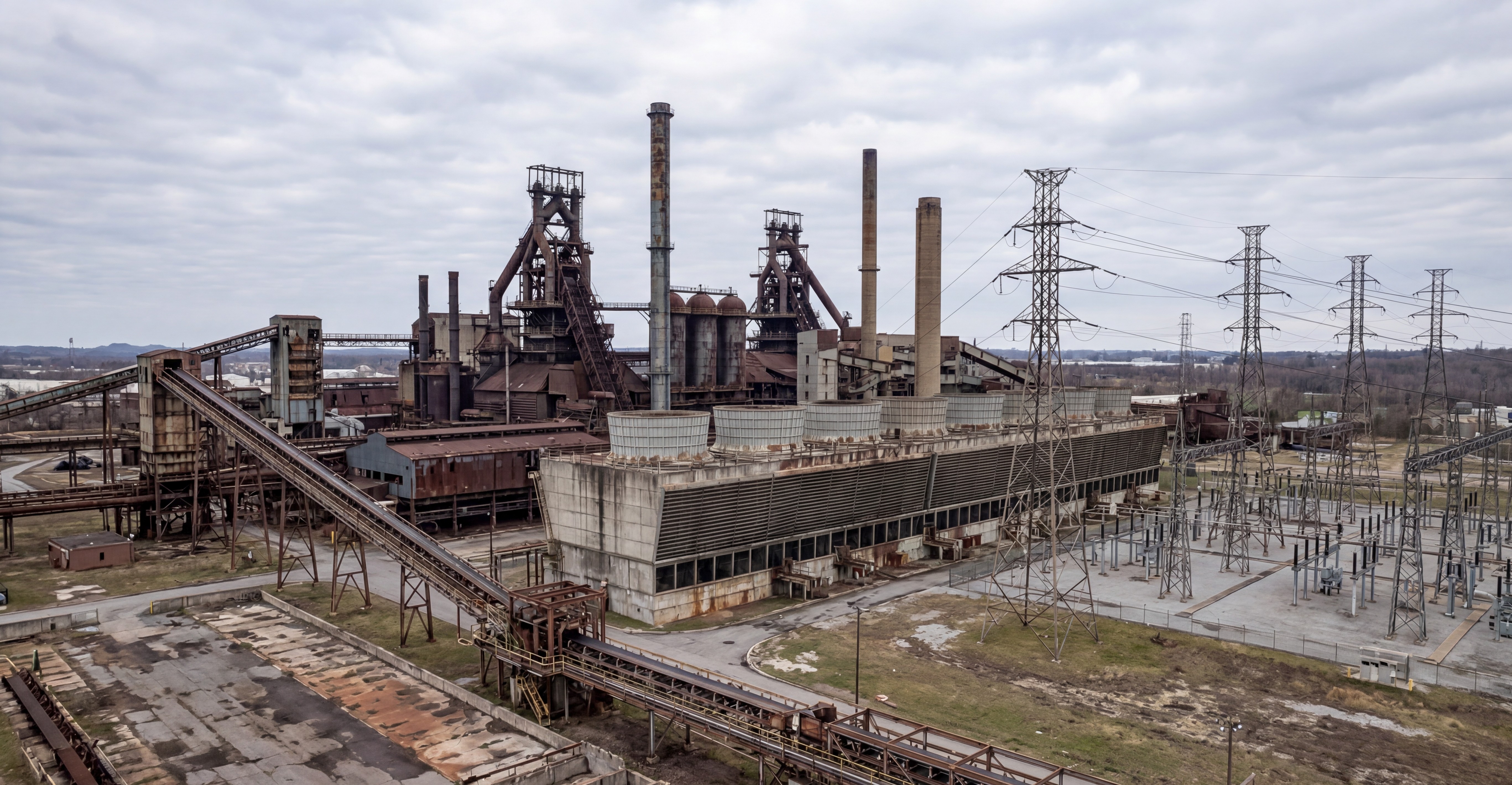
South Africa's experience with Eskom has dramatised this dynamic at scale. Electricity prices rose by roughly 900 per cent between 2007 and 2026, driven substantially by the need to service debt accumulated during a generation of underpricing and mismanagement. The result was visible by early 2026: of 66 ferrochrome smelters with installed capacity in the country, only 11 were still operating.
The government's emergency response, negotiating tariff relief to bring rates down from nearly 196 cents per kilowatt-hour towards a 62-cent competitive benchmark, was an acknowledgement of what happens when the cost of political pricing is finally presented to industry. But South Africa is not an outlier, but simply the most visible example of a dynamic playing out, at different stages, across the continent.
Self-generation and the stratification of energy access
One of the responses to unaffordable grid electricity that tends to be reported positively as evidence of entrepreneurial resilience and renewable energy progress is the rise of self-generation. In many African markets, firms with the capital to do so are investing in rooftop solar, battery storage, embedded generation, and private power purchase agreements.
They are, in effect, building their own utilities. I understand why this is reported optimistically, because it does represent a form of adaptation, and in some cases, it genuinely advances renewable deployment. But I think the optimistic framing misses something important about what self-generation actually reveals.
When the most creditworthy, highest-consuming industrial users exit the national grid, they take with them the revenue that the utility depended on to cross-subsidise other customers and to fund system maintenance. The firms that remain, the smaller manufacturers, informal processors, and household enterprises, are left on a grid that is now financially weaker than it was before, because its best customers have left.
The dynamic is not unlike what happens when middle-class families exit public health or education systems for private alternatives: the institutions they leave become progressively underfunded, and the populations who can't afford to exit are progressively worse served.
Self-generation in Africa is not an innovation story, but the energy sector's version of that same stratification. It tells us that the system is failing in ways that the most capable actors are responding to individually, at the expense of a collective solution. And collective solutions, in energy infrastructure, are the only kind that work at scale.
The gap between climate finance and industrial reality
There is a structural disconnect at the heart of how international climate finance engages with Africa's energy challenge, and it is one that rarely receives the direct scrutiny it deserves. The financing instruments that have been built to support Africa's energy transition, green bonds, blended finance facilities, concessional climate funds, and development finance institution lending, are primarily designed around generation.
They fund solar farms, wind projects, and hydropower developments. These investments are real and, in many cases, transformative. But they don't, in most configurations, address the system in which that generation sits: the financially distressed utilities, the ageing transmission corridors, the distribution networks losing a quarter or more of their load to technical losses, and the tariff structures that prevent any of these investments from translating into affordable electricity at the point of use.
What this means, in practice, is that billions of dollars in climate finance can flow into Africa's energy sector without materially improving the electricity economics that determine whether industrial activity is viable. The two things, clean energy deployment and affordable industrial electricity, are related but not identical, and treating them as synonymous has produced a financing architecture that is well calibrated to the former and largely inattentive to the latter.
What beneficiation actually require from an energy system
Africa's ambition to process its own minerals to smelt, refine, and manufacture rather than simply extract and export has become one of the defining economic policy commitments of the current decade.
It is the right ambition. The logic is sound, the precedents exist, and the potential gains in value, employment, and fiscal revenue are substantial. But beneficiation is an industrial process with specific technical and economic requirements, and the most important of those is reliable, affordable electricity at scale.
Smelting and refining operations are among the most energy-intensive activities in manufacturing. Electricity can account for between 30 and 50 percent of production costs in these sectors, meaning that the difference between a competitive tariff and an uncompetitive one is often the difference between operating and closed facilities.
What makes this particularly acute is the competitive context. Africa's mineral processors are not competing only against one another. They are competing against facilities in China, in Indonesia, in the Gulf states jurisdictions, where energy costs are structured deliberately to support industrial production, and power is treated as a strategic input into industrial policy rather than simply a commercial product.
South Africa has already lost its position as the world's leading ferrochrome producer to China, not because it lacked the chrome, it holds an estimated 70 to 80 percent of the world's known reserves, but because unaffordable electricity made smelting economically unviable and raw ore export became the path of least resistance. That isn't a cautionary tale about what might happen to Africa's beneficiation ambitions if energy costs aren't addressed, but a description of what has already happened to one of them.
Who pays, and who decides: the political economy question
At the centre of Africa's electricity affordability crisis is a set of political economy questions that technical analyses of tariff structures and grid efficiency tend to sidestep:
Who should pay for the transition from underpriced, politically managed electricity to a system that is financially sustainable and industrially competitive?
Who bears the cost of decades of deferred maintenance and accumulated utility debt?
Who decides which industries receive preferential tariff treatment, and on what terms?
These are political questions, which is partly why they are so rarely asked directly in the forums where Africa's energy transition is discussed. The instinct is to treat energy system reform as a governance and technical challenge, a matter of getting the right policies, the right regulatory frameworks, and financing instruments in place. Those things matter. But the deeper obstacle is political.
Raising electricity tariffs to cost-recovery levels imposes immediate costs on consumers and businesses, restructuring utility finances requires confronting powerful interests that have benefited from the existing arrangements, and extending industrial tariff relief to energy-intensive sectors as South Africa has had to do to prevent its ferrochrome industry from collapsing entirely requires governments to make visible choices about which parts of their economies they are willing to subsidise and for how long.
These aren't comfortable conversations; they involve trade-offs that are genuinely difficult and unequal distributional consequences. But until they are had, directly and publicly, the electricity affordability crisis will remain unresolved, and with it, the industrial ambitions that depend on its resolution.