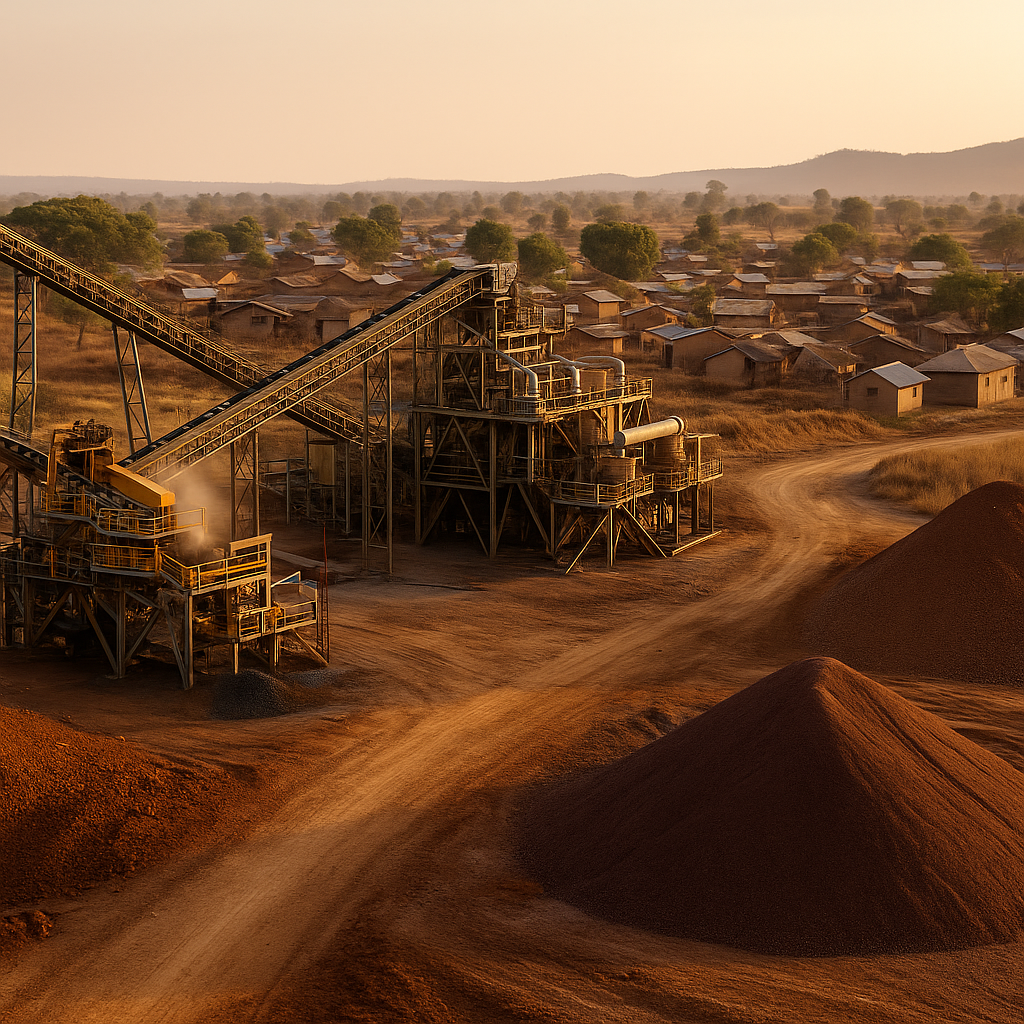
Africa's Beneficiation Ambition Has an Electricity Problem. Nobody Is Planning for Them Together.
Africa's critical minerals conversation has generated significant policy momentum over the past two years. Export restrictions are proliferating, and beneficiation mandates are being embedded in mining licences. The Nairobi Declaration commits governments to local value addition and technology transfer on fair terms, and the African Union's Continental Critical Minerals Value Addition Framework, adopted in February 2026, calls for coordinated industrial strategies across the continent.
All of this is necessary, but none of it addresses the operational precondition that will determine whether beneficiation mandates translate into functioning industrial activity.
Mineral processing isn't primarily a policy challenge. It is an electricity challenge. Refining and downstream processing are among the most electricity-intensive industrial activities in the global economy. Copper smelting requires continuous high-voltage power, lithium hydroxide production depends on energy-intensive chemical processing systems that cannot tolerate supply interruptions, and cobalt refining demands stable industrial electricity that can operate continuously at a consistent voltage and frequency. The industrial processes that beneficiation policies are designed to encourage require electricity infrastructure that most African grids were not built to provide.
That gap is no longer a peripheral concern. It moved to the centre of discussion at the Africa CEO Forum in Kigali, Rwanda, this month, where mining executives, financiers, utilities, and governments increasingly spoke about minerals and electricity as a single planning problem rather than as the separate sectoral conversations they have historically occupied.
What 430 megawatts from one mining company reveals
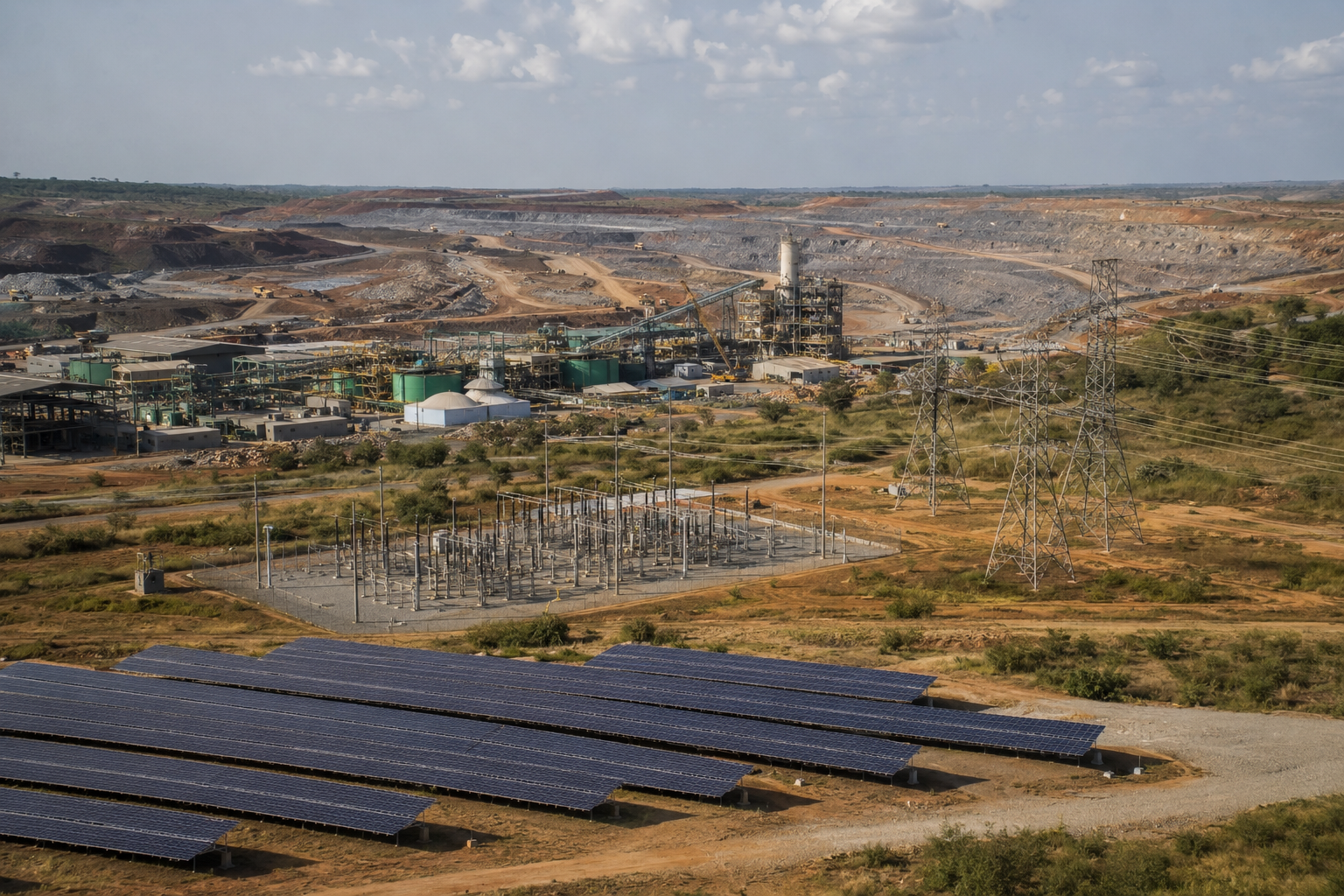
The most instructive data point from the Africa CEO Forum discussions concerns First Quantum Minerals and its Zambian operations. The company is developing approximately 430 megawatts of renewable power capacity linked to its Kansanshi and Sentinel copper mines.
That figure warrants careful attention. A single mining company is developing more renewable generation capacity for its own operations than many African countries add to their national grids in an entire year. That isn't a coincidence or a corporate sustainability gesture. It is the consequence of a rational commercial calculation: the national grid cannot reliably supply the power required for processing and advanced extraction at the scale the operations demand, so the company is solving the electricity problem independently.
First Quantum's approach represents a shift from traditional captive power toward systems designed to enable local processing, which is a meaningful step beyond the purely enclave logic of earlier mining-owned generation. But the structural dynamic it illustrates applies across the continent. In the Zambia-DRC battery corridor, backed by the $3.5 billion Lobito project, governments are exploring shared power and mineral processing capacity. In Namibia, green hydrogen plans are being developed that link renewables, desalination, and critical mineral processing in emerging industrial zones. The pattern is consistent: where industrial mineral processing is attempted at a meaningful scale, the electricity system constraint is being solved privately because the public system cannot yet meet the pace and reliability that industrial operations require.
Why captive power creates industrial islands
From a commercial perspective, captive power is logical. Industrial processing cannot function around an unstable electricity supply, and if the national grid doesn't deliver the reliability required, a mining company with the capital to build dedicated generation infrastructure will do so. This keeps projects operational and processing viable in the near term.
But there is a structural difference between a mine powering itself and a country building an industrial ecosystem, and that difference has historically been decisive in determining whether mineral wealth generates broad-based industrialisation or remains concentrated in extraction enclaves.
Industrial ecosystems emerge from interconnected systems, power, logistics, manufacturing, labour markets, and downstream industries, developing together with sufficient density to create genuine agglomeration effects, not isolated projects. When mining companies retreat into self-contained electricity systems, they solve their own operational problem while inadvertently reinforcing the fragmentation that prevents the wider industrial ecosystem from forming around them. The mine functions, processing plant runs, but the industrial cluster that would generate employment, skills, supplier development, and manufacturing linkages doesn't necessarily emerge because the enabling infrastructure that would support smaller processors, component manufacturers, and service industries remains unavailable at a competitive cost.
The Africa CEO Forum's central question, who moves first, and who absorbs the early risk, to make integrated mineral-energy planning viable, captures this coordination problem precisely. Do governments expand transmission infrastructure before processors arrive to justify it? Do mining companies finance energy systems and bear the cost of capacity that benefits the national grid? Do utilities modernise grids without guaranteed industrial demand that would make the investment bankable? Do financiers support integrated industrial-power infrastructure simultaneously, accepting the complexity that integration requires? No clear continental answer yet exists, and that absence is one of the most significant hidden constraints on African industrialisation.
How other mineral economies solved this and why the comparison has limits
Countries that successfully industrialised around mineral wealth historically developed energy infrastructure and processing capacity together rather than sequentially. Norway expanded hydropower alongside aluminium smelting and industrial chemical production. Chile aligned copper expansion with power infrastructure planning and logistics development. Australia integrated mining growth with large-scale industrial energy systems, port infrastructure, and export logistics built to serve the specific needs of mineral processing at an industrial scale.
The comparison is instructive but requires precision about the conditions it doesn't replicate. Those countries built their mineral economies over decades, with stronger fiscal systems, deeper domestic capital markets, and more mature electricity infrastructure as a starting point, and without the simultaneous pressure to decarbonise, expand access to 600 million people without electricity, and industrialise at speed under expensive capital conditions.
Africa is attempting something considerably more compressed and considerably more complex. The continent is being asked simultaneously to industrialise, decarbonise, expand electricity access, process critical minerals domestically, and modernise grids under conditions of fiscal pressure, high-cost capital, and persistent infrastructure deficits. Each of those objectives is legitimate, but pursued separately, in fragmented institutional frameworks, they risk working against each other rather than reinforcing a coherent industrial strategy.
The coordination failure beneath the policy ambition
The issue that the Africa CEO Forum discussions surfaced isn't electricity scarcity alone. Africa's generation capacity has grown significantly, adding 11.3 gigawatts of renewable capacity in 2025 alone, reaching a total of 82 gigawatts. The constraint is increasingly not generation but the institutional architecture that connects generation to industrial demand.
Mining ministries plan separately from energy ministries, utilities operate separately from industrial policy institutions, and transmission planning rarely aligns directly with the mineral corridor strategy. The incentive structures and planning cycles that govern each domain are different enough that coordination requires explicit institutional architecture rather than organic convergence.
Yet the economics of critical minerals industrialisation increasingly require precisely that integration. A beneficiation mandate imposed without parallel electricity infrastructure planning may succeed in restricting raw exports while failing to create the processing capacity it was designed to incentivise because processors require reliable industrial power that the grid cannot yet provide, and the financing gap for captive power is large enough to exclude all but the best-capitalised foreign operators. The result is the Zimbabwe pattern writ large: processing arrives, but the ownership structure reflects whoever could finance both the processing plant and the energy system required to run it. That is likely to be a major international operator, not a domestic or regional industrial ecosystem.
The Africa CEO Forum's framing of mining and energy as a single planning problem is therefore the right diagnosis. Botswana's Vice President Ndaba Gaolathe, addressing the forum, asked the prior question that often goes unasked before integrated mineral-energy project design and bankability structures are discussed: what does a government need to decide about ownership of critical minerals and energy infrastructure, time horizon, and which risks it must move first to absorb? That sequencing question, which risk must move first, and who absorbs it, is the operational version of the coordination problem. It does not have a universal answer. But it has to be answered specifically, country by country and corridor by corridor, before beneficiation mandates can reliably produce the industrial outcomes they promise.
What integrated planning would actually require
The Zambia-DRC battery corridor, anchored to the Lobito framework, represents the continent's most developed current experiment in integrated mineral-energy planning. Governments and investors are explicitly exploring whether mineral processing and power infrastructure can be planned together, with shared transmission capacity, joint processing zones, coordinated investment timelines, rather than one following the other after a delay that allows enclave structures to solidify.
That experiment is worth watching precisely because it represents the specific institutional innovation that Africa's broader mineral-industrial strategy requires. Not the electricity problem solved independently by a single mining company, or the beneficiation mandate imposed without a parallel grid modernisation commitment. But the deliberate alignment of processing investment, power infrastructure, transmission planning, and financing architecture into a coherent system that can support industrial activity at scale.
Africa's beneficiation debate has focused on who controls the minerals and where processing happens. Both questions matter. But beneath them sits the question that determines whether the policy answers produce industrial transformation or simply relocate extraction: whether the electricity systems required to sustain competitive processing at an industrial scale are being built alongside the processing facilities they are meant to power, or after them, at a pace and cost that leaves industrial ambition structurally dependent on whoever can afford to solve the electricity problem privately.
Mines alone do not industrialise economies. Power systems do.