Who Will Run Africa’s Power Grids? The Hidden Skills Crisis in Africa’s Electricity System
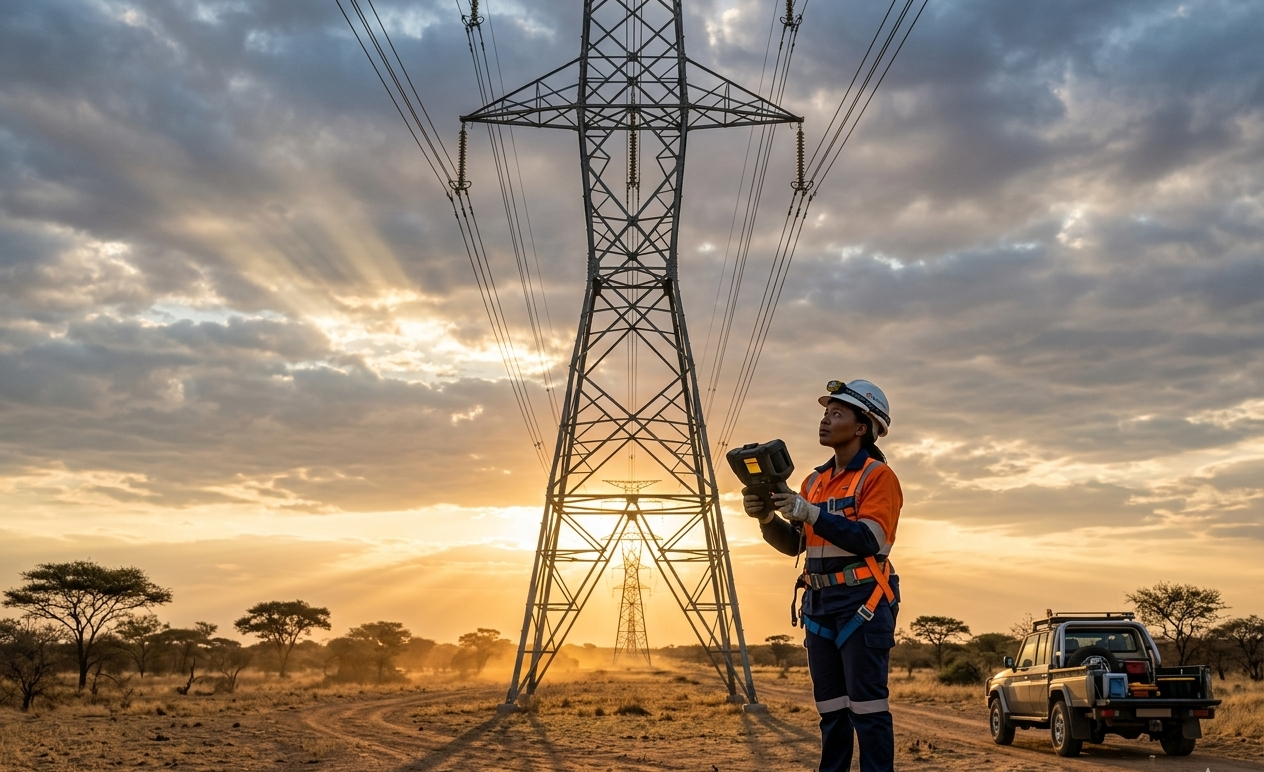
When people talk about Africa’s energy transition, they usually talk about infrastructure: solar farms, wind projects, gas pipelines, hydropower dams, etc.
But after years of working around the continent’s energy sector, I have learned that one of the most important parts of the system is the people, such as the transmission engineers who design the high-voltage lines that move electricity across countries, dispatch planners who decide which power plants should operate at any given moment, and grid operators who sit inside control rooms, watching screens and responding to system disturbances in real time. Without them, electricity does not flow.
But very few can explain how power actually moves across a national grid. Even fewer have been exposed to the disciplines that govern modern electricity systems: grid modelling, dispatch planning, power system stability or transmission design. Yet the global energy transition increasingly depends on these skills.
The International Energy Agency makes a striking observation in its Electricity Report 2026: the world’s energy transition is no longer limited by renewable technology; it is limited by grid infrastructure and system integration. And grids do not run themselves; they require people.
Transmission engineers and the backbone of electricity systems
Electricity systems are often imagined as power plants connected to cities, but in reality, the most complex part of the system sits in between, the transmission networks.
These are the high-voltage lines that move electricity hundreds or sometimes thousands of kilometres from generation sites to population centres and industrial hubs. Designing and expanding these networks is the work of transmission engineers.
Transmission engineers' responsibilities extend far beyond drawing lines on maps. They analyse power flows across entire regions, model system stability under different scenarios and design substations capable of managing large volumes of electricity safely.
As renewable energy expands, their role becomes even more complex. Solar and wind generation are inherently variable. Clouds pass, winds slow, and demand fluctuates. So transmission systems must be designed to absorb these fluctuations without causing system instability or blackouts.
This is why grid expansion has become one of the central challenges of the global energy transition. According to the IEA, more than 2,000 gigawatts of renewable energy projects worldwide are currently waiting for grid connections. For Africa, the stakes are even higher.
Many renewable projects across the continent are located far from existing transmission networks, solar resources are strongest in remote desert regions, and hydropower plants often sit deep within river basins.
Moving electricity from these locations to cities requires careful engineering and long-term planning. Yet transmission engineering remains one of the least visible disciplines in Africa’s energy education systems. Without a strong pipeline of engineers trained in grid design, the continent’s renewable ambitions will struggle to translate into reliable electricity.
Dispatch planners and the choreography of electricity
If transmission engineers design the skeleton of the power system, dispatch planners choreograph its movement.
Electricity can't be stored easily at large scale, so it must be generated and consumed at the same moment. That means someone must constantly decide which power plants should operate and how electricity should flow across the grid.
This is the work of dispatch planners. Inside control centres, they monitor electricity demand, forecast supply fluctuations and determine how different generators should operate to maintain balance within the system.
In systems dominated by fossil fuels, dispatch planning is relatively predictable. Power plants can run continuously, and operators can adjust output gradually. But renewable energy changes that equation.
Solar generation surges during the day and disappears at sunset, and wind output fluctuates with weather patterns. So managing these dynamics requires advanced forecasting tools and highly trained planners capable of responding quickly to changing system conditions.
Regional electricity markets make the job even more complex. Africa’s regional power pools, including the Southern African Power Pool and West African Power Pool, depend on coordinated dispatch across multiple countries.
Electricity may be generated in one country and consumed in another. Dispatch planners must not only think about national systems but also about regional flows. In practice, this means the future of Africa’s power pools depends on the people capable of coordinating electricity across borders.
Grid operators and the real-time guardians of stability
While engineers design the system and planners coordinate generation, grid operators keep the system alive. They sit inside control rooms filled with screens displaying voltage levels, transmission flows and frequency stability across entire national networks.
Their job is simple to describe but extraordinarily difficult to perform: keep the system stable. Electricity grids operate at precise frequency levels, usually around 50 hertz in most African countries. If the balance between supply and demand shifts too quickly, that frequency can drop or spike, potentially triggering cascading failures.
Grid operators must detect these changes within seconds and respond by adjusting generation levels, activating reserve power plants or isolating parts of the network to prevent wider blackouts. This requires deep technical knowledge, intense concentration and constant training.
Yet the pipeline of professionals trained for these roles remains limited across much of Africa. Control rooms cannot be automated away entirely. Someone still has to understand the system.
Why Africa’s training pipeline is struggling
The shortage of specialised grid professionals in Africa is the product of several structural gaps that have quietly developed over decades.
The first is the educational structure. Across many African universities, energy education still reflects the architecture of the twentieth-century energy economy. Mechanical engineering, electrical engineering and petroleum engineering programmes remain strong and well established. In countries with large hydrocarbon sectors, petroleum engineering in particular continues to attract significant institutional investment.
But the disciplines that underpin modern electricity systems, power system modelling, transmission planning, electricity market design and grid stability analysis, are often peripheral within engineering curricula.
Students may graduate with solid electrical engineering fundamentals, yet never study the real-world operation of a national grid or the complexities of balancing electricity supply across interconnected networks.
This gap becomes more visible once graduates enter the workforce. Many young engineers working in utilities or renewable energy companies encounter grid integration challenges long before they have been formally trained to manage them.
The second challenge lies within the institutions that traditionally train these professionals: national electricity utilities. Utilities across Africa operate under difficult financial conditions. Tariffs are often politically sensitive, infrastructure investment is constrained, and training budgets are frequently limited.
The World Bank has repeatedly emphasised that strengthening institutional capacity within utilities is essential for improving electricity sector performance across the continent. Without strong utilities, the pipeline of experienced grid professionals weakens.
The third factor is mobility. Highly trained power system engineers are highly mobile globally. As electricity systems expand in Europe, the Middle East and North America, demand for experienced grid specialists continues to grow. Many African engineers migrate to markets with greater infrastructure investment and professional opportunities.
The result is a persistent paradox: Africa urgently needs grid expertise just as global demand for those skills is rising. Yet this challenge also presents an opportunity for young professionals.
Students who want to position themselves for the future energy system can begin by building power system literacy alongside their engineering degrees. Courses in power system analysis, grid modelling, transmission planning and electricity markets are increasingly available through international universities and professional platforms.
Programmes offered by institutions such as IRENA and global engineering associations provide exposure to emerging grid technologies and renewable integration practices. Also, professional software tools such as PSS/E, DIgSILENT PowerFactory and grid simulation platforms are becoming core competencies for modern grid engineers.
Learning these tools early can significantly improve career prospects. In other words, the grid skills gap is not only a challenge but also a career opportunity waiting to be seized.
Conclusion: the engineers of the transition
Africa’s energy future is frequently described using numbers: megawatts and gigawatts of solar capacity, hydro power potential across major river basins, and wind resources stretching across coastal regions and deserts.
These figures are important, as they shape investment decisions and policy discussions, and help governments articulate ambitious energy strategies. But numbers alone don't build electricity systems. People do.
Behind every functioning grid is a community of professionals who understand how electricity behaves under pressure. Engineers who design networks capable of absorbing future demand, operators who respond instantly to system disturbances, and dispatch planners who coordinate generation across entire regions.
These professionals rarely appear in energy transition narratives. Their work happens in control rooms, engineering offices and planning departments far from the spotlight. Yet they are the people who ensure electricity systems function day after day.
For students and young professionals across Africa, this reality should be encouraging. The global energy transition is creating demand not only for solar developers and renewable investors, but for power system specialists who can design, operate and manage modern electricity networks.
Those who invest in these skills today, studying grid modelling, power system stability, transmission planning and renewable integration, will find themselves at the centre of one of the most important infrastructure transformations of our time.
Africa’s energy transition will ultimately be measured in megawatts, but it will be delivered by engineers. And the next generation of transmission planners, grid operators and system designers may well determine how quickly the continent’s electricity future becomes reality.