Africa is Training the Wrong Workers for the Energy Transition. The Grid Will Pay for It.
By Vincent Egoro|
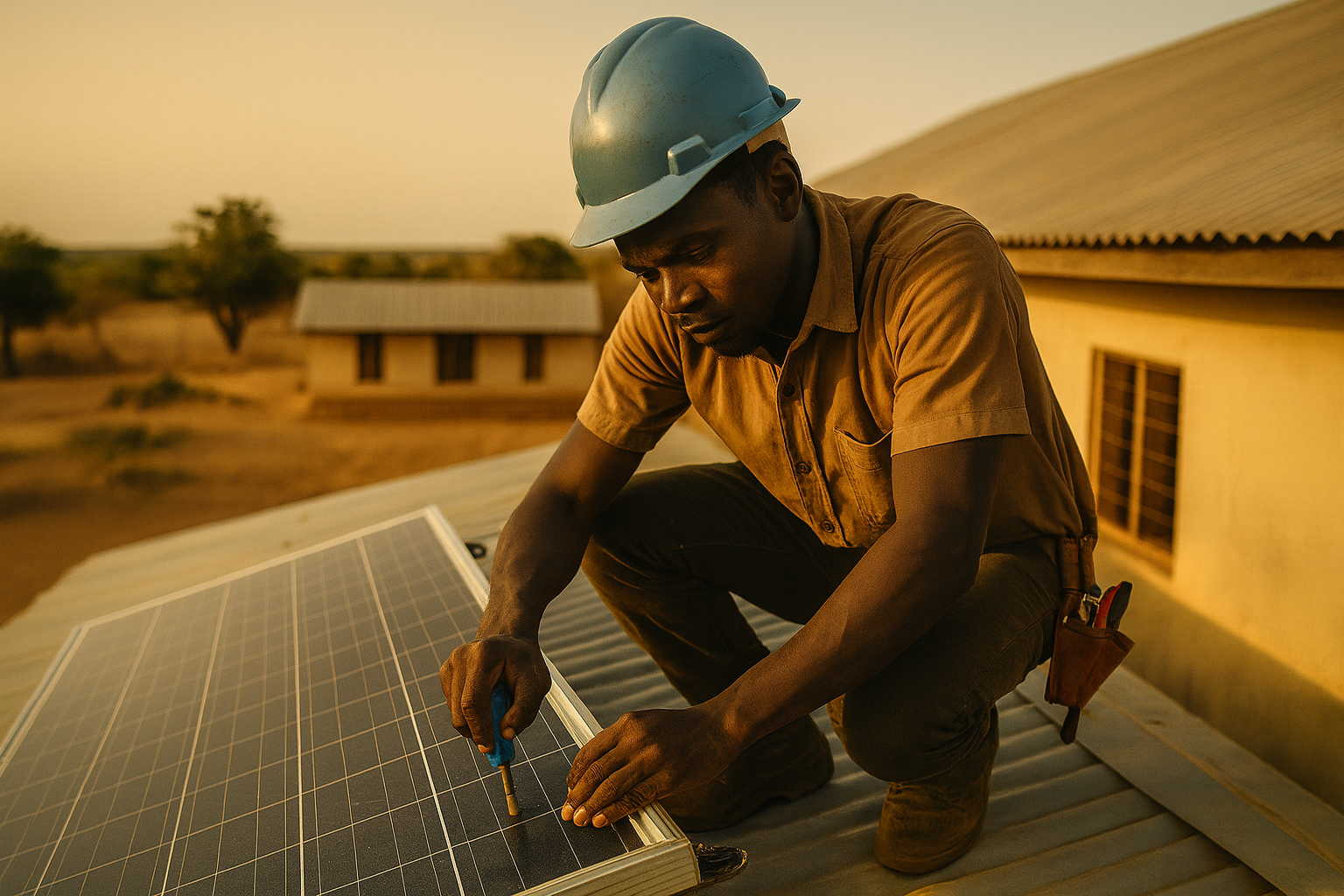
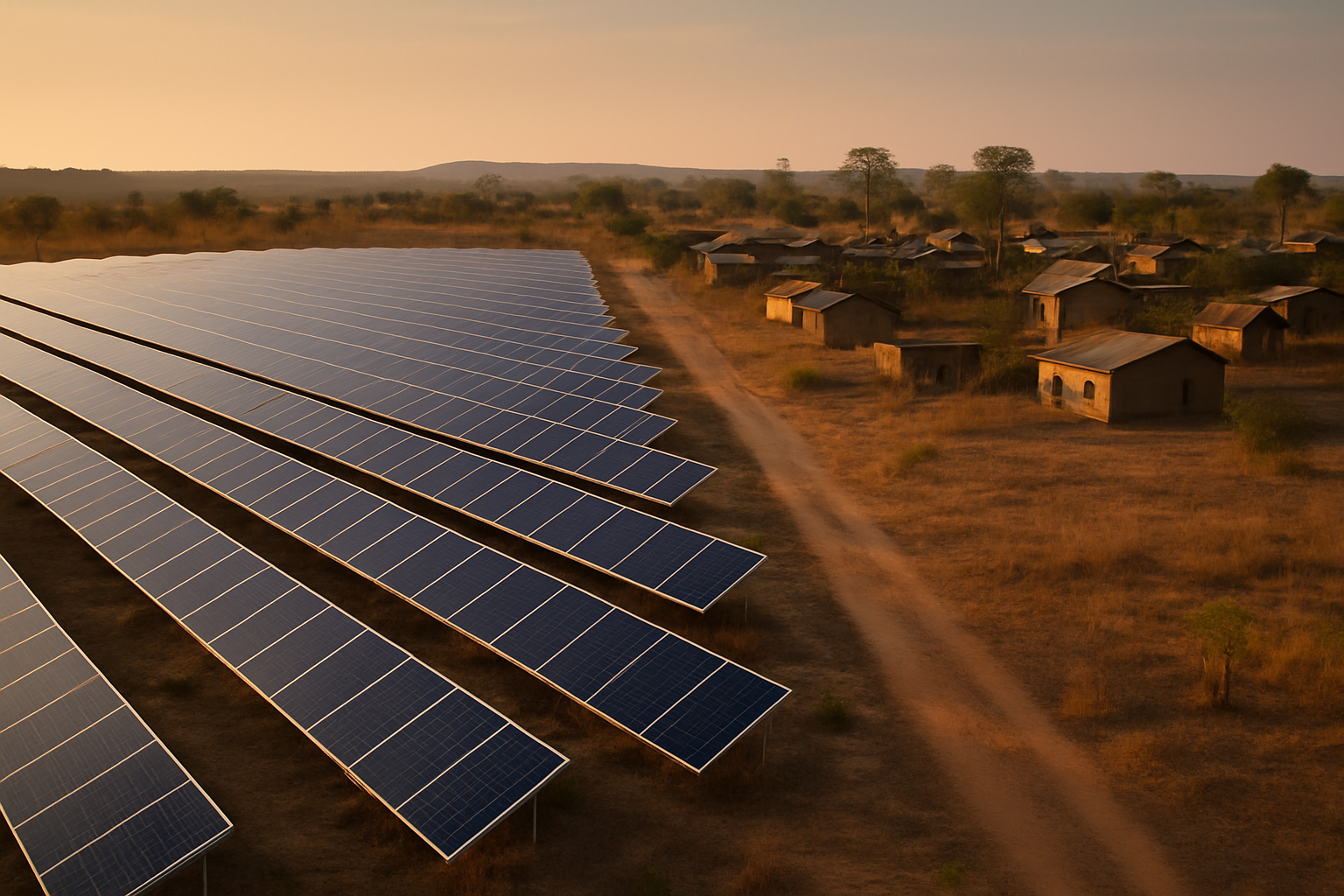
A few years ago, I visited a solar project that had been commissioned and celebrated as a success. The panels were mounted correctly, and inverters were in place. The photographs had circulated through social media, and the project had been counted as a win in several people's portfolios. One year later, parts of the system were no longer functioning reliably.
Not because the technology failed. Because there was nobody within a reasonable distance trained deeply enough to manage what happens after installation, the grid operators, protection specialists, maintenance engineers, dispatch planners, and people capable of integrating variable renewable power into a fragile electricity system over months and years, rather than over an installation period of weeks.
I left that project with a thought I have carried since: Africa was preparing intensively for the installation phase of the energy transition while remaining dangerously underprepared for the operational phase. That observation felt uncomfortable to articulate then because the installation story was genuinely positive, and nobody wanted to complicate it. It feels less comfortable now because three institutional reports published in the first half of 2026 have confirmed it at scale, and because the gap between the two phases is widening faster than the training systems are adapting.
What the reports are actually saying
The Bloomsbury Intelligence and Security Institute's Grid Skills Crisis Report, published in April 2026, identified shortages in grid planning, system protection, high-voltage engineering, transmission operations, and maintenance capacity as among the most significant constraints to renewable energy integration across African electricity systems. The report's framing is precise and worth dwelling on: the binding constraints aren't primarily shortages of people who can install renewable hardware. The shortages are concentrated in the engineering functions that determine whether installed hardware can operate reliably inside national electricity systems over time.
IRENA's Call to Action on Skilling for the Energy Transition, presented at the Agency's sixteenth assembly session in January 2026, identified acute skills shortages as one of the primary constraints threatening to slow the pace of the global energy transition, with the gap concentrated in specialised technical roles rather than installation labour. The AfriCGE Africa Climate and Sustainable Development Outlook 2026 called explicitly for embedding green skills development and institutional strengthening at the core of energy transition planning, linking investments to technical training, utility capacity building, and local industrial development, and concluded that Africa's energy transition will ultimately be judged not only by power generation but by the skills it builds.
What strikes me reading these reports together is not that the diagnosis is new. It is that the same diagnosis has been restated in three separate institutional frameworks in a single year without the policy conversation shifting sufficiently in response. The recognition exists, but training systems haven't caught up with it.
How the skills conversation became too narrow
For years, the dominant message around green jobs in Africa has been straightforward: the continent needs more renewable energy technicians. Solar installers, wind turbine engineers, battery system operators, and clean energy construction workers. That statement is true. Africa does need more people in all of those roles, and the scale of the deployment challenge means the numbers required are genuinely large.
But somewhere along the way, the entire skills conversation compressed into installation labour; panels, mounting, basic wiring, short-cycle technical certification and that compression has produced a systematic mismatch between what training systems are producing and what the electricity system actually needs.
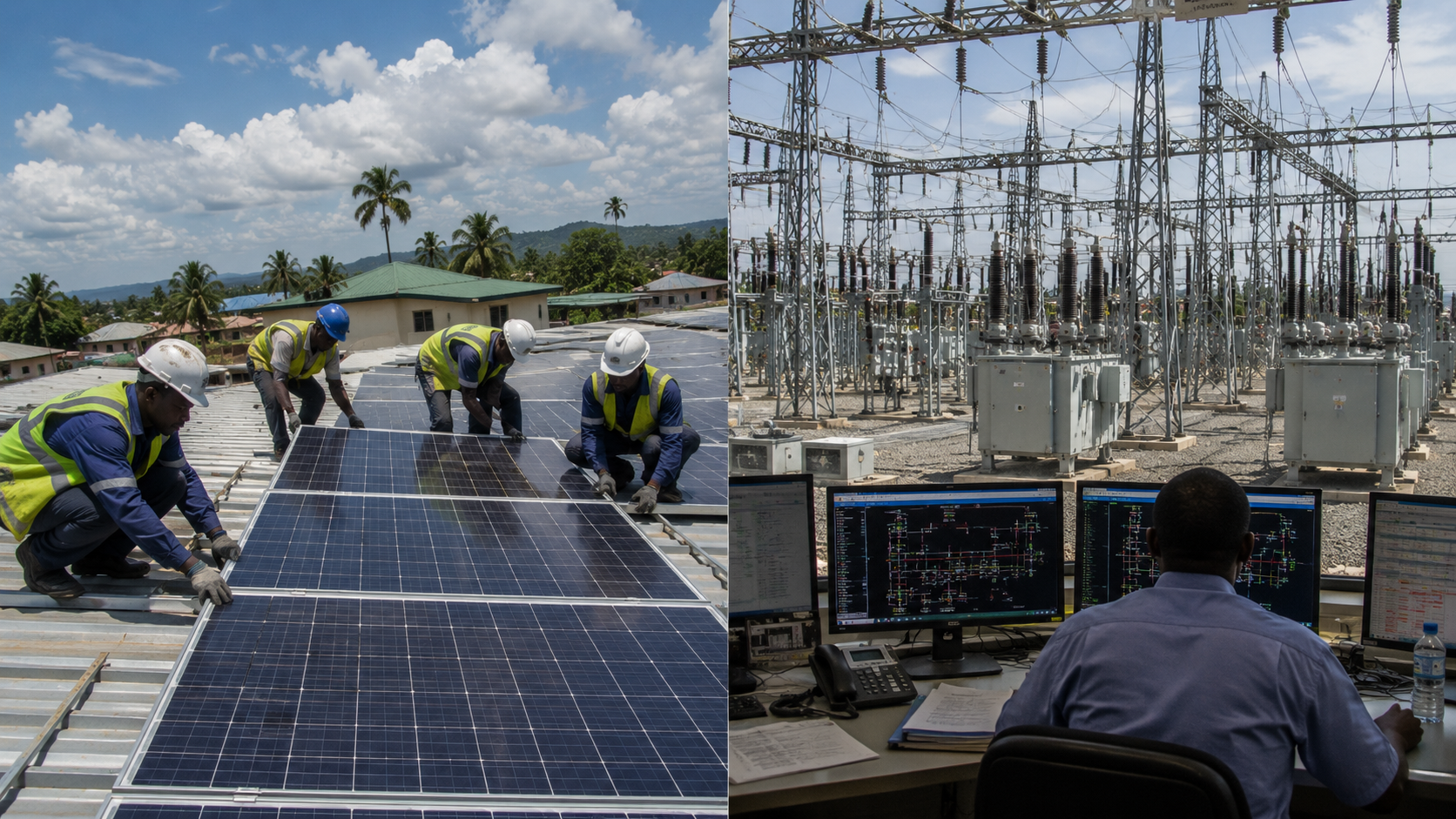
Electricity systems don't end at installation. In fact, installation is often the operationally straightforward phase. The harder work begins afterwards: balancing intermittent renewable generation within existing grid architectures, managing frequency stability and system protection, forecasting load demand across variable renewable inputs, maintaining high-voltage infrastructure, integrating storage systems, and operating electricity networks of increasing complexity as renewable penetration increases. Those functions require different skills from installation, longer training pathways, deeper technical formation, and institutional exposure that short-cycle certification programmes cannot provide.
The BISI report's findings make this concrete. The specialised shortages it identified are in protection engineering, dispatch operations, transmission planning, and system integration. A solar technician installs panels. A grid operations engineer determines whether thousands of megawatts of installed capacity can actually function reliably inside a national electricity system without causing instability, curtailment, or failure. These are not the same profession, and they aren't produced by the same training pathway.
Why training systems keep producing the wrong workers
I don't think the mismatch exists because policymakers are unaware of it, but because training systems respond to what is easiest to fund and measure. And in the current architecture of international energy development, installation technicians are significantly easier to fund and measure than grid operations specialists.
A six-month solar installation programme produces immediate outputs: certificates issued, youth trained, workshops completed, and panels installed. These are visible, politically attractive metrics that connect easily to donor accountability frameworks and short-cycle project finance. The returns are legible within a project cycle.
A grid protection engineer is harder to produce. The formation pathway requires years of advanced technical training, utility-level system exposure, transmission infrastructure access, and institutional environments capable of absorbing and retaining that expertise over the long term. The outputs aren't easily captured in a twelve-month programme evaluation. The development finance architecture that has shaped Africa's skills investment consequently drifts toward the model it can most easily measure and report, and that model consistently produces installation-focused labour at the expense of operations-focused expertise.
This is compounded by the institutional weakness of many African utilities. Grid operators across the continent frequently manage debt overhangs, ageing infrastructure, staffing constraints, and limited technical modernisation budgets. The institutional home required to absorb and deploy highly specialised grid talent is itself under structural stress in many markets. So the labour market naturally concentrates around installation roles because they connect more readily to contractor ecosystems, project finance, and donor-funded technical assistance programmes than to long-term utility employment pathways.
The consequence is predictable. Africa produces visible renewable energy labour faster than it produces system management labour. The installation story accumulates wins. The operational story accumulates quiet failures that rarely make it into the same reports.
The complexity is increasing faster than the training systems are adapting
This gap becomes more urgent as renewable penetration increases. An electricity system dominated by fossil fuel generation behaves differently from one increasingly dependent on solar variability, battery storage, distributed generation, mini-grids, and flexible demand management. The technical complexity of operating the second type of system is substantially higher than operating the first.
Sub-Saharan Africa faces a projected 57 percent shortfall in construction and infrastructure project professionals by 2035, according to Project Management Institute research published in March 2026, even as the continent commits hundreds of billions to infrastructure expansion. That shortfall isn't evenly distributed across skill types. It is concentrated precisely in the planning, integration, and operational specialisms that become more critical as renewable penetration rises.
South Africa illustrates the problem in its most documented form. Grid capacity constraints and skills shortages were identified by renewable industry leaders as the primary obstacles to renewable energy deployment, even as project pipelines expanded. Electrical engineering roles face acute shortages, with nearly 80 percent of advertised positions requiring bachelor's or postgraduate degrees, but only 48 percent of applicants meeting the requirement. Materials engineering graduate numbers have declined since 2009, driven by under-resourced educational institutions and brain drain. These are not Nigerian-specific or South African-specific problems. They are continental structural conditions appearing in their most measurable forms in the markets with the most data.
Universities across the continent compound the problem through institutional inertia. Many engineering faculties still train students for electricity systems designed around centralised thermal generation and older utility models. The energy transition is changing those assumptions faster than curriculum reform cycles allow. Countries risk building renewable infrastructure faster than they build the human systems capable of operating it effectively, and that imbalance produces exactly the failure pattern I have witnessed repeatedly: systems designed to improve reliability beginning to struggle inside the unreliable grids they were meant to stabilise.
The institutional problem is more fundamental than the educational one
The longer I observe this issue, the more certain I become that Africa's renewable workforce problem is not primarily an educational one. It is institutional.
The continent does not only need more engineers, more technicians, or more graduates. It needs functioning institutions capable of training, absorbing, retaining, and continuously upgrading specialised grid expertise over decades. That includes utilities with sufficient financial health to employ and develop technical specialists, transmission operators with the institutional capacity to train protection and dispatch engineers, engineering schools with curricula aligned to the actual requirements of modern electricity systems, vocational systems that connect to utility employment pathways rather than to contractor ecosystems alone, and regulatory bodies capable of setting and enforcing technical standards that create demand for specialised expertise.
The AfriCGE Outlook's call to link investments to technical training, TVET programmes, university reform, and utility capacity building simultaneously is the right diagnosis. The challenge is that all of those systems need to move together, and they are currently moving at very different speeds. Infrastructure investment moves fast when finance is available. Curriculum reform moves slowly. Utility institutional strengthening moves at the pace of fiscal and governance reform. The resulting gap between the electricity system's technical requirements and the workforce available to meet them widens with every megawatt of renewable capacity added, ahead of the operational expertise required to sustain it.
This is the transition challenge Africa has not yet found adequate language for. We measure installation. We count certificates. We photograph ribbon-cutting ceremonies. We rarely measure what happens to systems eighteen months later, in the absence of the operational specialists who were never trained to run them.
The energy transition will not ultimately succeed because of the number of solar panels Africa installs. It will succeed or fail based on whether there are enough people capable of keeping those panels integrated into functioning electricity networks a decade after installation. That is the workforce problem that deserves the same urgency as the installation story has already received and is not yet getting.