Africa's Energy Transition Was Designed Without its Factories in Mind
There is a thought experiment worth trying. Take any major energy transition document produced in Africa over the past decade, whether it's a national energy plan, a sector strategy, an internationally funded programme, and search for the word "industry." In most cases, you will find it mentioned, briefly, somewhere between the access targets and the renewable deployment schedules. You will rarely find it at the centre, and seldom find it treated as the primary purpose around which the rest of the system should be organised.
This reflects a foundational design choice, one that was made, largely without being explicitly made, at the beginning of the transition. The dominant questions that have shaped Africa's energy policy over the past fifteen years have been versions of the same two things: how do we connect more people to electricity, and how do we do so using cleaner generation?
These are legitimate and urgent questions. The energy access deficit across sub-Saharan Africa remains one of the most acute development failures of our era, with hundreds of millions of people still without reliable power, and the case for renewable deployment is equally sound. But somewhere in the process of building a framework around these two imperatives, a third question was ignored: how does Africa power production? How does it use electricity not just to light homes but to run factories, process minerals, manufacture goods, and build the industrial base that structural economic transformation actually requires?
That question, the industrial question, has been present in the policy conversation, but it has rarely been allowed to shape it. And the consequences of that omission are now becoming visible in ways that are difficult to ignore.
Energy policy and industrial policy were built in separate rooms
To understand why the industrial question has been marginalised, it helps to look at how Africa's energy transition has been institutionally organised. In most African countries, energy policy sits within a ministry of energy or power, while industrial policy, to the extent that it is coherent at all, sits within a separate ministry of industry, trade, or investment. These institutions operate on different planning cycles, respond to different international partners, and are measured against different sets of indicators.
The Ministry of Energy are judged on megawatts installed and electrification rates, while the Ministry of Industry are judged on manufacturing output and export growth. Neither is explicitly accountable for the intersection: whether the electricity system is capable of supporting the industrial economy.
This institutional separation has produced a compounding planning failure. Energy infrastructure has been developed according to its own internal logic, generation first, transmission second, distribution third, affordability and industrial suitability somewhere further down the list, without systematic reference to where productive economic activity is located, what it requires, or how the two can be aligned. Industrial zones and special economic zones have been developed by investment promotion agencies without guaranteed access to the quality and volume of electricity their tenants need to operate.
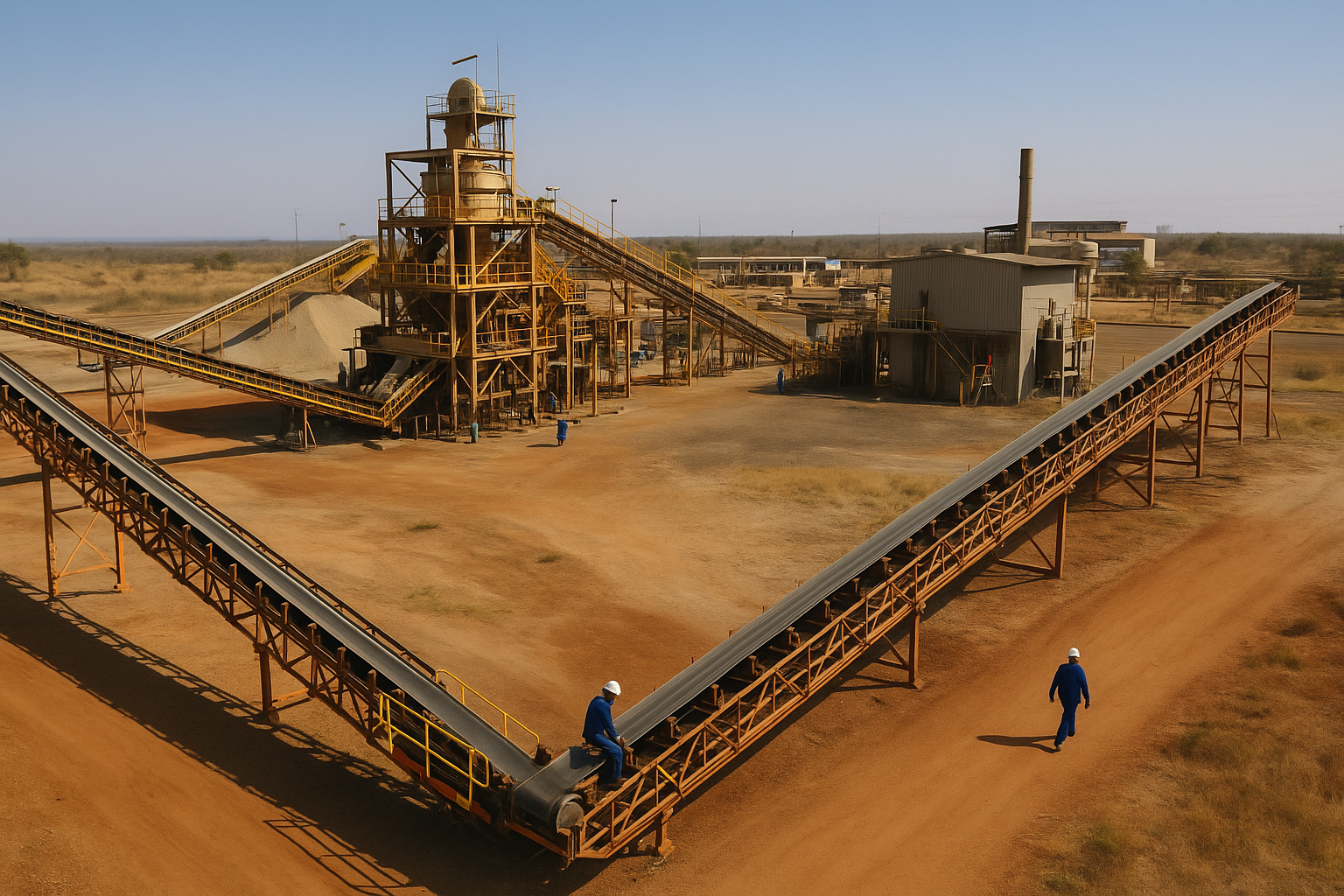
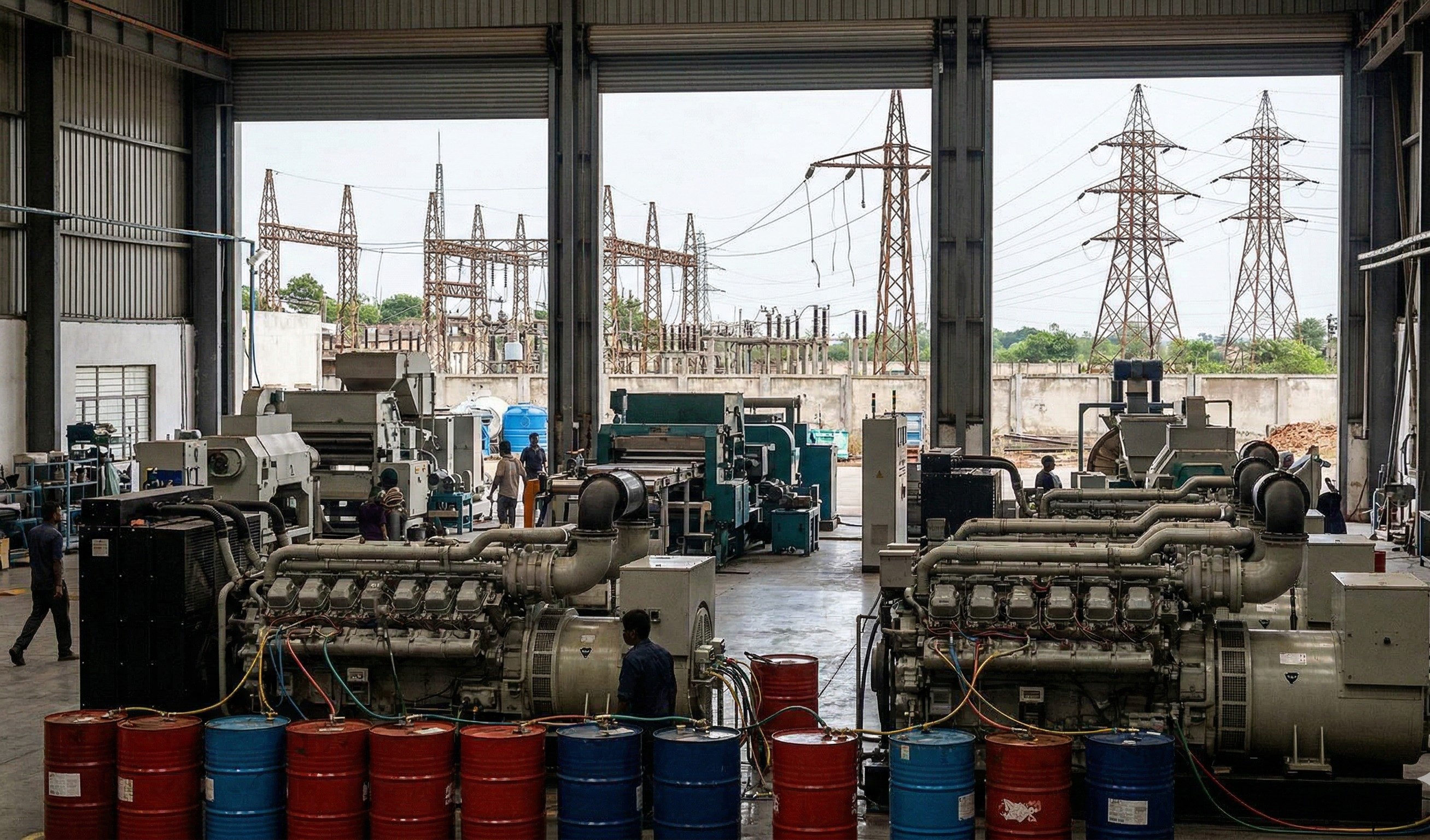
The result, in country after country, is the same: factories that are officially connected to the grid but operating on generators because the grid cannot deliver what they need; processing plants that were designed assuming a certain electricity cost and are now financially unviable because tariffs have moved beyond the assumptions; investors who took commitments about power supply at face value and are now managing a risk they were never told they were taking. This isn't primarily a technical failure, but a governance one, the predictable consequence of two policy systems that were never properly integrated.
What industry actually needs from an electricity system
The electricity requirements of industrial users are fundamentally different from those of households, and treating these two demand categories as variations of the same problem has produced systems that serve neither particularly well. A household needs enough electricity to power lights, appliances, and increasingly a phone or a small business. Its tolerance for intermittency is limited but manageable.
An industrial facility like a cement plant, a textile mill, a mineral processing operation, or a data centre needs something categorically different. It needs large and predictable volumes of electricity, available continuously, at a price that is known far enough in advance to be incorporated into investment decisions and production cost models.
The consequence of intermittency for an industrial user isn't inconvenience. It is machinery damage, production downtime, spoiled inputs, and in some cases, safety risk. The consequence of price unpredictability is the inability to plan, to compete, or to attract the investment that would allow capacity to grow. These aren't refinements to the electricity service. They are prerequisites for industrial participation in the electricity system.
And yet, throughout much of Africa, energy planning has proceeded without treating them as prerequisites. Projects have been commissioned without dedicated industrial offtake arrangements. Tariff frameworks have been designed around household and small commercial users, with industrial pricing treated as a negotiation to be had after the fact rather than a design parameter to be incorporated from the start.
Grid infrastructure has been routed according to population density rather than economic activity, leaving industrial corridors and processing zones underserved or unserved. The system works, in a technical sense, but it simply wasn't designed for what the industry needs it to do.
Renewable energy is not the same thing as industrial energy
The rapid expansion of renewable energy across Africa has generated considerable optimism, and much of that optimism is justified. Solar costs have fallen to levels that would have seemed implausible a decade ago, wind capacity is expanding, and hydropower continues to anchor power systems in East and Southern Africa. The pipeline of renewable projects is real, and the financing, while still insufficient relative to need, is growing. But there is a conflation embedded in the way this progress is discussed that carries significant risk.
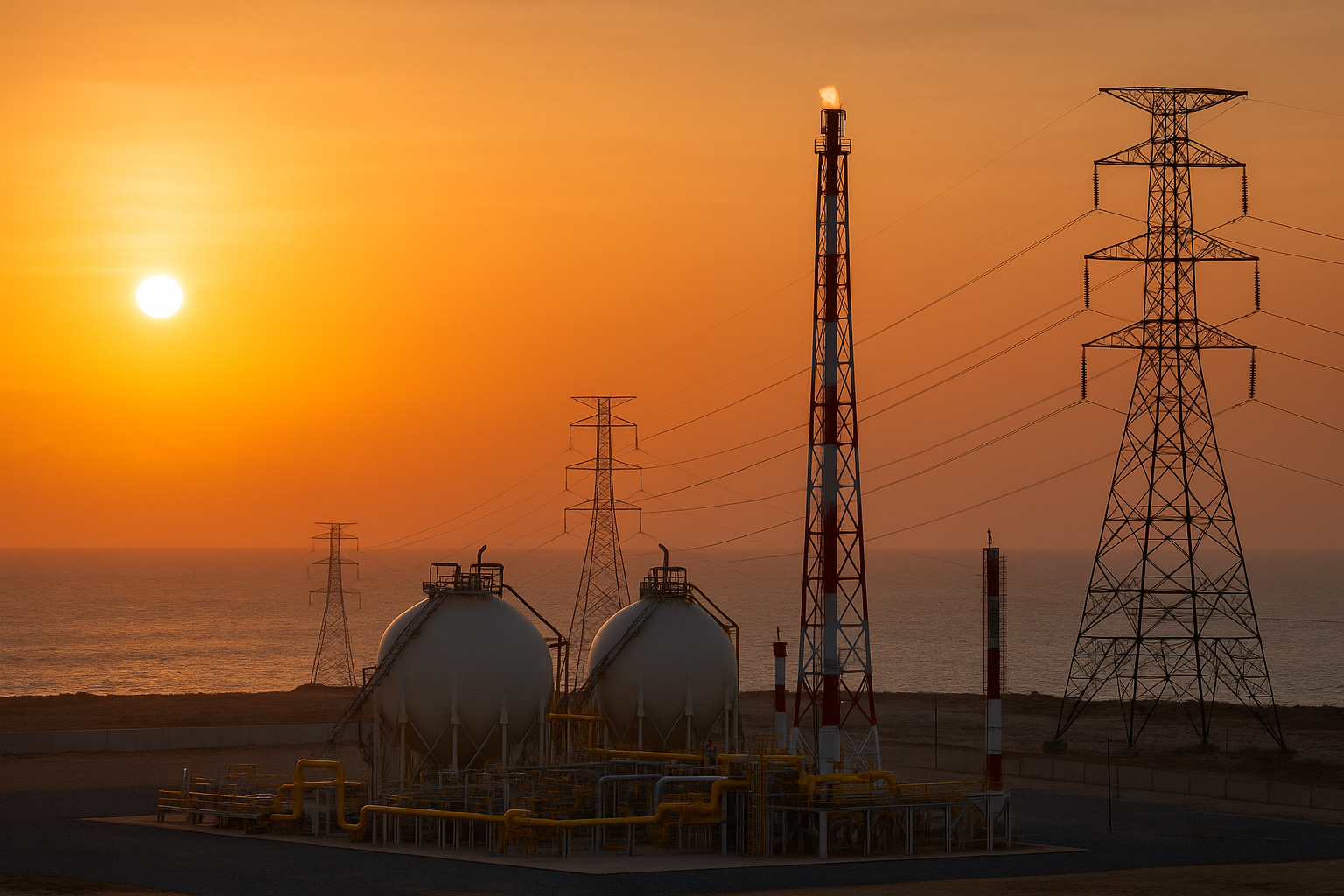
Renewable energy capacity and industrially useful electricity are not the same thing, and the gap between them is structural. Solar generation is intermittent, producing power during daylight hours and nothing at night. Wind output varies with meteorological conditions. Neither, without storage or complementary baseload, can provide the continuous, predictable supply that industrial processes require. The integration challenge is combining variable renewables with storage, flexible demand, and stable baseload to produce a system that can serve industrial users reliably, which is one of the most technically demanding problems in modern power sector development.
It requires sophisticated grid management, significant capital investment in storage and balancing infrastructure, and long-term planning coordination between generation assets, grid operators, and industrial offtakers. In many African countries, these systems of coordination don't yet exist at the required scale. Projects are developed, but they aren't integrated. And without integration, renewable capacity additions don't automatically translate into the industrially useful electricity that economic transformation depends upon. The energy transition, in this sense, risks becoming an exercise in capacity accumulation without the system coherence that makes that capacity economically productive.
The self-generation trap and what it costs the system
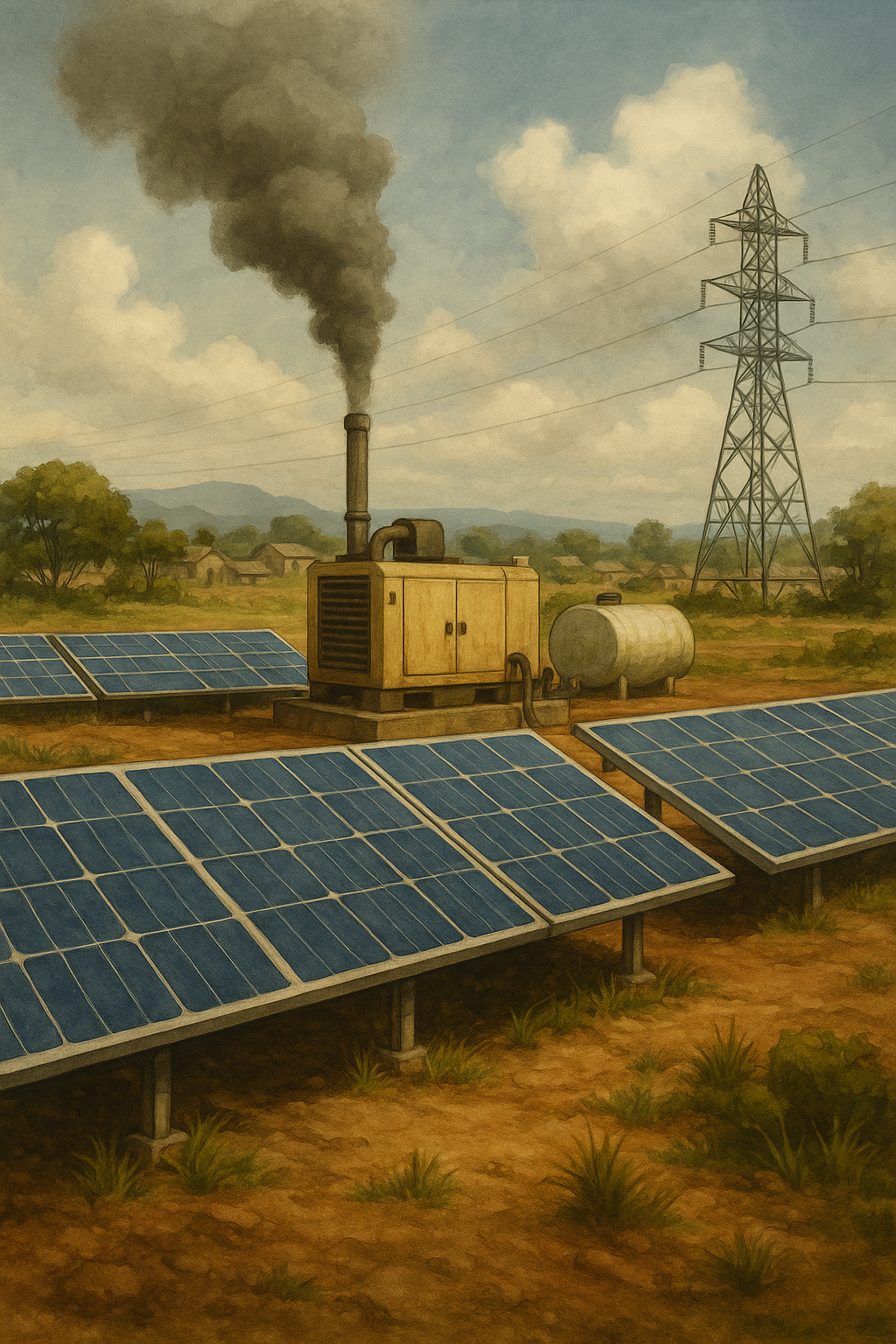
When the national grid fails to deliver what industrial users need, those users respond by generating their own power. Companies invest in captive power plants, private solar installations, diesel generators, and agreements with independent producers that bypass the utility entirely. From the perspective of an individual firm, this is rational. It reduces exposure to grid unreliability and, once the full cost of downtime is factored in, often delivers power more cheaply than the utility tariff.
Each round of deterioration drives more industrial users towards self-generation, which weakens the utility further. What began as a rational individual response becomes, in aggregate, a mechanism that accelerates the failure of the very system it was meant to work around.
Energy planning must be restructured around productive use
The argument here isn't that access and renewable deployment are unimportant. It is that pursuing them without reference to industrial demand produces an incomplete transition that matters enormously for Africa's economic prospects. A continent that electrifies its households but cannot power its factories has achieved a social good and missed an economic transformation, a serious failure, even if it doesn't appear as one in the metrics most energy stakeholders currently use.
Reorientation towards productive use would require:
energy and industrial ministries to plan together against shared outcomes rather than separately against siloed indicators.
grid routing decisions made with explicit reference to industrial geography.
tariff frameworks that treat industrial electricity as a competitive input, not simply a cost-recovery exercise.
renewable projects integrated with industrial offtake arrangements from the outset.
The knowledge and financing instruments exist. What has been missing is the institutional will to reframe the energy transition as an economic project.
Conclusion: The transition will be judged by what it makes possible
There is a version of Africa's energy transition that succeeds on every metric currently used to measure it; electrification rates, renewable capacity, emissions reductions, climate finance mobilised and still fails to deliver structural economic transformation. That version is the trajectory that current planning frameworks, if unreformed, are likely to produce: celebrated in public forums while factories stand idle and processing plants continue exporting raw materials.
The alternative requires a different starting question. Not how do we generate clean electricity, that question now has a growing set of answers, but how do we ensure electricity drives the economic activity Africa actually needs? That question points towards system integration over capacity addition, industrial demand coordination over household connection targets, and institutional frameworks that treat energy policy and industrial policy as inseparable. Africa's energy transition will be judged by whether it changes the structure of African economies. That judgement will be made by what the transition powers.