Why Energy Costs Could Derail Africa’s Mineral Processing Ambitions
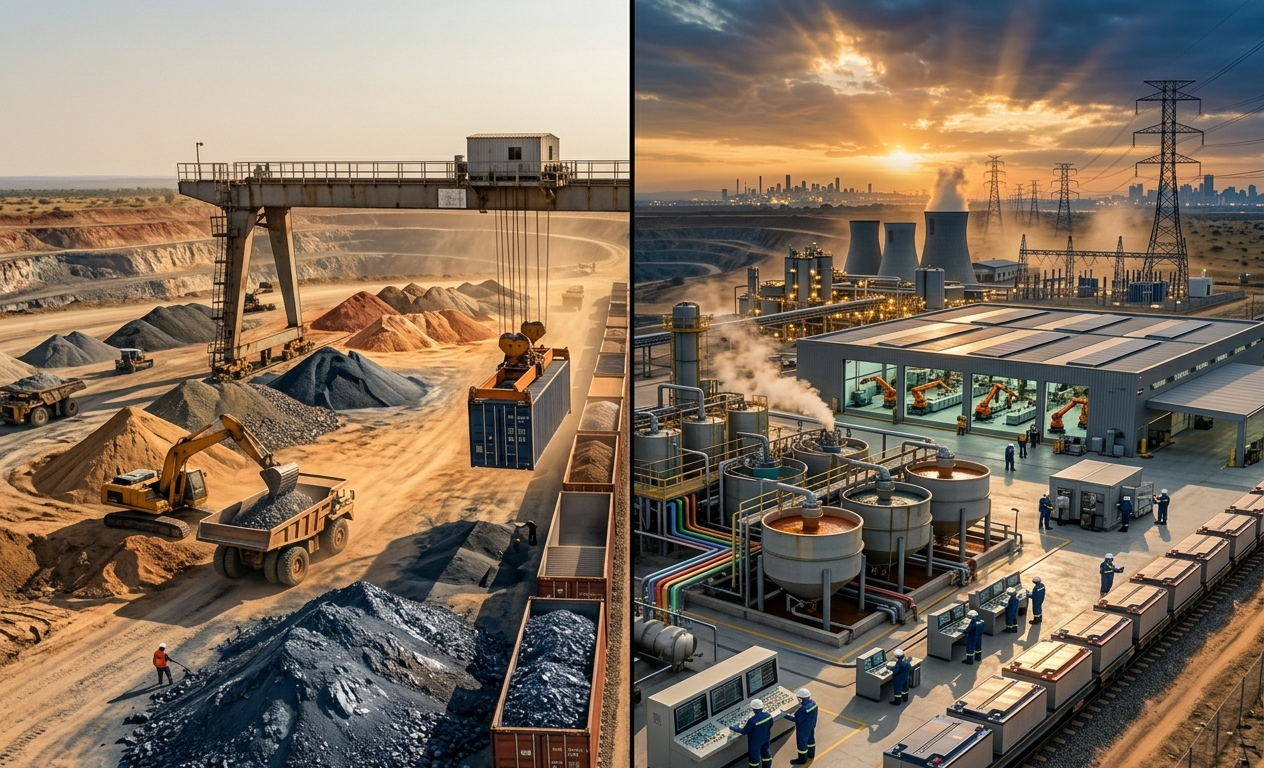
A few years ago, I stood at the edge of a mining site where trucks carried raw minerals out of the ground and onto long journeys toward distant ports, to be processed abroad.
At the time, the conversation around Africa’s minerals was already shifting. Governments were beginning to ask harder questions: Why export raw value? Why not process locally? Why not build industries around these resources?
Today, those questions are louder than ever. But there is another question less visible, less discussed, and far more decisive. What does it actually cost to process minerals in Africa?
Because behind every beneficiation policy, every refinery plan, every industrial ambition, there is a constraint that is rarely visible in speeches or strategy documents. Electricity. Not just whether it exists, but how much it costs.
The economics of processing: where energy becomes decisive
Mineral processing is often discussed as a logical extension of mining, when in reality, it is different. It is an industry that runs on energy.
Turning lithium into battery-grade chemicals, processing cobalt into cathode materials, or refining metals into usable inputs requires energy-intensive operations that must run continuously and precisely. These are not processes that can be paused and resumed without consequence. They depend on stable systems.
In many cases, energy costs make up between 20% and 40% of total processing costs. Globally, this is well understood. Processing facilities are located where electricity is cheap, reliable and abundant. It is one of the reasons why much of the world’s mineral processing capacity is concentrated in a few countries.
For Africa, this creates a difficult starting point. The continent may hold the resources, but processing those resources requires an entirely different economic foundation, one where electricity is available and competitively priced.
Africa’s electricity cost paradox
Africa’s energy story is full of contrasts. The continent has some of the world’s most abundant renewable energy potential. Solar radiation levels are among the highest globally, hydropower resources remain underdeveloped in several regions, and wind corridors stretch across coastlines and inland areas.
On paper, this should make Africa one of the most competitive regions for energy-intensive industry. But the reality is very different.
Electricity costs for industrial users in many African countries are high relative to global benchmarks; tariffs are often elevated, and supply is not always reliable. In some markets, electricity prices reflect inefficiencies across the system from generation to transmission to distribution.
This creates a paradox. Africa has energy abundance, but it doesn't yet have energy competitiveness. And for industries that depend heavily on electricity, this gap matters because processing minerals locally becomes less attractive as energy costs erode margins and reduce competitiveness relative to other regions.
The hidden cost: reliability and self-generation
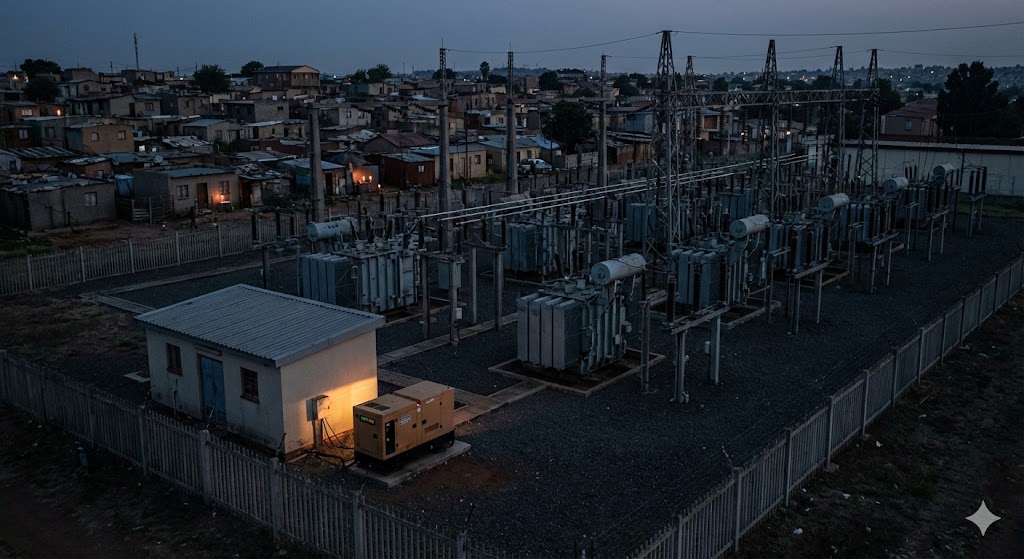
Across many countries, businesses cannot depend on grid electricity alone. Outages are frequent, voltage fluctuations are common, and the power supply can be unpredictable. For many households, this becomes an inconvenience and a constraint for industries.
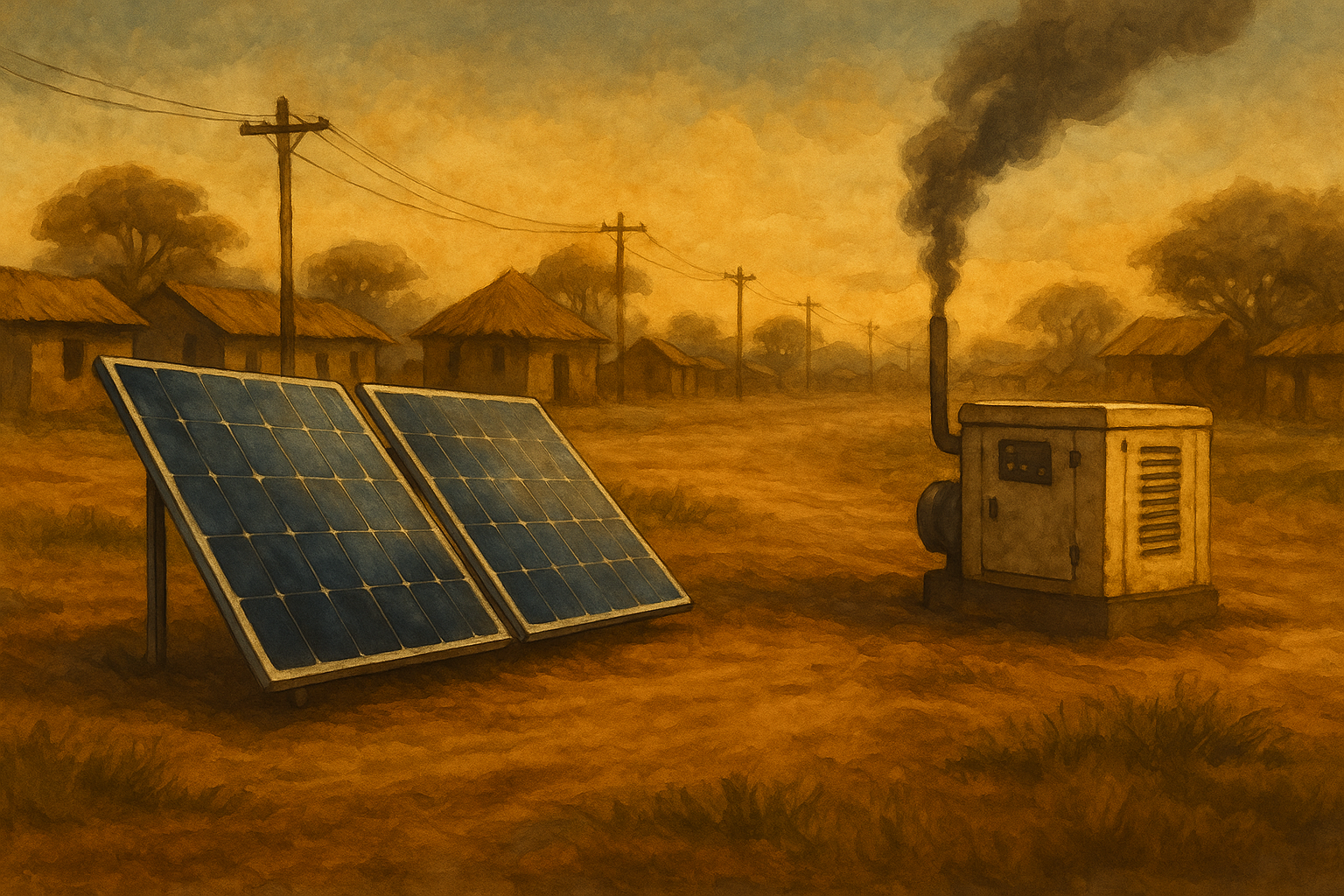
Processing facilities require continuous power, and interruptions can damage equipment, disrupt production cycles and increase operating costs. To manage this risk, many businesses invest in backup generation, typically diesel or gas-powered systems, which creates an additional layer of cost:
fuel expenses
maintenance costs
capital investment in generators
In some cases, self-generation becomes a significant share of total electricity use. The result is that the effective cost of reliable electricity is far higher than the official tariff suggests. And it is this effective cost, not the headline price, that determines whether beneficiation is viable.
Why energy costs shape where value chains develop
Global value chains are shaped by economics, not intention. Mineral processing doesn't happen where resources are located by default. It happens where the cost structure supports it.
Countries that dominate processing combine several factors:
competitive energy prices
reliable infrastructure
stable policy environments
access to capital and technology
Energy sits at the centre of this equation. If electricity is too expensive, processing becomes uncompetitive; if supply is unreliable, production risks increase, and if both conditions exist, investors will look elsewhere.
This helps explain why many African countries continue to export raw minerals despite policy ambitions to move up the value chain. It is not simply a question of will, but of cost. And until the economics of energy shift, beneficiation will remain difficult to scale.
Renewable energy: opportunity or incomplete solution?
Renewable energy is often presented as Africa’s pathway out of this challenge. In many ways, it is, as solar and wind projects are expanding rapidly and costs are falling. Across the continent, we see new projects being developed.
These trends are important. They expand generation capacity and reduce dependence on imported fuels, but they don't automatically solve the problem of industrial electricity. Mineral processing requires power that is:
continuous
stable
available at scale
Renewables, particularly solar, are inherently variable. Without storage or complementary generation, they can't provide a constant power supply. But this doesn't diminish their importance; instead, it highlights the need for system integration.
Renewables must be combined with storage, grid infrastructure and other sources of generation to create reliable electricity systems. The challenge is not adding megawatts, but delivering reliable industrial power.
The policy dilemma: ambition vs competitiveness
African governments face a complex balancing act. On one side is the desire to industrialise to process minerals locally, create jobs and capture more value. On the other side is the reality of global competition.
If beneficiation is pursued without addressing energy costs, several risks emerge. Processing facilities may struggle to compete with international producers. Investors may hesitate to commit capital. Informal or inefficient processing may increase.
In some cases, policies such as export bans or local processing requirements may not achieve their intended outcomes. This creates a tension between ambition and feasibility; beneficiation is economically desirable, but it must also be economically viable. And that viability depends heavily on energy costs.
What would make beneficiation economically viable?
For Africa to scale mineral processing, the economics of electricity must change. And this requires a coordinated approach. Electricity must become more affordable for industrial users, reliability must improve, and transmission infrastructure must expand to connect generation with industrial zones.
Dedicated industrial power solutions may also play a role. Special economic zones with guaranteed electricity supply can provide controlled environments for processing facilities, and regional electricity trade can help balance supply and reduce costs.
Renewables can contribute particularly when combined with storage and firming capacity. But these changes require investment, coordination and time. Beneficiation won't scale through policy alone; it will when energy systems make it possible.
Conclusion: the price of power will decide the value of minerals
Africa’s mineral wealth has created a new wave of optimism. The idea that the continent can move beyond extraction and build industries around its resources is both compelling and necessary.
But minerals alone don't create value; processing does. And processing depends on energy.
If electricity is too expensive or unreliable, beneficiation will remain limited regardless of policy ambition. But if energy costs can be reduced and reliability improved, the continent could begin to capture far greater value from its resources.
Electricity, in this sense, isn't just an enabler of industrialisation. It is the factor that will determine whether Africa’s mineral future is defined by extraction or transformation.