Africa's Solar Boom Runs on Lead. Here Is Why and What Changes When It Doesn't.
Lithium-ion batteries power the global clean-energy story. They sit inside electric vehicles, grid-scale storage systems, smartphones, data centres and the artificial intelligence infrastructure reshaping the global economy, but they aren't, for the most part, the chemistry powering Africa's off-grid solar boom.
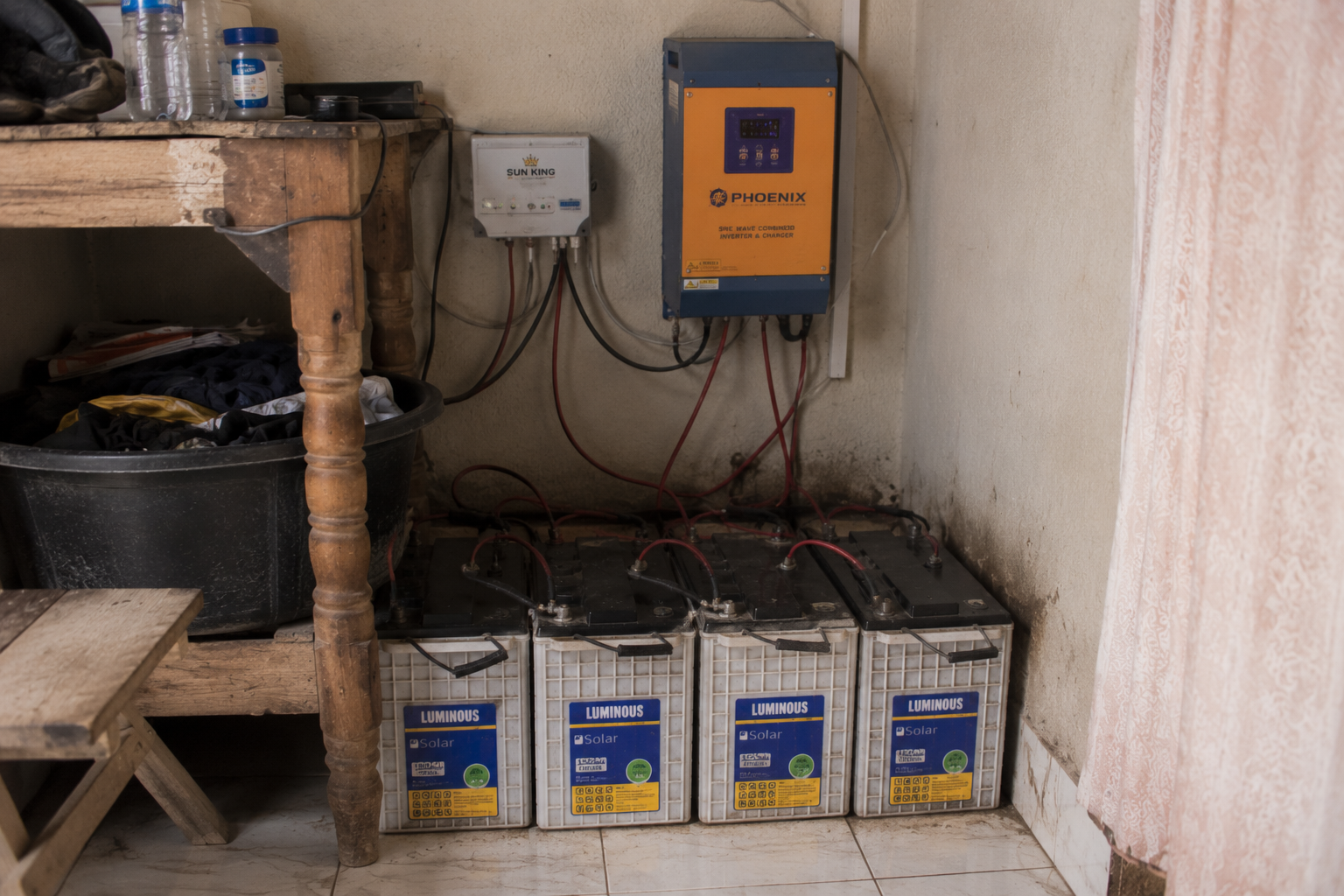
That role still belongs to lead-acid batteries, one of the oldest commercial battery technologies in use, a direct descendant of the same electrochemical design that has powered car engines since the 1850s. The reason has nothing to do with technology preference, but price. In markets where a household energy budget is measured in tens of dollars rather than hundreds, the lower upfront cost of lead-acid remains decisive, even when lithium-ion is, on a full lifetime basis, often the cheaper option.
Why lead-acid still wins at the household scale
The price difference between the two chemistries in African markets is not marginal. In Nigeria in late 2025, entry-level lead-acid solar batteries were priced at approximately $128–$185 per kilowatt-hour. The most competitively priced lithium iron phosphate options available locally started at approximately $142–$215 per kilowatt-hour. Premium lithium brands exceeded $285 per kilowatt-hour and above.
At the level of a small solar home system, the basic unit of off-grid access for tens of millions of households across sub-Saharan Africa, the difference is immediate and concrete. A basic lead-acid battery for a small system costs roughly two to three times less upfront than a comparable lithium unit from a reputable manufacturer. For a household making daily decisions about whether to spend on food, school fees, or energy, that gap is an affordability wall.
The World Bank notes that lead-acid batteries became the historical default for off-grid solar and mini-grid systems because of their maturity, wide availability, and low upfront cost, even as lithium-ion began displacing them in newer commercial installations. That default hasn't yet broken at the household scale, and the price data shows why.
What lead-acid actually delivers, and where it fails
The problem with the affordability argument for lead-acid is that it measures only the purchase price, not the total cost of owning a system in the conditions where it is actually deployed.
Heat is the critical factor. Battery lifespan falls sharply as operating temperature rises. The technical standard confirmed by Sandia National Laboratories and others is that a valve-regulated lead-acid battery loses roughly half its rated lifespan for every 8°C rise above 25°C. Most of sub-Saharan Africa operates at ambient temperatures of 28°C to 38°C. A battery rated for six years under temperate laboratory conditions may last three years in Nigeria, two years in the Sahel, and considerably less in an enclosed space without ventilation, the exact condition in which most household solar batteries are stored.
A USAID and NREL study of battery performance in sub-Saharan African climates, specifically testing systems in Lodwar, Kenya and Niamey, Niger, found that in hot locations without thermal management, both lead-acid and lithium-ion batteries can show similar shortened lifetimes of under four years. Heat, not chemistry alone, determines performance in real deployment conditions.
This changes the cost calculation fundamentally. A lead-acid battery priced at $65 that needs replacing every two years costs $195 in battery purchases alone over a six-year horizon. A lithium iron phosphate battery priced at $130 at the entry level, and lasting five to seven years in the same environment, may cost less in total over that period while requiring fewer maintenance interventions and generating fewer disposal events.
The most common cause of failure in off-grid solar home systems is the battery. SolarAid's research, conducted with the University of New South Wales across Zambia and Malawi, found that 75 percent of all off-grid solar products sold in sub-Saharan Africa since the early 2000s are now non-functional, approximately 110 million lights. The single most common cause of failure was the battery. And 91 percent of those systems were found to be repairable if trained technicians and spare parts were available.
Where the transition to lithium-ion is already happening
The displacement of lead-acid by lithium-ion isn't a future possibility in Africa. It is already happening at the commercial and industrial scale.
Global lithium-ion battery pack prices fell to a record low of $108 per kilowatt-hour in 2025, according to BloombergNEF's annual price survey, 93 percent lower than 2010 prices. Stationary storage packs, the relevant category for solar-plus-storage projects, fell even further: to $70 per kilowatt-hour, a 45 percent single-year decline that made stationary storage the lowest-priced lithium segment globally for the first time. LFP packs specifically, the chemistry preferred for African applications because of its thermal stability and cycle life, averaged $81 per kilowatt-hour globally.
At those prices, lithium-ion now undercuts diesel generators for African telecom towers and commercial mini-grids on a total-cost-of-ownership basis. MTN and Airtel are actively retrofitting tower sites with lithium-ion systems that last up to ten years and reduce the total cost of ownership by approximately 30 percent compared to diesel and lead-acid alternatives. Mining operations in the DRC and Zambia are adopting battery storage for off-grid mine-site power. Utility-scale solar-plus-storage projects in South Africa and Egypt are now specifying lithium-ion as the default storage chemistry.
Africa's battery market reflects this bifurcation. The total market is valued at USD 2.81 billion in 2026 and growing at an 11.55 per cent annual rate, with lithium-ion expanding at 12.4 percent, the fastest-growing segment. At commercial, telecom, mining and infrastructure scale, lithium is winning. At the household scale where Africa's 563 million people without electricity actually live, lead-acid persists, because the affordability gap hasn't yet closed at the unit size and financing terms that matter.
What bridges the gap: financing, not just technology
The history of Africa's solar access market contains an instructive precedent. A decade ago, solar panels were too expensive for most households to purchase outright. The pay-as-you-go financing model, spreading small payments over time through mobile money, made solar home systems accessible to millions of households that couldn't pay the upfront cost in full.
The same logic applies to lithium-ion batteries at the household scale. A lithium battery at $142 per kilowatt-hour may be unaffordable as a single purchase for a rural household in northern Nigeria. Spread over twenty-four months through a PAYG structure at a payment equivalent to what the household currently spends on kerosene or mobile charging, it may be accessible. Several companies operating in East and West Africa are beginning to structure lithium battery financing this way, though the model has not yet reached the scale needed to displace lead-acid as the default chemistry for lower-income solar users.
Until it does, the technical superiority of lithium-ion is commercially irrelevant at the household scale. Africa's battery transition will be decided by whether better batteries can become affordable at the right unit size, with the right payment structure, before cheaper batteries generate a larger and longer-lasting waste crisis.
The cost that the affordability argument excludes
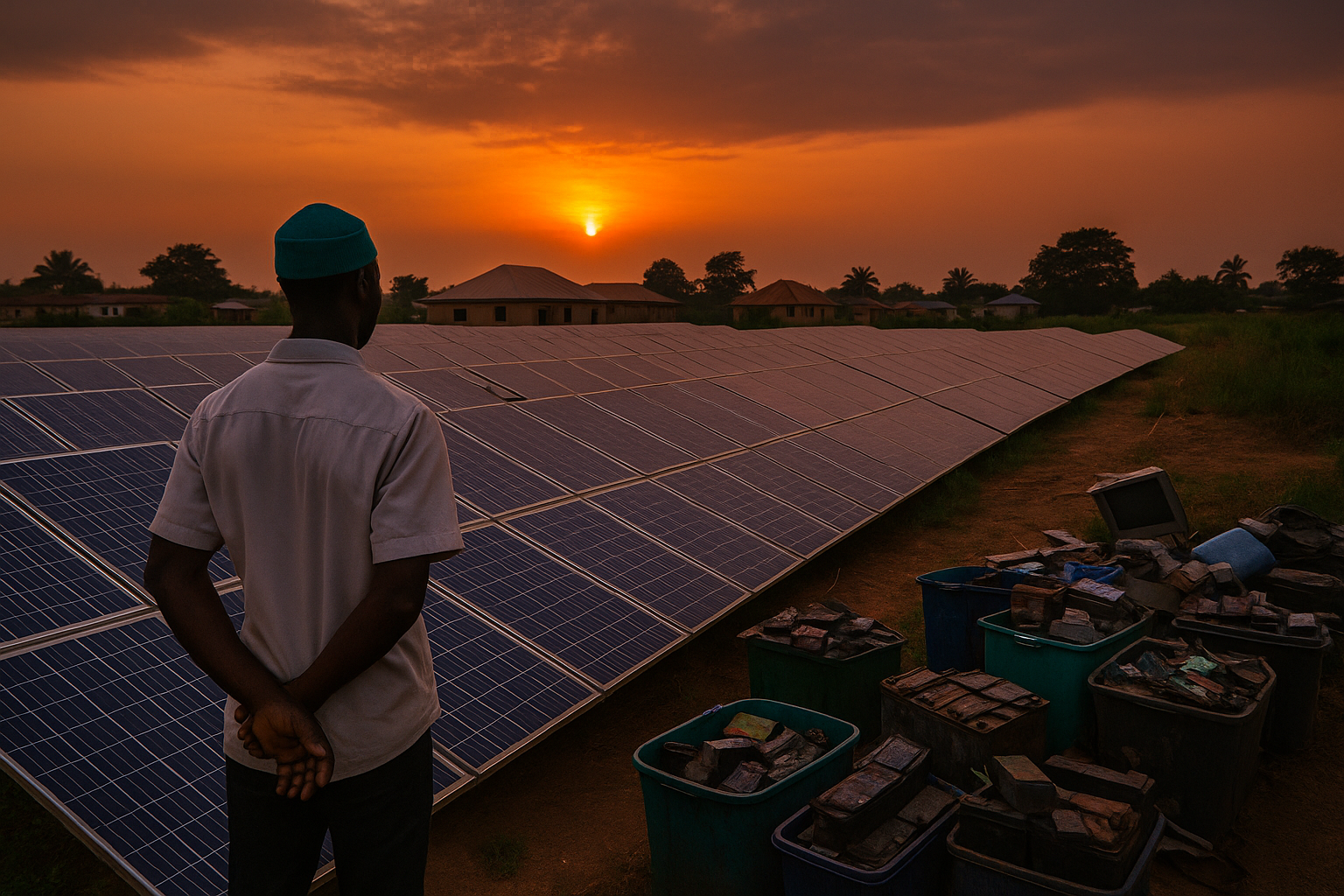
Lead-acid dominance at the household scale creates one consequence the solar access story rarely addresses: a rapidly growing stream of toxic battery waste, generated roughly every two to three years in communities that have almost no formal infrastructure for handling it.
The Center for Global Development estimates that off-grid solar systems in sub-Saharan Africa generate between 250,000 and 1.5 million tonnes of used lead-acid battery waste annually, accounting for 13 to 47 percent of all lead-acid battery waste in the region. Most of it enters the informal sector through scrap dealers, backyard smelters, and unregulated workshops without pollution controls. ETA has previously documented the health consequences of that informal recycling chain in detail.
Lithium-ion won't eliminate all end-of-life challenges, because it introduces its own material questions around cobalt sourcing, lithium mining, and recycling infrastructure. But a longer-lasting battery, one that serves a household for seven years rather than two, means fewer disposal events, failed systems, and a smaller cumulative waste stream per household served. The transition at the household scale, when it comes, will change the waste equation.
Lead-acid batteries dominate Africa's off-grid solar market because they solve the affordability problem. They make solar storage reachable at the unit size and price point that the household market requires. But they also create another problem: short lifespans, high replacement frequency, maintenance demands, and a growing stream of hazardous waste whose environmental and health costs are absorbed by the communities least equipped to bear them.
Lithium-ion is already winning where capital is available and lifetime economics drive the decision. The unresolved question is whether financing innovation can bring that chemistry transition to the household scale before the cheaper option becomes a larger crisis.