Does Article 6 Really Make African Power Projects Bankable?
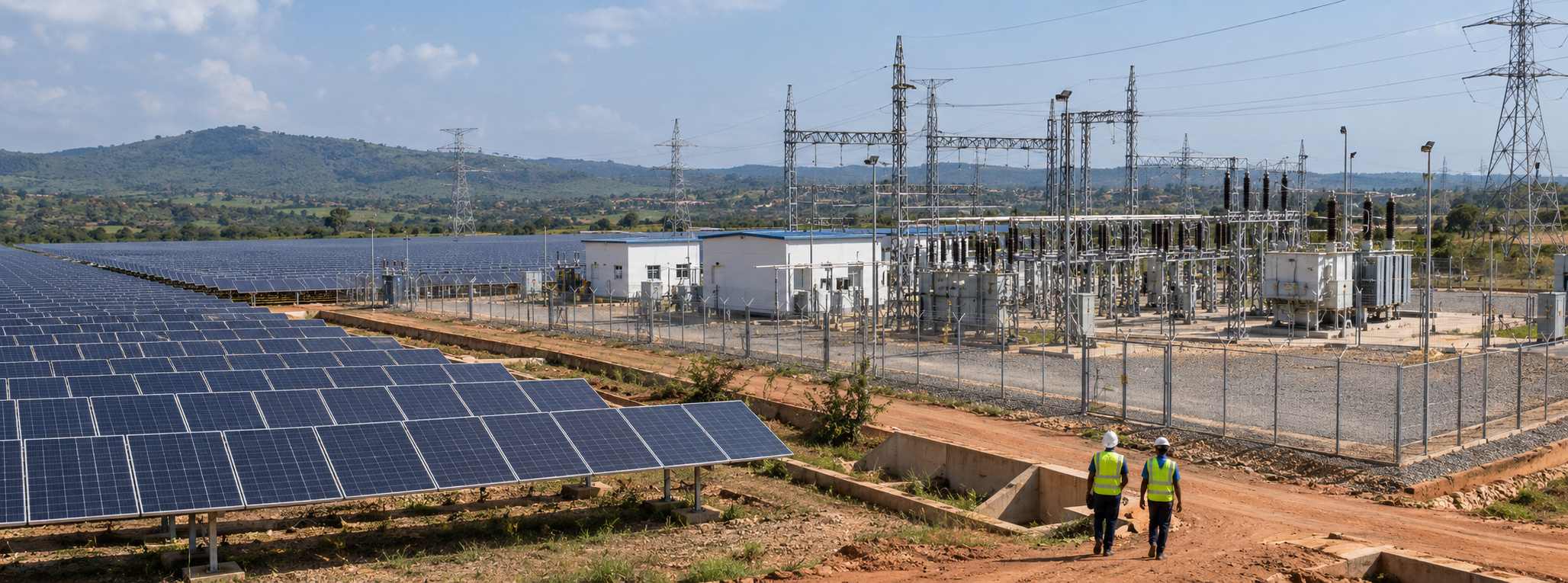
Ghana spent years building something no photograph of a solar farm can show: a registry, authorisation procedures, carbon-accounting rules, bilateral agreements with foreign governments, and systems for deciding which emissions reductions the country can afford to sell and which it must keep for its climate target. In 2025, that largely invisible machinery produced a tangible result.
Ghana completed the full authorise-issue-transfer-report cycle on 11,733 tonnes of internationally transferred emissions reductions to Switzerland, becoming the first African country to run the entire Article 6.2 process end to end. By September 2026, Ghana had authorised 11 projects representing 12.7 million tonnes of carbon dioxide equivalent, more than half its current Article 6 carbon budget, with a further 91 projects sitting in the national pipeline across clean cooking, renewable energy, electric mobility, waste and nature-based solutions.
Behind these figures sits a genuinely new source of finance for African electricity projects. A solar farm, wind project or mini-grid that reduces emissions can, if those reductions are measured, verified and authorised, sell them to another government or a regulated buyer, earning a second revenue stream alongside its electricity sales. The harder question is whether that second stream can be the difference between a project stuck on a spreadsheet and one that reaches financial close.
Article 6 is three mechanisms, not one
Article 6.2 lets countries cooperate directly: Ghana authorises emission reductions and transfers them to Switzerland as Internationally Transferred Mitigation Outcomes, or ITMOs, with governments building the framework and individual projects operating inside it. Switzerland, Japan, Singapore and South Korea have been among the most active buyers globally. As of early September, the UNEP Copenhagen Climate Centre's Article 6 Pipeline counted 112 bilateral agreements worldwide involving 65 countries, with Africa accounting for 35 agreements across 12 countries.
Article 6.4 works differently: a centralised, UN-supervised crediting system, now called the Paris Agreement Crediting Mechanism, where projects register against UN methodologies rather than a bilateral deal. It crossed a real threshold on 26 February 2026, when the body supervising it approved its first credit issuance: 60,000 credits from a clean-cooking project in Myanmar, with the Supervisory Body's chair noting the updated, more conservative calculations produced roughly 40 percent fewer credits than the old Clean Development Mechanism would have generated for the same activity, a deliberate signal that the new system prioritises integrity over volume.
For electricity developers specifically, a more consequential milestone arrived five months later: on 30 July 2026, the Supervisory Body adopted the mechanism's first methodology covering grid-connected renewable power, opening the route for eligible new solar, wind, hydropower and geothermal plants to seek credits directly, though methodology eligibility is a starting gate, not a guarantee of registration or issuance. Article 6.8 covers cooperation that doesn't involve credit trading at all, and is largely irrelevant to project finance. For electricity, 6.2 and 6.4 are the tracks that count.
Why the accounting rule is what gives a tonne its value
Suppose an eligible Ghanaian project prevents one tonne of carbon from entering the atmosphere. Ghana can count that reduction toward its climate target, or authorise it for international transfer. It cannot do both. If the tonne is transferred, Ghana has to make a corresponding adjustment to its accounting so it no longer claims that same reduction, and the buyer can then use it for whatever purpose the agreement specifies.
That rule sounds like paperwork, but it is the entire market. Without it, both countries could claim the same tonne helped hit their targets which is the credibility problem that undermined earlier carbon-market generations. Singapore's implementation agreement with Ghana requires a corresponding adjustment and lays out the sequence: project design, validation, authorisation, verification, then the adjustment itself, that every credit has to pass through. That sequence is why an authorised Article 6 credit tends to command more confidence than an ordinary voluntary carbon credit: the buyer isn't purchasing a claim that emissions fell somewhere. It's purchasing a reduction that has passed through a sovereign accounting system built specifically to stop double counting.
How the money actually reaches a project
UNDP describes the mechanism as payment for results: developers invest upfront, then receive payment once ITMOs are verified, and UNDP's analysis suggests the private investment such programmes unlock can run several times larger than the eventual carbon payment itself. But Article 6 doesn't hand a developer a construction budget before the solar farm exists. The project still needs equity, debt, permits and a grid connection, the same sequence ETA has explained in detail elsewhere for African energy finance generally.
Carbon revenue sits alongside that structure rather than replacing it: it raises forecast cash flow, improves debt-service coverage, and, where the future carbon sale is sufficiently certain, helps persuade lenders there is more revenue available to repay the financing. To make the scale concrete: a project generating 20,000 verified tonnes annually would earn roughly $500,000 a year at $25 a tonne, or $800,000 at $40. There is no single global ITMO price; it depends on the buyer, the methodology and the country's authorisation terms. But a related compliance market gives a sense of what scarcity does to value.
Sylvera estimates roughly 300 million credits could potentially qualify for aviation's CORSIA scheme, yet only around 38 million had cleared the two hurdles: a host-country letter of authorisation and either a corresponding adjustment or qualifying insurance, which make a credit genuinely usable, with Sylvera's scenario analysis putting eligible prices between $15 and $53, median around $33. Scarcity of properly authorised supply, not simply the existence of a certified tonne, is what drives the premium.
Sovereignty is the part project developers don't control
Selling an ITMO carries an opportunity cost: once transferred with a corresponding adjustment, Ghana can no longer use that reduction toward its NDC. Ghana has built explicit eligibility rules around this, requiring projects to sit inside relevant conditional NDC programmes and excluding certain measures entirely from international transfer because it intends to keep them domestically. A developer can have an excellent project and an interested foreign buyer and still have no automatic right to an ITMO, because the host government has to be willing to authorise the transfer, and Ghana's pipeline shows how tight that filter is: 91 projects waiting, only 11 actually authorised by mid-2026. For a lender, that distinction is everything. Carbon revenue already authorised and contracted can be modelled with real confidence. Carbon revenue depending on a future sovereign decision gets discounted heavily, or excluded from the model entirely.
Africa's real bottleneck is institutional, not diplomatic
Article 6 has moved fast at the negotiating table, but implementation has moved slower. The Article 6 Implementation Partnership reported in June that 112 bilateral arrangements existed globally, yet among 100 countries examined, only 14 had both authorisation and tracking systems in place, and just 23 had submitted the initial reports the UN system requires. A functioning national Article 6 capability needs an authority empowered to approve projects, rules defining which sectors qualify, a registry that can identify every tonne, measurement and verification capacity, and officials able to make corresponding adjustments without jeopardising the country's climate commitments.
Ghana has built most of this, running five bilateral agreements and 44 Article 6.2 activities behind its Carbon Market Office. Kenya has done the same, with five bilateral agreements and an established authority. Nigeria, carrying Africa's largest electricity access gap, had no bilateral Article 6.2 agreement or activity recorded as of early September, though it has designated an authority and approved four activities under the separate 6.4 track. The DRC shows a similar split: no bilateral 6.2 activity, but two host-approved 6.4 projects and submitted participation requirements. These countries aren't doing nothing. They sit at earlier stages of a build-out that rewards whoever finishes it first, and as of this dataset, only two African countries, Madagascar and Ghana, had actually recorded an international ITMO transfer. The agreements are arriving faster than the tonnes.
A second chance Africa cannot afford to waste again
Under the Kyoto Protocol's Clean Development Mechanism, Africa captured less than 3 percent of registered projects globally, a history that helps explain why African governments are moving with real urgency now. Article 6 was partly designed to correct that: it gives host countries more control, ties transactions to national commitments, and builds in the double-counting safeguard the CDM never had. Africa is entering earlier this time, with 35 bilateral agreements across 12 countries and 91 host-approved 6.4 activities spanning 24 countries. But the risk the continent faces isn't a repeat of total exclusion. It's a narrower, more familiar pattern: capital following institutional readiness rather than electricity need, rewarding Ghana and Kenya's registries while Nigeria, the DRC and Ethiopia, the countries with the deepest access deficits, wait for the systems they still need to build. VCMI's new partnership with the Eastern Africa Alliance on Carbon Markets, launched in September, is built around this gap, helping governments construct the strategies and institutional capacity Article 6 participation actually requires.
When the Carbon Markets Africa Summit opens in Kigali on 13 October, the real test for the electricity sector won't be integrity debates or price forecasts. It will be simpler: does the carbon contract arrive early enough, and with enough certainty, for a bank to actually put it into a project-finance model? Does it move the debt-service coverage ratio? Does it let a mini-grid developer charge a lower tariff? Does it push a nearly bankable solar project across the line to financial close? If it does that consistently, Article 6 becomes energy infrastructure finance, not carbon accounting. If it only rewards the countries already capable of running the paperwork, it will have reproduced a familiar shape in a new mechanism, one this desk has argued applies just as much to workforce and regulatory capacity as it does to carbon registries.