How Electricity Actually Crosses Borders Between African Countries
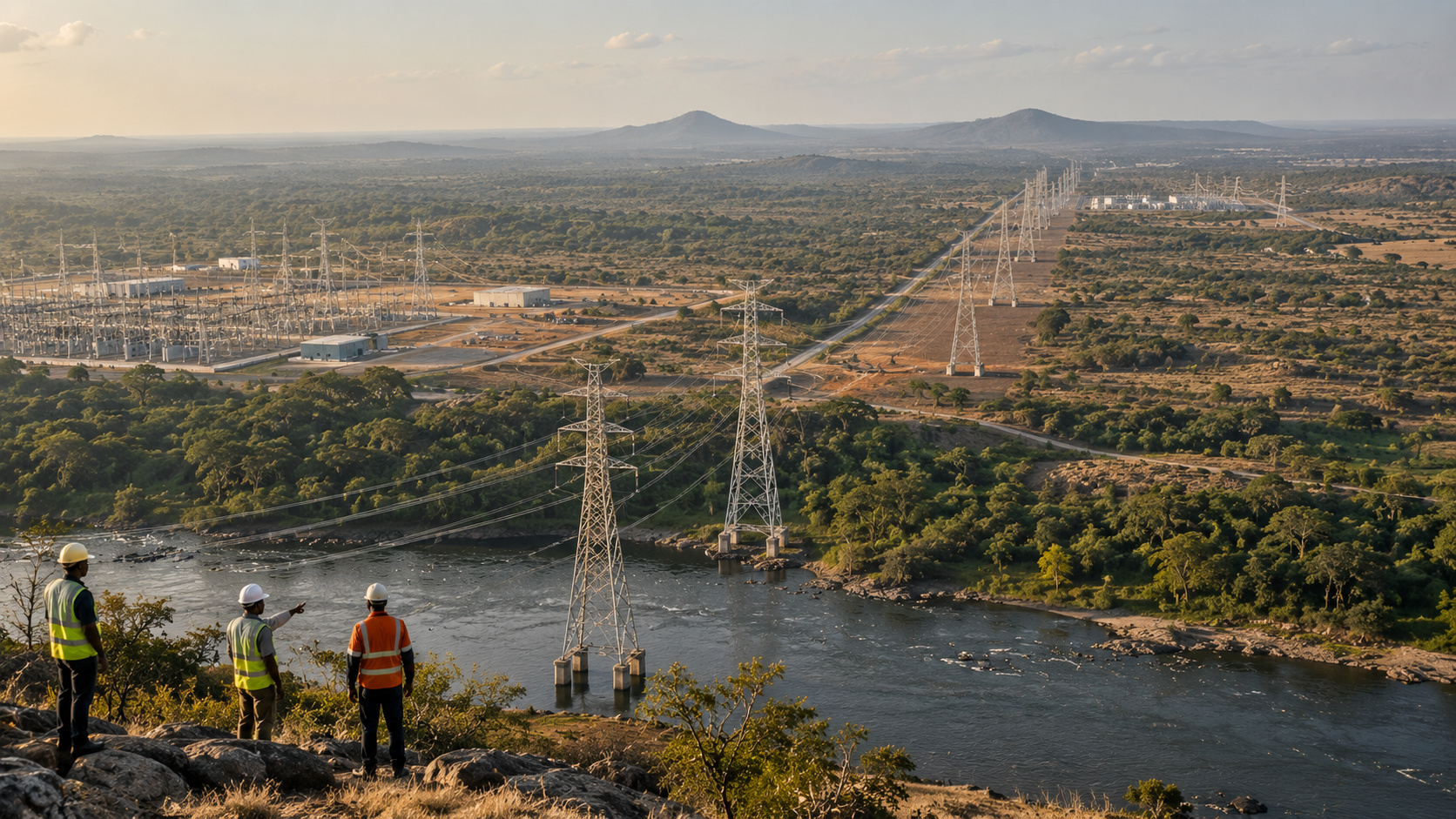
In June 2026, electricity traders in Southern Africa agreed deals for 137.4 gigawatt-hours of power in the region's day-ahead market, but only 97.4 gigawatt-hours actually moved. The shortfall wasn't a lack of sellers; the Southern African Power Pool had received more than three times as much electricity for sale as buyers wanted, nor was it simply price. Almost 29% of the electricity already matched between willing buyers and sellers couldn't be traded because the transmission network couldn't carry it, with the Zimbabwe-Zambia interconnector identified as the main constraint.
That small episode contains most of what is needed to understand how electricity actually crosses an African border. A country needs power. Somewhere else, a utility has power to sell. They agree on a price, but a contract doesn't make electricity move: transmission capacity has to exist, grid operators must approve the schedule, the system has to stay stable, someone has to pay for the networks the power passes through, and meters and settlement systems must later confirm what was actually delivered. Cross-border electricity trade isn't simply the buying and selling of power. It is the coordination of contracts, grids, markets, and trust, and Africa is now trying to do much more of it.
You cannot put electricity on a truck
Electricity behaves differently from any other commodity Africa exports. Copper leaves Zambia on a train; Nigerian gas leaves on a vessel. Once power enters an interconnected grid, it carries no marker showing which plant or country it came from, and it flows according to the physics of the network rather than the terms of a contract. If Côte d'Ivoire agrees to sell electricity to Liberia, the two utilities can settle on volume, timing and price, but system operators still have to ensure enough generation is injected and that Liberia can withdraw the equivalent amount without destabilising the grid.
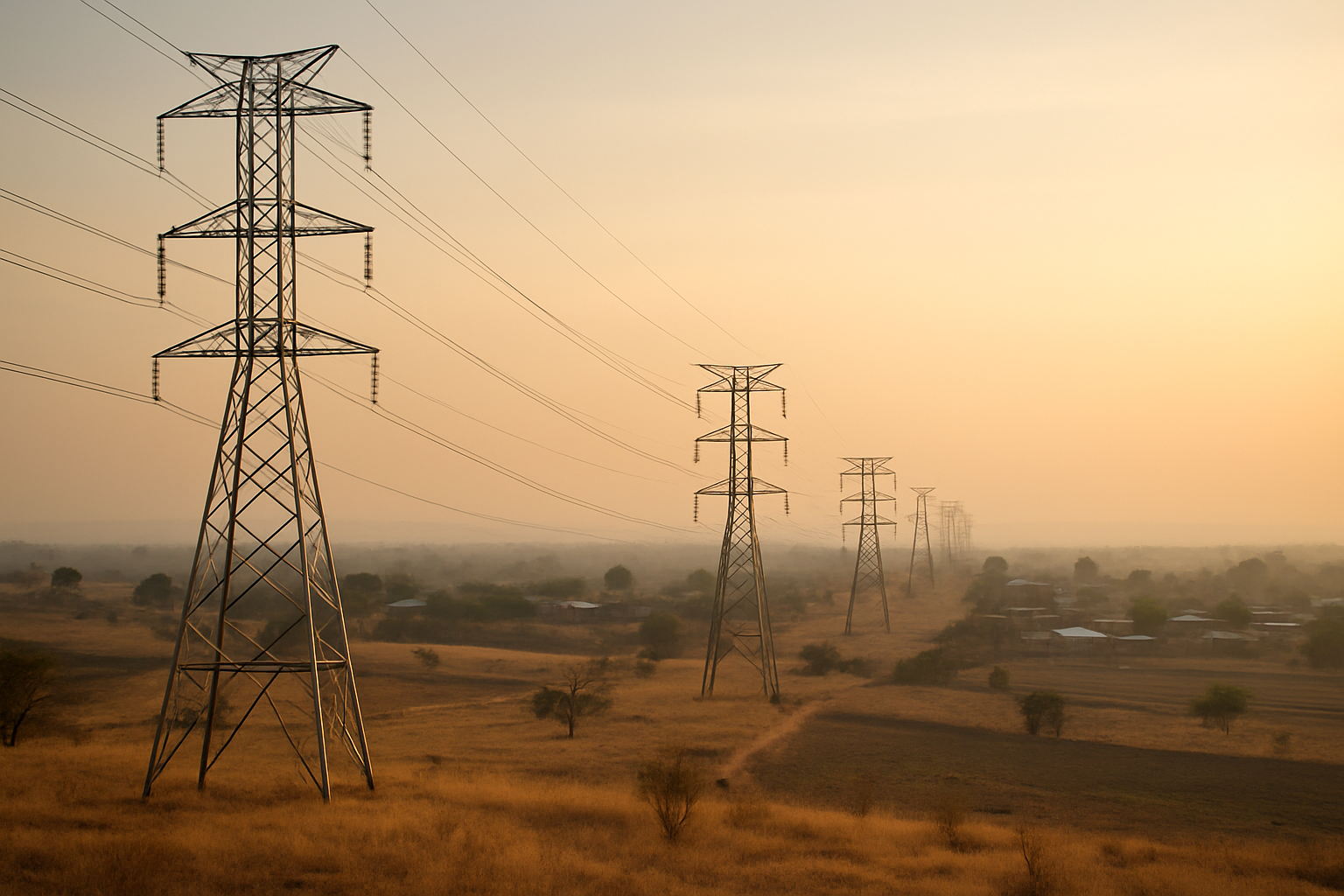
Where the power crosses a third country, that country's network may need compensating too, a practice known as wheeling. The World Bank's own 2026 guidance on regional power trade treats transparent transmission pricing and non-discriminatory network access as the foundation the rest of the system depends on, which is why building an interconnector is only the beginning.
Most African power still moves through negotiated contracts
The simplest form of cross-border trade is bilateral: a seller and buyer negotiate directly, in a firm contract carrying stronger delivery obligations or a non-firm one allowing interruption under agreed conditions. Even in Southern Africa, the continent's most developed regional market, 714.8 gigawatt-hours moved through bilateral contracts in May 2026 against 156.7 gigawatt-hours through SAPP's competitive markets, meaning most cross-border power still changes hands through negotiation rather than anything resembling a conventional exchange. Bilateral contracts offer certainty; a generator with a firm export commitment can use it to support financing. They are also rigid, which is where organised markets earn their place, allowing a country with sudden unplanned demand, or a neighbour with unexpected surplus after heavy rainfall, to trade without renegotiating a long-term agreement.
Southern Africa already buys tomorrow's electricity by the hour
SAPP runs several products: forward physical markets weeks or months ahead, a day-ahead market for each hour of the following day, and an intra-day market for closer adjustments, working as an auction in which sellers submit offers, buyers submit bids, and the platform clears a price. In June 2026, the average day-ahead price was 5.3 US cents per kilowatt-hour, with 97.4 gigawatt-hours traded through that product alone, but price matching remains subject to physics: 47 gigawatt-hours matched across SAPP's competitive markets that month still could not be delivered because of transmission constraints. A cheap generator is of limited regional value if the wire to the customer is already full. The market discovers a price. The transmission network decides whether the transaction is physically possible.
West Africa is moving from agreements toward a market
Power has moved across some West African borders through bilateral deals for years, but the physical network has expanded substantially since. The World Bank counts more than 4,000 kilometres of high-voltage transmission now built to interconnect West African systems, with roughly 8% of the region's electricity trading across borders. Through the OMVG interconnection, Guinea's hydropower reaching Guinea-Bissau and The Gambia has cut Guinea-Bissau's generation cost from around 25 US cents to 11 cents per kilowatt-hour, with The Gambia saving roughly 42%, while imports through the Côte d'Ivoire-Liberia-Sierra Leone-Guinea corridor have cut generation costs in Liberia and Sierra Leone by an estimated 10 to 20%. Liberia's own imports had grown to around 50 megawatts by 2025, almost double the 27 megawatts originally agreed under its 2022 power purchase agreement.
Regulators validated tariffs for a new regional day-ahead market in late 2025, and the West African Power Pool completed a synchronisation trial carrying uninterrupted power across twelve countries; the market itself is launching during 2026. Instead of negotiating every additional purchase separately, a utility will increasingly be able to enter a regional marketplace and buy tomorrow's electricity from whoever can supply it most competitively.
East Africa is building the highway before opening the market
Some East African trade is already substantial without a competitive market to match it. A 1,065-kilometre, 500-kilovolt HVDC line connecting Ethiopia and Kenya can transfer up to 2,000 megawatts in either direction, giving operators far more control than a conventional interconnected AC system allows. Kenya imported roughly 1.31 terawatt-hours from Ethiopia in 2024, with Ethiopian imports exceeding 12% of Kenya's electricity purchases in the second half of that year, displacing expensive fossil generation.
Across the wider Eastern Africa Power Pool, cross-border trade reached about 3,200 gigawatt-hours in 2024, eleven times its 2010 level, according to the African Development Bank, but the region still lacks a competitive market comparable to SAPP's. That is changing: the World Bank approved a $1.6 billion regional transmission and trade programme in June 2026, including the Uganda-Tanzania interconnector and support for launching the EAPP's own day-ahead market, aiming to push cross-border trade past 5,000 gigawatt-hours annually by 2031. The sequence is consistent everywhere it has worked: build bilateral exchanges first, interconnect the systems, harmonise the rules, then let a genuine market operate on top.
The invisible machinery: wheeling, losses and trust
A future trade in which Zambian electricity is sold to Kenya once the Eastern and Southern systems connect might have to cross Tanzania, neither generator nor buyer, but still using its network, which needs rules governing access and compensation. Losses occur over distance too, and somebody has to pay for the extra electricity needed to cover them. Regional markets price more than energy: wheeling charges, loss charges, congestion, market administration and imbalances between scheduled and actual delivery all appear as separate line items in SAPP's own settlement accounts, the largely invisible financial architecture underneath every cross-border megawatt.
Trade carries a political dimension too. During a shortage, governments face intense pressure to supply domestic consumers before exporters abroad, and a drought can turn yesterday's exporter into tomorrow's importer, exactly what a recent World Bank assessment found happened to competitive SAPP trading during the region's severe drought years. That is why contracts distinguish firm from interruptible supply, and why West Africa's new market is building a liquidity-enhancement revolving fund specifically to reduce the risk that utilities fail to pay one another on time. The weakest link in regional electricity trade is often not the interconnector, but the balance sheet of the utility at the end of it.
Five power pools, five different stages
Africa's electricity integration isn't one market yet. It is five regional systems moving at different speeds: SAPP already runs competitive markets alongside bilateral contracts; WAPP has expanded its physical network and is launching a day-ahead market; EAPP is rapidly increasing bilateral trade while preparing an organised one; the Central African Power Pool remains far behind, an AfDB programme recorded only around 18,147 megawatt-hours of regional trade against a 1.44 million megawatt-hour target across 2021-2025; and North African systems, comparatively well interconnected and linked toward Europe, don't yet operate as a single competitive African market in SAPP's sense.
The African Union wants those five systems eventually to merge into the African Single Electricity Market, and the ambition has moved past the declaration stage: at the third AfSEM Forum in Accra in July 2026, the AU reported implementation work advancing on regulation, infrastructure and market integration, including early work coupling the Eastern and Southern African markets across power-pool boundaries for the first time.
But Africa cannot trade electricity if its transmission system cannot move, and June's SAPP numbers make that plain: there were buyers, there were sellers, they agreed on trades, and nearly a third of the matched electricity still could not reach the market because a single corridor was constrained. That is the gap between an electricity agreement and an electricity market. A genuine regional market needs the contract, the wire, the operator, the regulator, the meter and the payment system working at once, and Africa has already begun building all six.