Africa’s Electrification Gains Are Being Erased by Population Growth
Africa is connecting millions of people to electricity each year. That fact is not disputed. Grid extension, solar home systems, mini-grids and utility reforms have pushed access rates upward across several countries.
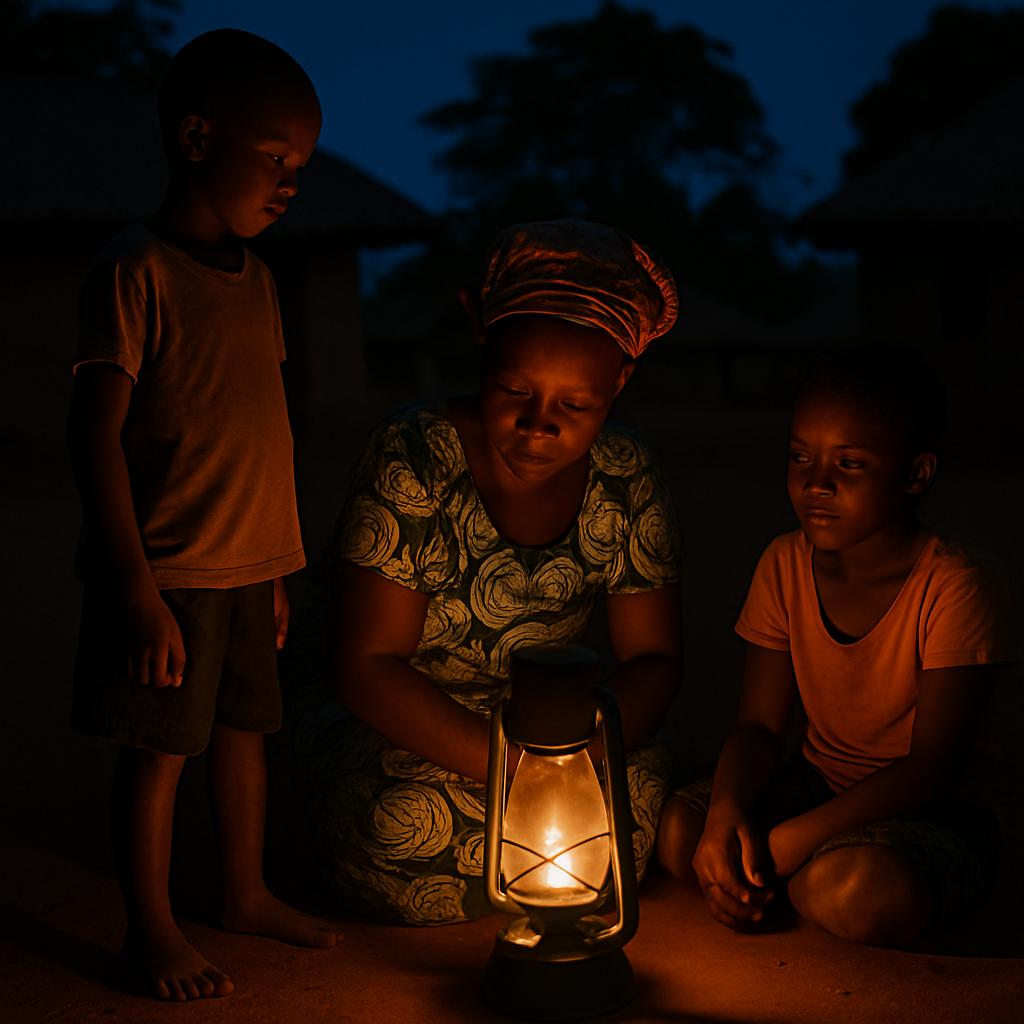
According to the latest SDG7 Tracking Report, sub-Saharan Africa has made measurable progress in electricity access over the past decade, with connection rates improving in East and parts of West Africa. Yet despite this progress, approximately 600 million people in sub-Saharan Africa still lack access to electricity, representing the overwhelming majority of the global access deficit.
The contradiction is stark: access rates improve, but absolute numbers remain stubbornly high. Population growth across sub-Saharan Africa remains the fastest in the world. In several high-growth economies, the number of people added to the population each year rivals, and in some cases exceeds, the number gaining electricity access.
Electrification systems are expanding, but demographic expansion is expanding faster. This isn't a policy failure in the conventional sense, but a scaling mismatch. And unless electrification accelerates beyond demographic momentum, energy poverty will persist even amid genuine progress.
The demographic driver: growth at historic scale
Sub-Saharan Africa’s demographic trajectory is historically unprecedented in its speed and scale. According to the United Nations World Population Prospects, the region will continue to account for the majority of global population growth over the coming decades, with several countries projected to double their populations within a generation.
Nigeria alone adds several million people annually, and the Democratic Republic of Congo, Ethiopia and Tanzania follow similar patterns. These increases represent millions of new households requiring connection each year.
This has profound implications for electrification planning. Because if a country connects two million people in a year but adds three million to its population, access rates may inch upward while the absolute access gap widens. Electrification progress becomes statistically diluted.
In macroeconomic terms, electricity expansion must exceed demographic expansion simply to reduce the total number of people without access.
The scale challenge is compounded by youth demographics. Africa has the youngest population globally, meaning new household formation will remain elevated for decades. And energy demand is structurally embedded in demographic momentum.
Electrification strategies that assume static populations underestimate the scale of the task. In Africa’s case, energy planning without demographic modelling risks systematic underinvestment.
The access illusion: connection versus reliability
Even where connection numbers improve, a second, less visible dimension complicates the narrative; connection doesn't automatically equal reliable supply.
In sub-Saharan Africa, however, reliability remains a structural constraint. Outages are frequent in multiple markets, voltage instability undermines productivity, and firms and households rely heavily on diesel generators to compensate for unreliable grids.
The World Bank continues to identify power reliability as one of the most significant constraints on private sector development in Africa.
This produces a layered energy poverty dynamic:
Millions remain entirely unconnected.
Millions more are technically connected but effectively underpowered.
Population growth intensifies both pressures. As new households connect, system strain increases. And if generation and transmission don't scale proportionally, reliability deteriorates even as connection rates improve.
Energy poverty isn't merely about first-time access, but also about a sustained, quality supply at a demographic scale.
Urbanisation and informal expansion
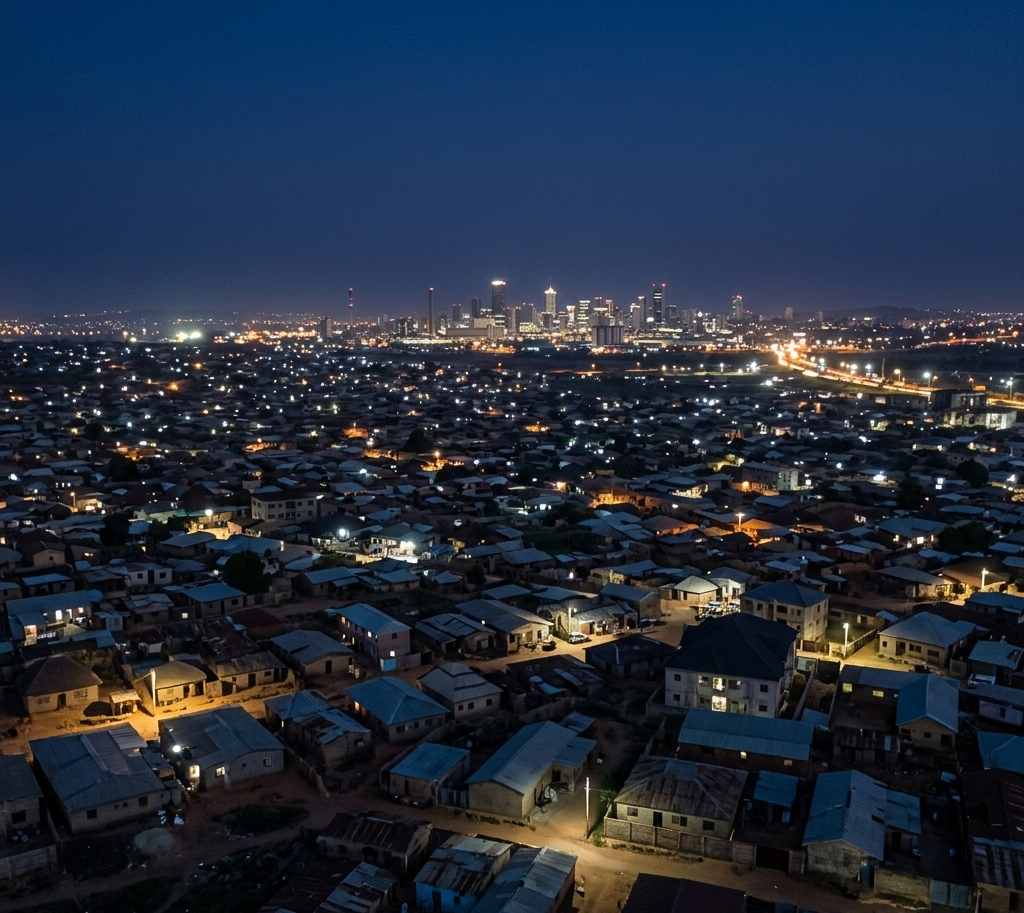
Demographic growth is increasingly urban. Africa’s cities are expanding rapidly, often outpacing formal infrastructure planning, and informal settlements grow faster than utilities can extend formal distribution networks.
In megacities such as Lagos, Kinshasa and Nairobi, the electrification challenge is less about initial access and more about stabilisation and reinforcement. As populations concentrate, peak demand intensifies. Cooling needs rise, particularly under warming climate conditions, and digital penetration increases per-household electricity consumption.
The IEA notes that rising temperatures are driving cooling demand globally, a trend particularly relevant for rapidly urbanising regions.
Urbanisation transforms the energy poverty equation; it shifts the focus from rural grid extension to metropolitan system resilience, and transmission upgrades, substation reinforcement and loss reduction become central.
Without urban grid reinforcement, demographic concentration produces chronic congestion. Blackouts become more frequent, informal connections proliferate, and utilities face mounting technical and commercial losses.
Energy poverty in cities is often less visible than in rural communities, but economically more damaging.
Policy critique: electrification targets without demographic acceleration
Electrification policy frameworks frequently emphasise percentage coverage targets, for example, reaching 80% or 90% access by a specified year. These targets are politically compelling and internationally benchmarked.
Yet percentage targets can mask absolute stagnation when populations are growing rapidly. The SDG7 Tracking Report indicates that universal access by 2030 is increasingly unlikely without substantial acceleration in investment and reform.
The critical issue is velocity, not incremental improvement, because electrification must outpace demographic growth, not merely keep pace with it. This requires integrating demographic modelling into energy planning frameworks. Annual connection targets should exceed annual population growth, and infrastructure capacity additions should anticipate urbanisation flows.
Absent this shift, electrification strategies risk perpetually chasing moving targets. Population growth isn't a background variable, but the primary constraint shaping Africa’s access trajectory.
Financing at demographic speed
But financing must match demographic speed. If infrastructure investment grows linearly while population growth compounds, the gap persists. Moreover, financing must extend beyond generation to transmission and distribution reinforcement, which are equally critical.
The IEA highlights that global grid investment must rise substantially to accommodate electrification trends, and Africa’s requirement is proportionally larger because it must build both access and reliability simultaneously.
Demographic pressure transforms electrification from a development project into a race against arithmetic. Thus, scaling investment without accelerating institutional capacity, including utility reform and regulatory strength, will not close the gap.
Why this matters for Africa’s growth model
Energy poverty is often framed as a social challenge, but it is equally an economic constraint.
Africa’s development strategy increasingly rests on industrialisation, mineral beneficiation and digital transformation. Each of these pillars depends on reliable electricity.
If population growth continues to outpace electrification:
Informal economies remain dominant.
Productivity growth stalls.
Youth unemployment persists despite demographic dividend narratives.
Industrial investment hesitates due to grid unreliability.
Conversely, aligning electrification with demographic reality can unlock economic transformation.
Electricity is the infrastructure that converts population growth into productivity growth, and without it, demographic expansion risks amplifying poverty rather than reducing it.
Conclusion: The arithmetic challenge defining 2026
Energy poverty in Africa in 2026 is not a story of inaction, but one of insufficient acceleration.
Millions are being connected every year, but millions more are being added to the population at the same time.
The challenge is demographic arithmetic.
Access gains are real, but unless electrification expands faster than population growth, the absolute number of people without reliable electricity will remain stubbornly high.
Africa’s energy debate often centres on decarbonisation, climate finance and critical minerals. Yet the more immediate structural question is simpler and more fundamental: Can electrification systems scale at demographic speed?
In 2026, population growth isn't a statistic in the background of Africa’s energy transition; it is the force reshaping its trajectory.