I Have Watched Clean Energy Projects Fail for a Decade. The Problem Starts After Installation.
By Vincent Egoro|
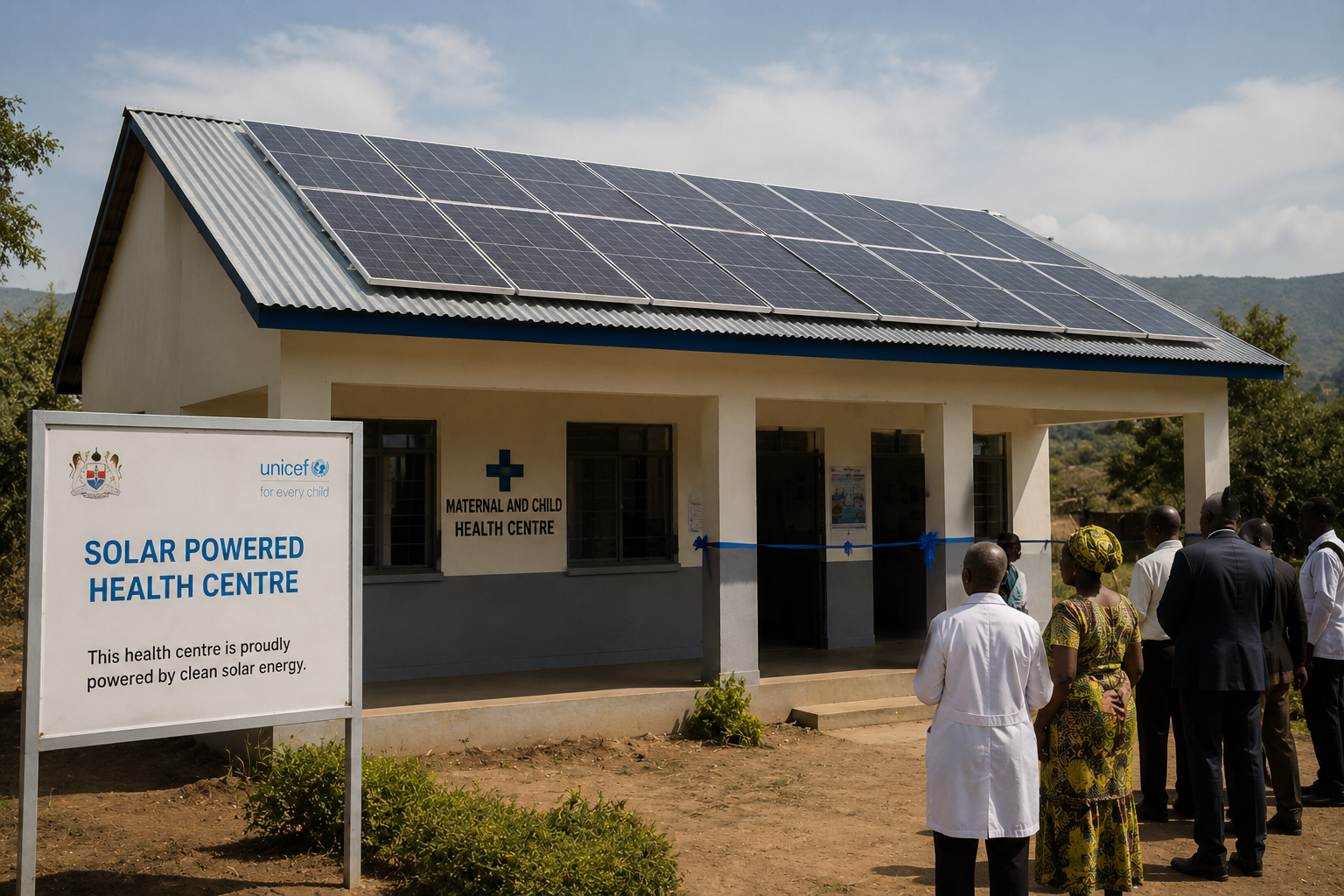
There is a photograph I have never seen taken.
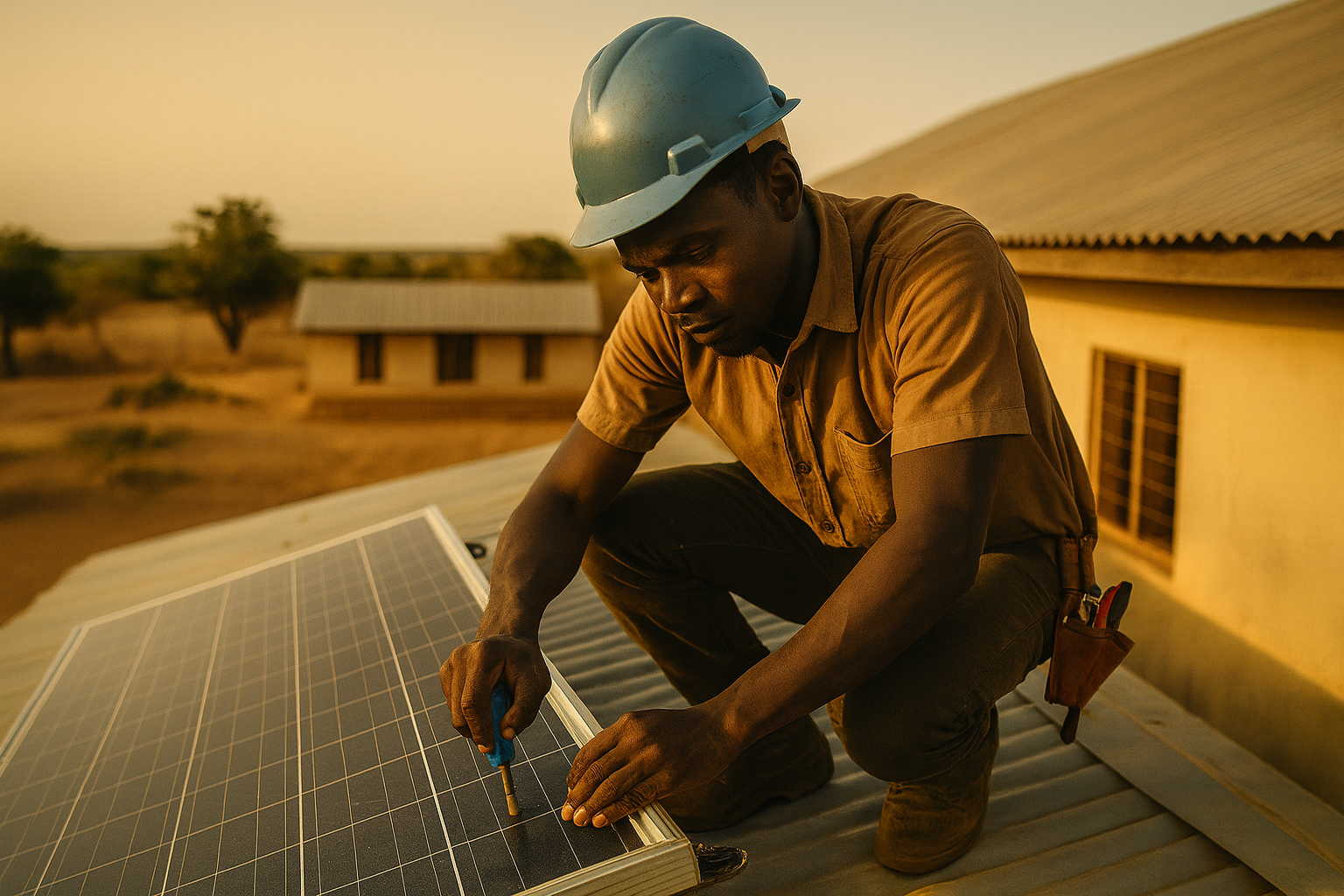
Not for lack of opportunity. I have stood beside enough government officials at ribbon-cutting ceremonies to know exactly when the camera comes out. The moment is always the same: panels mounted, inverter humming, someone in a hard hat shaking hands with someone in a suit, and a community gathered behind them.
What nobody photographs is the same facility a year or more later, when the battery bank has degraded, and the inverter is showing a fault code that no staff member knows how to clear. Or two months later, when the replacement charge controller that was supposed to arrive hasn't arrived, and the solar system that was commissioned to provide reliable power is now providing intermittent power at best and darkness at worst.
I have been watching that second scene for a decade in Nigeria and other countries on the continent, not because the technology failed, but because the system built around the technology, the maintenance contracts, trained technicians, spare parts supply chains, and regulatory frameworks that create accountability for what happens after installation, was never built to the same standard as the installation itself.
And the consequence that troubles me most is not an outage statistic, but a vaccine that no longer works.
The numbers the installation statistics do not show
The WHO, World Bank, IRENA, and Sustainable Energy for All published their most authoritative joint assessment of electricity in health facilities in January 2023. Its findings have not been adequately absorbed into the energy transition conversation, so they are worth stating precisely.
In sub-Saharan Africa, 15 percent of health-care facilities have no access to electricity. Only 50 percent of hospitals in sub-Saharan Africa report reliable electricity access. Close to one billion people worldwide are served by health-care facilities without reliable electricity or with no electricity at all.
Half of Africa's hospitals don't have electricity you can depend on. Not isolated rural dispensaries, but hospitals, the flagship facilities of national health systems.
Those figures become even more troubling when set alongside the post-installation failure pattern that the World Bank's Lighting Africa programme identified directly in its quality assurance work: even when high-quality components are installed, there has historically been a high failure rate for solar systems in many countries caused by poor maintenance and a lack of good operational practices following installation.
The pattern is straightforward. A donor funds an installation programme, and the implementing organisation has strong incentives to maximise the number of systems deployed. More deployments mean more impact metrics, and more metrics mean a stronger case for the next funding cycle. Maintenance doesn't appear in the deployment count, and there is no line item for the technician who visits six months after installation to check battery health, recalibrate the charge controller, and train the facility manager on basic fault diagnosis. And the system fails, yet the record still shows the facility as electrified.
When the system fails, it is not inconvenience that follows
I want to be precise about what electricity failure in a health facility actually means, because the conversation around grid stability in Nigeria and elsewhere tends to reach for economic statistics before it reaches for clinical consequences.
Electricity powers oxygen concentrators, surgical lighting, laboratory equipment, maternal care, emergency procedures, and perhaps most consequentially, vaccine cold chains. The cold chain is the least visible part of the immunisation system and the one most sensitive to power interruption.
Research shows that up to 50 percent of vaccines globally may be wasted due to cold chain failures. Approximately 80 percent of prequalified vaccines require continuous cold storage to maintain their potency. A vaccine that has lost its cold chain may look entirely normal. The nurse who administers it has no way of knowing that the thermal damage it sustained during a six-hour power outage last Tuesday night has rendered it ineffective. The child receives the injection, but is not protected.
That is what an electricity failure in a health facility costs. Not megawatts, but children.
The data from the ETA policy brief published last week, researched by Bridget Owojoku Idoko, makes the Nigerian picture concrete. Fewer than 40 percent of Nigeria's electrified rural health facilities receive power sufficient to maintain vaccine cold chains reliably. Seventy-eight percent of primary health centres report weekly outages lasting more than six hours. Forty-two percent report outages lasting more than twenty-four hours. And fewer than 5 percent receive any compensation or service recovery from their distribution company when the power fails.
Those facilities are connected, but their electricity doesn't function.
Nigeria's grid collapse is not only an economic crisis
Nigeria's national grid collapsed twice within four days in January 2026, plunging millions of Nigerians into darkness and disrupting economic activities. The outages followed a similar incident in late December 2025. During the January 27 collapse, power generation fell from 3,825 megawatts to 39 megawatts within minutes, with supply to all eleven distribution companies dropping to zero.
The grid collapsed at least 12 times in 2024, almost monthly, before a slight improvement in 2025. Three collapses in less than one month, from late December 2025 to late January 2026, signal a worrying trend.
When the energy conversation engages with these collapses, it usually reaches for the economic cost. The World Bank estimates that Nigeria loses $29 billion annually due to an unstable power supply. That number is real and important.
What is less often named is what happens inside hospitals and clinics during each collapse. A vaccine refrigerator that loses temperature control at midnight and warms its contents over the eight hours it takes partial grid restoration to reach the facility, a labour ward that loses lighting during a delivery, or a surgical procedure that must be continued by torchlight or abandoned. These aren't hypothetical scenarios in a country where the grid falls to zero megawatts, and the alternative energy systems, the solar panels, the batteries, and the inverters are themselves subject to the post-installation failure pattern I described at the start.
Solar independence is only as reliable as the maintenance infrastructure that keeps the solar system functional. A solar system at a rural health facility with a degraded battery bank that cannot sustain overnight load isn't an alternative to the grid, but an additional source of failure.
Zambia showed what the solution looks like
One of the most instructive examples I have encountered is a technician training programme recently.
In 2025, UNICEF documented efforts in Zambia to train local technicians specifically to maintain vaccine cold chain equipment at Northern Technical College, recognising that installation without a maintenance workforce isn't a functioning cold chain system. The programme acknowledged directly that delays in accessing specialised repair support often leave critical cold chain equipment unattended, disrupting immunisation services for months.
The lesson that Zambia is working toward, imperfectly and with significant gaps still to close, is the lesson that Africa's entire health facility electrification agenda needs to absorb: technology requires people. Every solar panel eventually becomes a maintenance question, battery eventually becomes a maintenance question, inverter eventually becomes a maintenance question, and every maintenance question eventually becomes a workforce question, which is a training question, an institutional question, and a funding question.
The measurement that would change the conversation
The truth at the centre of this is that Africa has a post-installation problem.
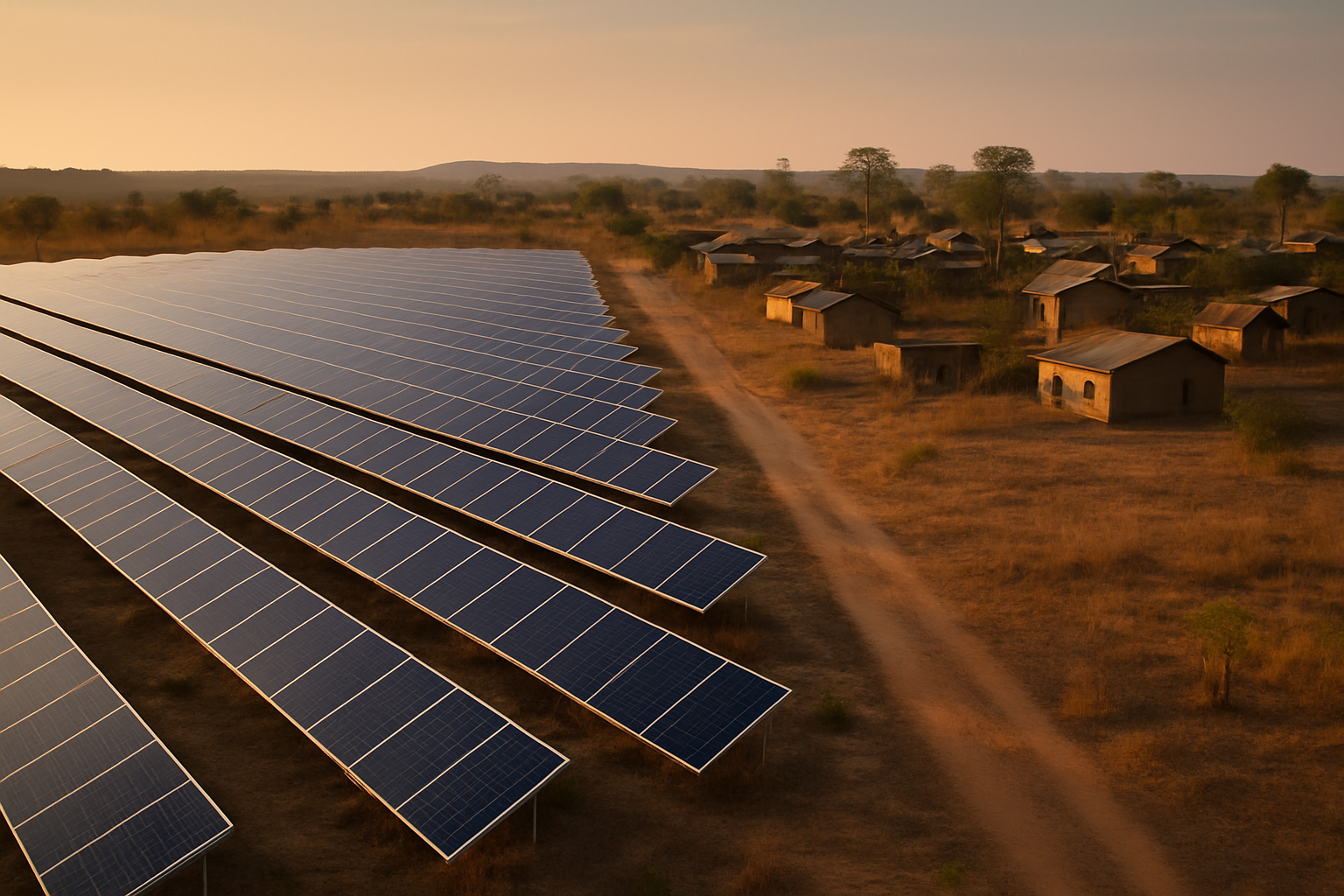
The continent is adding renewable energy capacity at record rates. IRENA data shows Africa grew its renewable capacity by 15.9 percent in 2025. The installations are happening. The question nobody is systematically asking is how many of those systems will still be functioning reliably in 2030, and how many rural health facilities counted as electrified today will have functional cold chains when the next immunisation campaign requires them.
If we measured energy projects not at commissioning but five years later, we would build different programmes. We would fund maintenance alongside installation, require service contracts as a condition of financing, train technicians before we deployed panels, and design regulatory frameworks that create accountability for what happens after the ribbon is cut.
The ETA policy brief published last week by Bridget Owojoku Idoko identifies three specific regulatory reforms achievable within NERC's existing authority that would begin to close this gap in Nigeria. They are worth reading. But before any of those reforms can be acted on, the conversation that needs to happen is the simpler one: that measuring a health facility as electrified on the day of installation, and then not returning to check whether it is still electrified reliably five years later, is not a measurement of energy access. It is a measurement of installation. And installation and access are not the same thing.
I have watched clean energy projects succeed. The difference between the ones that succeeded and the ones that failed was rarely the quality of the technology. More often, it was whether somebody remained responsible after the installation team left.
Because the true test is whether it is still working when nobody is watching. And in too many African clinics today, that question still determines whether the vaccines in the refrigerator will protect the children who receive them.