Africa Can Build Green Factories. Who Will Buy What They Make?
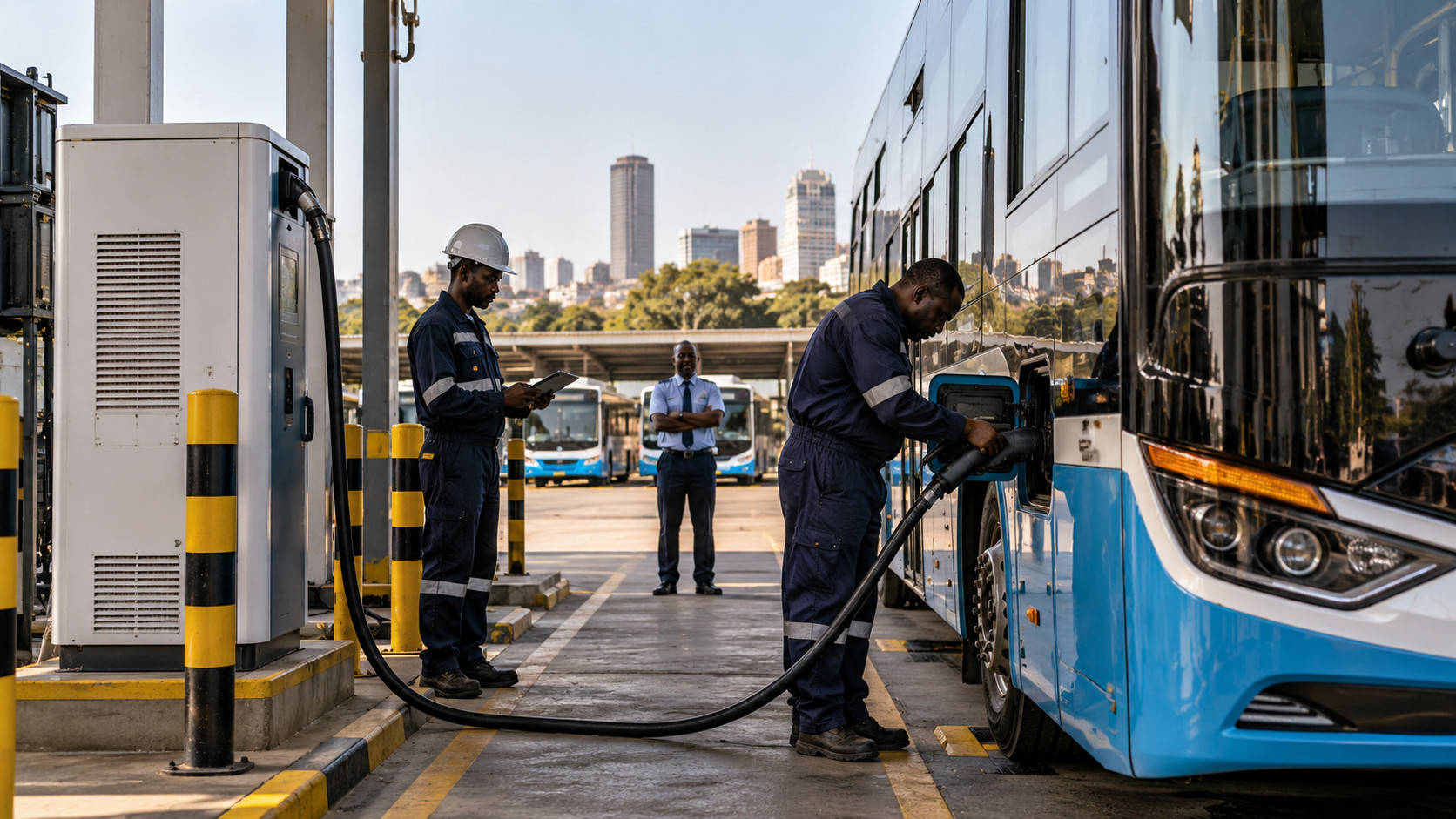
In Nairobi, nearly 500 electric buses have buyers waiting for them. BasiGo, the Kenyan electric bus company, says deposits have already been paid on those orders. Its assembly facility is producing about 20 buses a month, and the company has grown from a two-bus pilot in 2022 to 134 buses operating on Kenyan roads by March 2026.
One transport cooperative alone reserved 68 buses, but it had received fewer than 30 by February. The surprising part is why. The operator didn't blame a shortage of passengers or an inability to find buses to buy. It said charging infrastructure was slowing deliveries. BasiGo, meanwhile, says financing remains a constraint as it tries to expand assembly and the infrastructure required to support its vehicles.
This is a useful place to begin thinking about Africa's green industrial ambitions because the problem isn't what industrial policy discussions often assume. Demand exists. But something between the customer and the factory is preventing that demand from becoming delivered products. And that problem changes depending on what Africa is trying to manufacture.
The strategy lists inputs, not customers
On 8 September, the African Development Bank and Hyundai Motor Group exchanged a letter of intent on green industrialisation. Like most African industrial strategies, it is a supply-side agenda: minerals, factories, power, skills, finance. This analysis asks the question the letter leaves open, product by product. Who buys what the factories make, and what stands between a buyer and an order? The answer differs for electric buses, solar panels and battery materials. In each case, demand has to be created, financed and connected to supply. It cannot be assumed.
The letter covers six areas: clean energy, sustainable mobility, transport and logistics, electric vehicle value chains, industrial manufacturing and talent. The Bank says it is non-binding and creates no financial commitment, and any project would face its standard due diligence. Its president, Sidi Ould Tah, argued that local processing helps firms shorten and diversify supply chains and creates demand for Korean machinery, and called value addition "not charity but a strategic investment." Hyundai's vice chair, Jaehoon Chang, said an integrated financing package linking policy finance with private capital was essential.
Both statements describe suppliers, lenders and machinery, but neither describes a buyer, which is normal for a first letter. It becomes a problem if the strategy that follows treats orders as a result of production rather than a condition for it. The three cases below suggest otherwise.
Kenya's bus buyers are waiting on chargers and credit
BasiGo says it has 134 buses on the road, assembles 20 a month and aims for 1,000 by 2027, a target some analysts doubt. Operators don't buy outright. Under a pay-as-you-drive lease, they pay a low deposit and a fee per kilometre, while BasiGo arranges charging, service and maintenance. The model solves the buyer's credit problem, but also ties deliveries to BasiGo's charging footprint, which stood at 11 stations in March, 10 of them in Nairobi. Reserved buses are potential demand; it takes a lease, a charger and a grid connection to make it executable.
Kenya has roughly 60 public charging stations for four-wheelers and about 300 battery-swap stations, according to the Africa E-Mobility Alliance. The government plans 10,000 charging stations by 2030 at KSh6.12 billion, with timelines yet to be disclosed.
Incentives reward the vehicle, and registration data disagree
Kenya's incentives favour the vehicle. Parliament kept VAT on electric buses and lithium-ion batteries zero-rated in the Finance Act 2026 after a proposal to drop it, and assemblers are exempt from the 35 percent import duty. Charging equipment and grid upgrades get little direct support. The buses are assembled from imported kits: BYD at first, and other Chinese suppliers since, according to the China-Global South Project. Local value sits mainly in assembly, leasing and charging.
But the registration data disagree. The Ministry of Roads and Transport says cumulative registrations rose from 1,378 in 2022 to 39,324 in 2025. Kenya Power cites 35,000 and the Associated Press 24,754. The Ministry and Kenya Power both point to electric motorcycles as the main driver, so none of the totals measures bus demand.
Solar demand is vast, and it buys imports
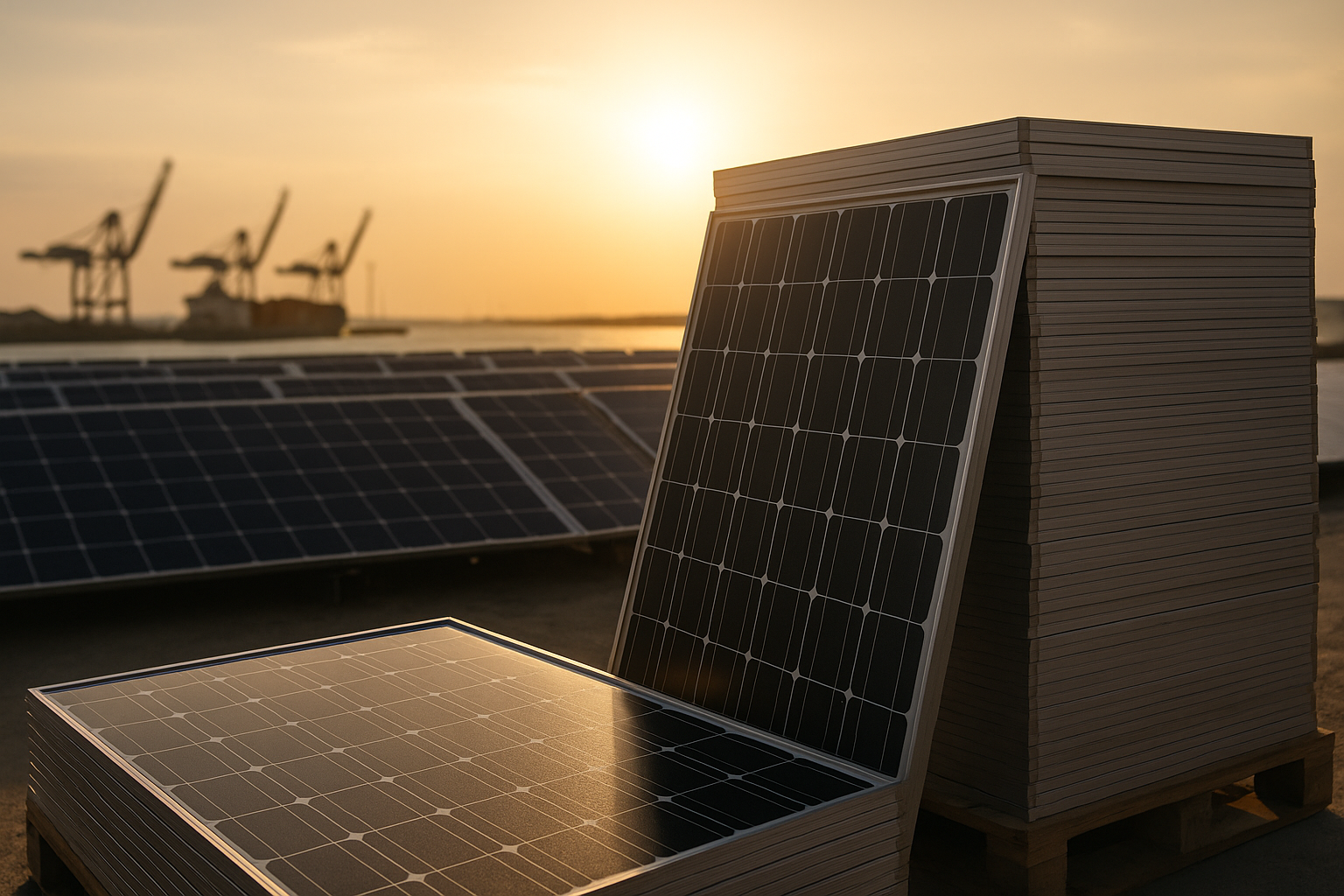
Africa installs a record 17 GW of solar in 2026, and 94 percent of the panels are imported from China. African panel output will quadruple to about 3.5 GW, a fifth of installations, but the new plants in Egypt and Tanzania are aimed at the United States. Chinese panel exports to Africa reached 23 GW, costing $2.4 billion, in the year to June 2026. Manufacturing data are thin, and the Tanzanian estimate is a guess. The buyers have a reason to stay with imports: the same electricity from diesel would cost a year of panel imports every three months, and Africa now spends more on Chinese batteries than on Chinese panels.
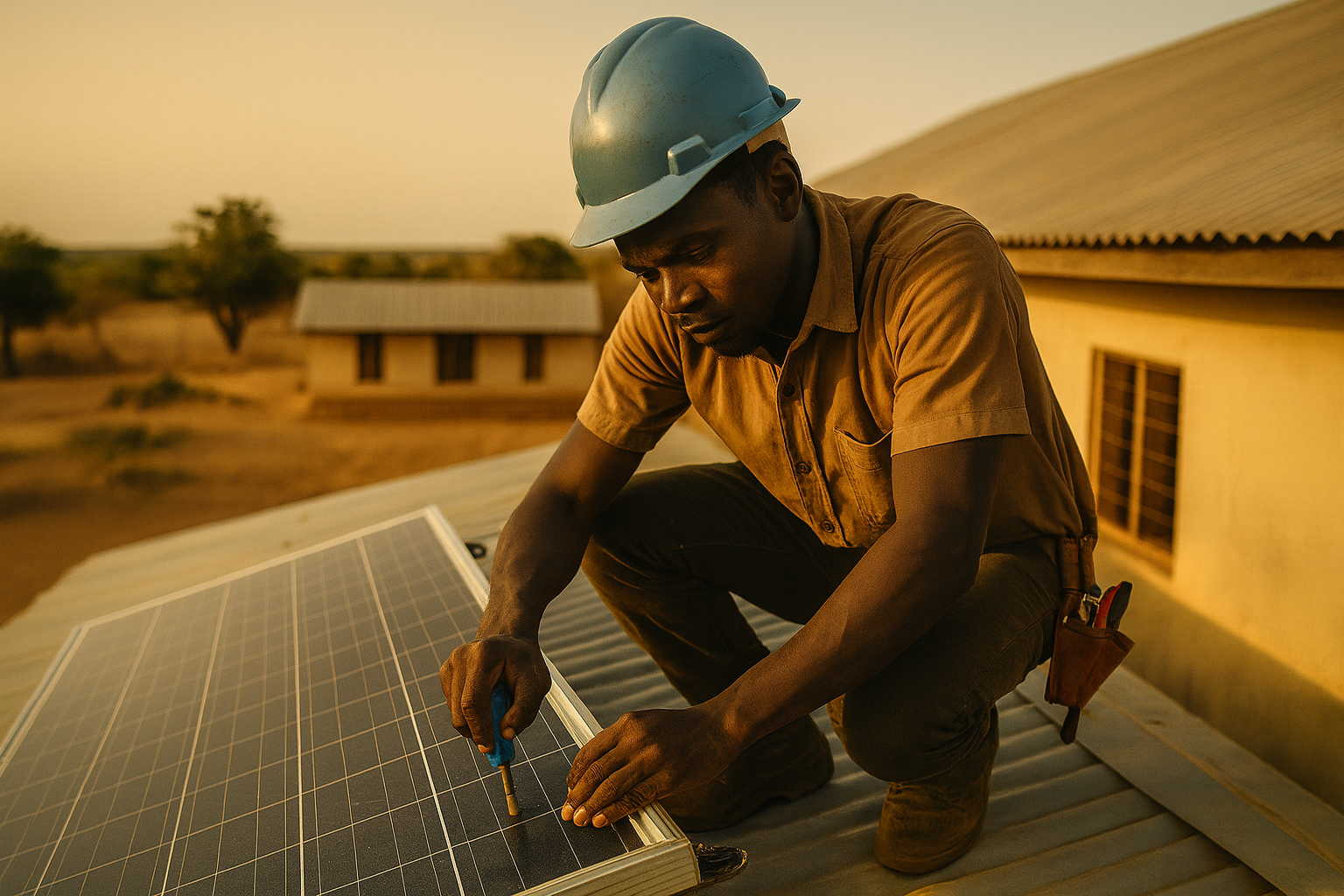
Who buys? Mostly private customers choosing on price. Three-quarters of recent solar growth is distributed, and commercial and industrial users make up at least 80 percent of it in most markets, with paybacks of two to five years. No procurement rule reaches them. ETA's earlier analysis traced the barriers to local panel making to capital costs, supply chains and policy inconsistency. A price-driven buyer compounds each of them.
Where law creates the buyer, enforcement decides
South Africa tried the alternative. Its power procurement required laminated modules to carry 35 percent local content in bid window 5 and 50 percent in bid window 6, and a 10 percent import duty followed in 2024. The rule covers public procurement. Private offtake projects, which local content rules do not bind, were met largely by imports.
The Durban manufacturer ARTsolar asked the Gauteng High Court in October 2024 to review three tenders, alleging systematic circumvention by winning bidders. By its calculation, only 71 MW of roughly 2 GW of designated projects used local modules. The trade department denies granting any exemptions, and the developers call the case a commercial grievance. The Industrial Development Corporation committed R96.8 million for a new production line in 2022, and more than 300 workers were cut in July 2025. The allegations are untested. Claims against ARTsolar's compliance, which it rejects, are also unresolved, and the court ordered the record disclosed in December 2025.
A rule creates orders only if someone enforces it
Wind manufacturers also built local factories on procurement signals, and several closed when bidding rounds were delayed or cancelled. In April 2026, the trade commission proposed considering solar panels for local-content designation, and the proposal is preliminary. A rule can create a buyer. It creates orders only if someone enforces it.
Battery materials have buyers, and most are abroad
Morocco is building a battery cluster, and its disclosed buyers sit outside Africa. COBCO, a joint venture of Al Mada and China's CNGR, began production at Jorf Lasfar in June 2025. Its precursor will serve Umicore's customer contracts in North America and Asia, with Umicore contracting volumes from early 2026. COBCO's LFP cathode line will start only when a regional LFP battery ecosystem emerges.
On 28 September, Volkswagen, PowerCo and Gotion announced three joint ventures for a European LFP supply chain. The Kenitra venture will build a 100,000-tonne cathode plant, 51 percent Gotion and 49 percent PowerCo, prioritising supply to the two European cell ventures. The deal still needs shareholder and regulatory approvals. Volkswagen's release does not mention the cell and pack lines behind the AfDB's €100 million loan, which ETA covered in its climate finance analysis.
Morocco's carmakers are the obvious local buyer
Renault and Stellantis plants operate in Morocco, and ETA has traced that automotive base to infrastructure first and anchor investors second. Whether those carmakers will buy locally made cells is not stated in any document reviewed. Until they do, the cluster's output is an export, and its demand depends on European contracts and trade rules.
The strongest objection: demand follows supply
The strongest objection is that demand follows supply. Cheap Chinese panels created demand worldwide, and Africa may see the same pattern. Egypt's EliTe Solar, inaugurated in January with 2 GW of cells and 3 GW of modules, employs about 800 people. China removed its 9 percent export VAT rebate on 1 April, lifting panel prices 4 to 8 percent, and new US tariffs take effect on 1 December. That could turn some African output toward African buyers.
The argument holds for export-scale plants. It fits early producers poorly. Nigeria's panel capacity is about 300 MW. No solar glass is made anywhere in Africa, and the EVA, backsheet, ribbon and junction boxes are thought to be imported. A price shift of 4 to 8 percent is unlikely to make them competitive. Demand instruments bridge the years until scale does.
Six instruments create orders, each partially
The evidence supports six instruments. Buyer finance: BasiGo's lease, and NCBA and BasiGo working toward financing for 1,000 vehicles. Public procurement: Angola announced on 28 September a plan for at least 1,000 electric buses and 2,000 charging points, with investment and schedule undisclosed. Local-content and tax rules: South Africa's, if enforced, and Kenya's proposed duty-free entry for more than 100,000 vehicles, which manufacturers want tied to local assembly. Regional markets: Spiro assembles motorcycles in Kenya, Uganda, Nigeria and Rwanda. Export offtake: COBCO's Umicore contract.
Anchor industrial buyers are the sixth. Much of the DRC's battery import bill is linked to solar-and-storage systems at copper mines. Those buyers exist, and they buy imports unless contracts say otherwise. ETA's Zambia analysis traced how mines became anchors for the electricity market.
None of the instruments is automatic
Buyer finance needs lenders willing to take bus-operator credit. Procurement needs budgets, not memoranda. Local-content rules need enforcers. Export contracts need stable trade rules. Each depends on a party outside the factory: a lender, a ministry, an enforcer, a trade negotiator.
What the evidence cannot yet say
Questions remain open. At what price would an African-made panel sell to an African business, and would that business buy it? No source reviewed gives a figure. What terms govern Kenitra's sales? The joint venture is announced, but its commercial terms are not public. How many of Kenya's electric vehicles are buses? Official totals exist, but no vehicle-type breakdown was obtained. How reliable are the manufacturing numbers? The best available dataset calls them extremely limited.
A factory strategy without a buyer strategy is half a strategy. Before the next letter of intent is signed, the useful question is who will sign the purchase order, who will finance it, and who will enforce the terms.