Nigeria's Electricity Crisis Comes Down to Four Numbers
Nigeria has 13,625 megawatts of installed grid-connected generation capacity. In the first quarter of 2026, it averaged 4,112.72 megawatts an hour. Its Transmission Company says the national network can wheel 8,700 megawatts, and has, in practice, carried as much as 5,801.84 megawatts on its single best day, 4 March 2025.
Those four numbers, laid side by side, are the clearest diagnosis of Nigeria's electricity crisis available officially, because they show where the country's power actually disappears. The grid has demonstrated it can carry far more than it typically receives. The question this piece answers is why the generation itself so rarely shows up, and why it has failed to show up consistently for the better part of two decades.
The answer has several interlocking parts, each technically distinct, that together form a system in which every component's failure reinforces the next one's.
The plants exist. Most of them were not producing.
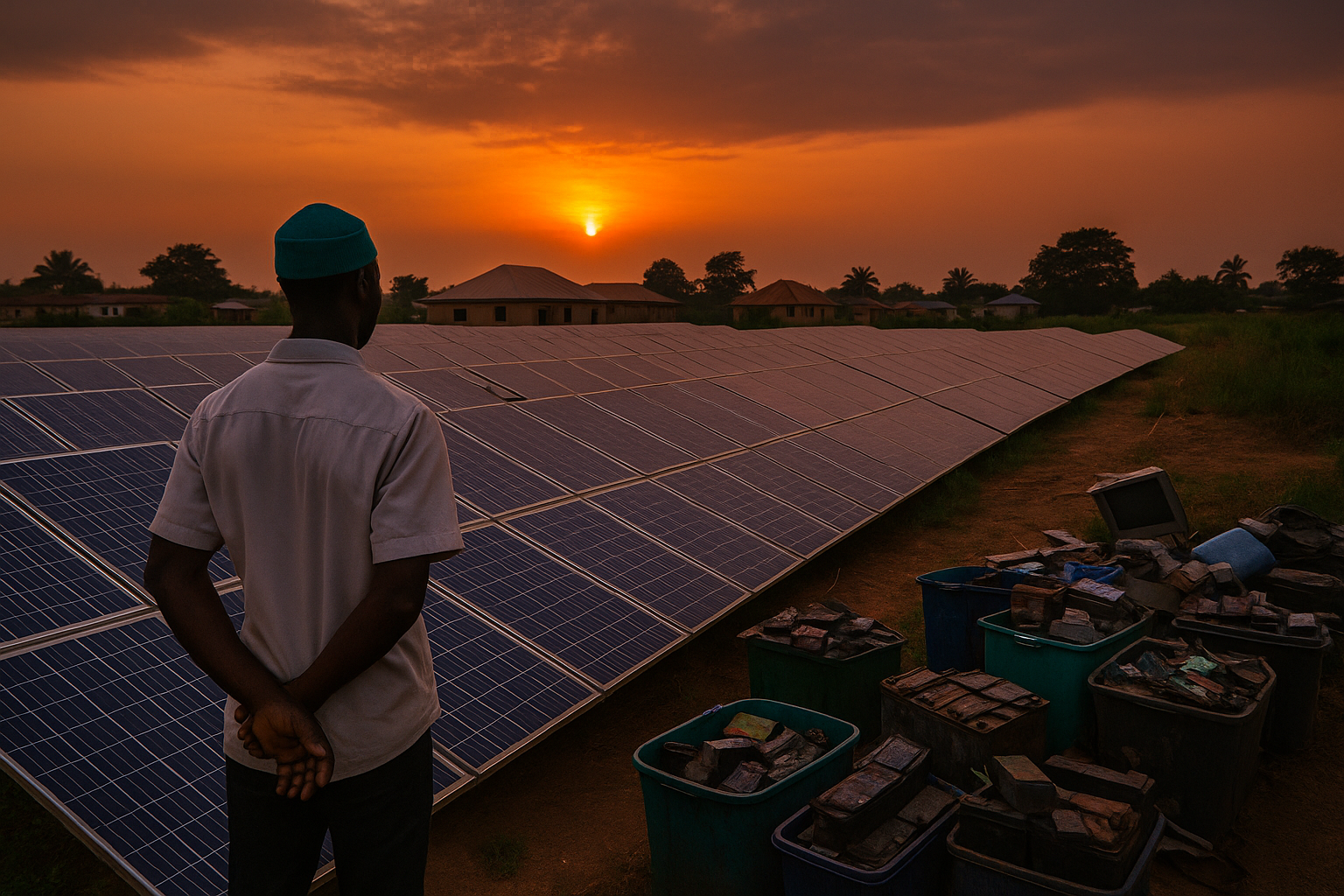
Nigeria has 13,625 megawatts of installed generation capacity across 28 grid-connected plants, according to NERC's first-quarter 2026 report. In that quarter, the fleet's Plant Availability Factor averaged just 32.72%, meaning 67.28% of installed capacity was unavailable for dispatch at any given hour, before transmission evacuation even entered the question. That was a further decline from 39.64% the previous quarter. Alaoji, a 500-megawatt gas-fired station, recorded zero availability for the entire quarter; Rivers Power Plant managed 2.05%; Ibom Power and Sapele Steam each managed 2.67%. Several hydropower plants also lost output to seasonal water levels and maintenance at Jebba, Shiroro, Kainji and Dadin-Kowa.
These are generation failures, not transmission ones. Nigeria's Transmission Company said as much in a July 2026 statement rebutting claims that the real bottleneck was an evacuation constraint. Citing the same NERC dataset, TCN pointed to a grid load factor of 92.26% for the quarter, meaning only around 345 megawatts of already-available capacity went undispatched, nowhere near the multi-thousand-megawatt "stranded power" figure some industry voices had claimed. The plants, not the wires, are where Nigeria's electricity disappears first.
Nigeria has the gas. Its power stations cannot get enough of it.
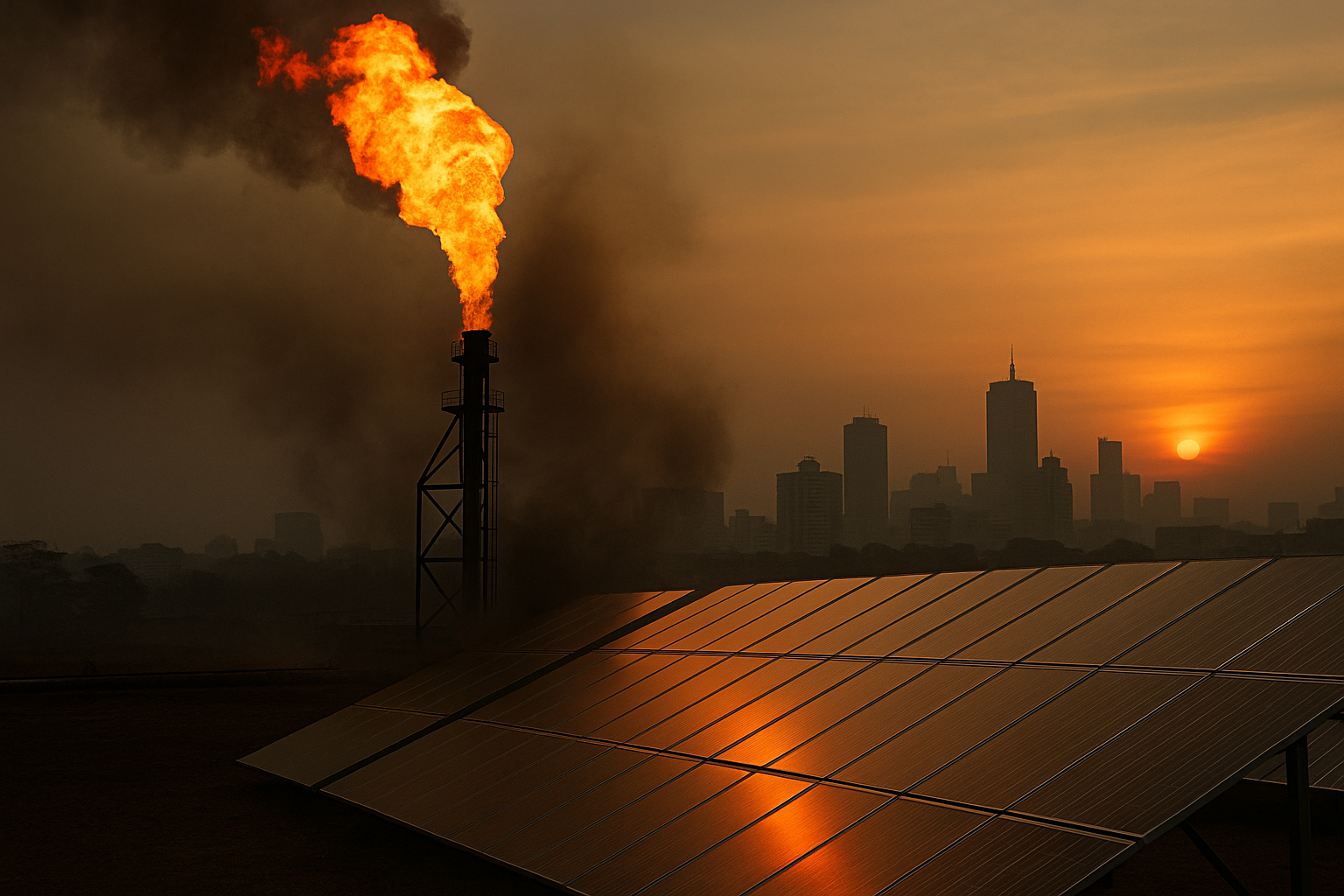
The country holds more than 209 trillion cubic feet of proven natural gas reserves, among the largest in Africa and the eighth-largest in the world. Thermal plants, which make up more than 70% of the grid's installed capacity, need roughly 1,629.75 million standard cubic feet of gas a day to run at optimal output. As of late February 2026, Nigeria's Independent System Operator reported actual supply at around 692 million standard cubic feet a day, under 43% of requirement, feeding directly into the plant availability figures above.
This isn't a geological constraint. It is a payment constraint, and the mechanism runs backwards through the market: gas suppliers reduce volumes because generation companies don't consistently pay them. Generation companies haven't been paid in full by the bulk electricity trader because the trader hasn't received full remittances from distribution companies, because distribution companies aren't collecting enough revenue at tariffs that don't cover the true cost of supply. A $2.8 billion, 614-kilometre pipeline connecting southern gas fields to demand centres in central and northern Nigeria entered service in July 2026, a genuine infrastructure improvement that doesn't resolve the payment chain determining whether gas that exists actually reaches the plants that need it.
The liquidity cascade
Nigeria's electricity market, structured at privatisation in 2013, largely as it still operates today, is the mechanism through which a shortfall at the consumer end becomes a gas shortage at the generation end. Distribution companies sell power at NERC-set tariffs and remit collections to the Nigerian Bulk Electricity Trading Company, which pays generation companies, which pay gas suppliers. The 11 distribution companies collectively billed ₦756.93 billion in the quarter and collected ₦597.56 billion, a collection efficiency of 78.95%, down slightly from 79.36% the previous quarter. The wider aggregate technical, commercial and collection loss, which also captures electricity lost or unbilled before reaching a customer at all, ran to 37.44% against a target of 16.92%, a variance NERC values at ₦140.64 billion in the quarter, alongside a further ₦24.95 billion shortfall in remittances to the bulk trader.
That average conceals enormous variation between distributors, which is the reason NERC intervened where it did. Kaduna's distributor recorded the worst collection efficiency in the sector at 45.81% and the worst ATC&C loss at 69.66%, nearly double the national figure, against a debt NERC put at ₦456.5 billion, the immediate trigger for dissolving its board in August. Ikeja and Eko, by contrast, collected close to 90% each. The same national market produces wildly different outcomes depending on which distributor a customer happens to sit behind.
The shortfall compounds from there. Generation companies issued invoices worth ₦689.72 billion in the quarter; with tariffs frozen at July 2024 levels, distribution companies were responsible for only ₦331.40 billion of that, and the federal government covered ₦358.32 billion, almost 52%, as subsidy. The Association of Power Generation Companies puts accumulated sector debt at ₦6.2 trillion, roughly ₦4 trillion built between 2015 and 2024 and a further ₦2.2 trillion in 2025 alone. The government has responded with bond issuances, ₦501 billion in a first series completed in January 2026 and a further ₦729 billion planned, which reduce the historical stock of arrears without stopping fresh debt from accumulating on top of it each month the chain falls short.
Losses that compound the upstream problem
Even a fully funded, fully gas-supplied generation fleet would still lose more than a third of its output before it generates revenue. The 37.44% ATC&C figure combines technical losses in ageing networks with commercial losses from meter bypassing and non-metering, and collection shortfalls where bills are issued but never paid. Metering penetration across many distribution companies remained well below 60% through 2025, leaving several million customers billed on estimated consumption, a system that under-bills some, enables bypassing by others, and gives distributors no reliable data on actual demand. Nigeria's system operator has been directed to install smart meters at all regional interconnection points by December 2026; universal consumer metering remains a target repeatedly deferred.
Why the cycle persists
None of this is undocumented. Generation availability, gas supply, the liquidity cascade and distribution losses have appeared in NERC's quarterly reports for at least fifteen years, and solutions; cost-reflective tariffs, better metering and collection, gas payment discipline, have been recommended repeatedly by the World Bank, the IMF and Nigeria's own sector consultants. They haven't been implemented at scale because each imposes a cost that is politically difficult to impose: cost-reflective tariffs mean higher bills in a country where median household income sits under $2,000 a year, and every government since privatisation has instead managed that gap through subsidy and deferred obligations that surface eventually as GenCo debt.
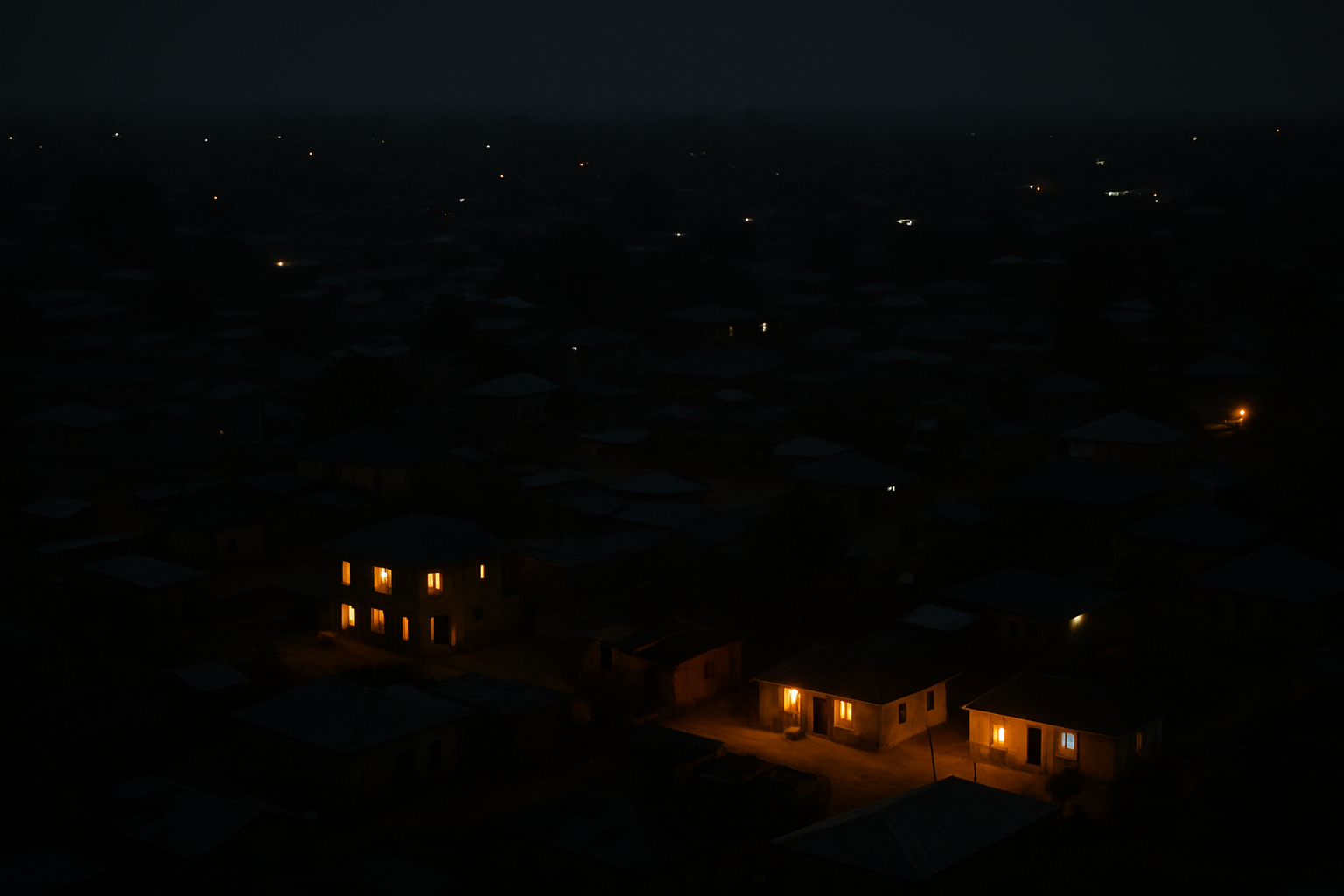
The market's structural response has been decentralisation on one side and exit on the other. In the same week of August 2026, NERC transferred regulatory oversight of Akwa Ibom's market to the state's own regulator, rewarding a sub-national government that built its own architecture within a year of the Electricity Act 2023, while simultaneously dissolving Kaduna's board over the failures described above. Those aren't contradictory moves; they are the same reform logic applied in opposite directions. Meanwhile, more than 60% of Nigerian manufacturers secured permits for off-grid captive generation between 2024 and 2025, a pattern ETA has examined in its analysis of Nigeria's parallel generator economy. Firms with the capital to self-generate are doing so. Households, schools and clinics without that option remain dependent on a grid that averaged barely 4,100 megawatts across the quarter.
What would actually break the cycle
Three changes, each technically achievable and each politically difficult, would move the needle. Tariffs need to reach cost recovery for commercial and industrial consumers, with explicit, funded protection for the poorest, rather than a system that subsidises everyone through debt accumulating invisibly across the chain; the 2024 Band A reform was a step in that direction but hasn't been extended comprehensively.
Metering and loss reduction need to be treated as the first infrastructure priority rather than a downstream benefit, since every percentage point clawed back from 37.44% toward the 16.92% target is revenue flowing upstream to generators and gas suppliers. And gas payment discipline needs to be built into the market's architecture rather than negotiated transaction by transaction, whether through an escrow or pre-payment mechanism ring-fencing distribution collections for gas costs before anything else is paid out.
None of this makes transmission investment unnecessary; a growing economy will eventually need well beyond 8,700 megawatts of wheeling capacity. But Nigeria's immediate shortage won't be solved by strengthening one link in the chain while the financial system around it continues to fail, and the cost this unreliability imposes on the firms and households still dependent on the grid is a story ETA has examined separately in its own right. The unmetered customer, the indebted distribution company, the unpaid generator and the undersupplied gas plant aren't separate problems. They are the same circuit, measured at different points, and the crisis persists because that circuit has never been made to operate as one system.