Why Isn't Africa Talking About Energy Transition Skills?
I was reading recently about Canada's nuclear ambitions when one detail stopped me. Canada already produces roughly 80 percent of its electricity from non-emitting sources, one of the cleanest grids anywhere, with decades of nuclear operating experience behind it. And yet, as it prepares for another era of nuclear construction, the question occupying its government is remarkably basic.
Where will the people come from? Not the uranium, the financing, or which reactor design wins. But who will build it, operate it, and maintain it? In June 2026, Canada's federal government released a national Nuclear Energy Strategy that commits, explicitly, to doubling the country's nuclear workforce, from roughly 90,000 jobs today to more than 180,000 within coming decades, as it plans up to ten new large-scale reactors.
At the University of New Brunswick, the only university east of Ontario with substantial nuclear programming, the centre's own director, Dr William Cook, put the problem plainly: today's workforce can meet today's requirements, but a dozen or more new plants over coming decades will need many more trained people than currently exist. What struck me wasn't that Canada has a shortage. It was that Canada is trying to name the shortage before the infrastructure arrives.
Other countries are planning the people alongside the power plants
Britain is doing something similar. Its first Clean Energy Jobs Plan, published in October 2025, estimates the workforce supporting clean-energy industries needs to grow from roughly 440,000 people in 2023 to around 860,000 by 2030. It doesn't stop at saying the transition will "create jobs." It spells 31 priority occupations; electricians, welders, engineering technicians, and specialist engineers, and is funding five new Technical Excellence Colleges with more than £100 million committed specifically to engineering skills. The European Union has built workforce planning into its Net-Zero Industry Act through technology-specific Net-Zero Industry Academies.
Australia commissioned a national Clean Energy Capacity Study asking exactly which jobs the transition requires and what training pathways produce them. Canada's Sustainable Jobs Act now legally requires a new federal action plan every five years, not a one-off announcement but a standing statutory obligation. Different countries, different systems, the same realisation arriving everywhere: an energy transition is also a capability transition, and planning one without the other eventually means the shortage of people constrains the shortage of power you were trying to solve.
Africa should be asking this more urgently than anyone
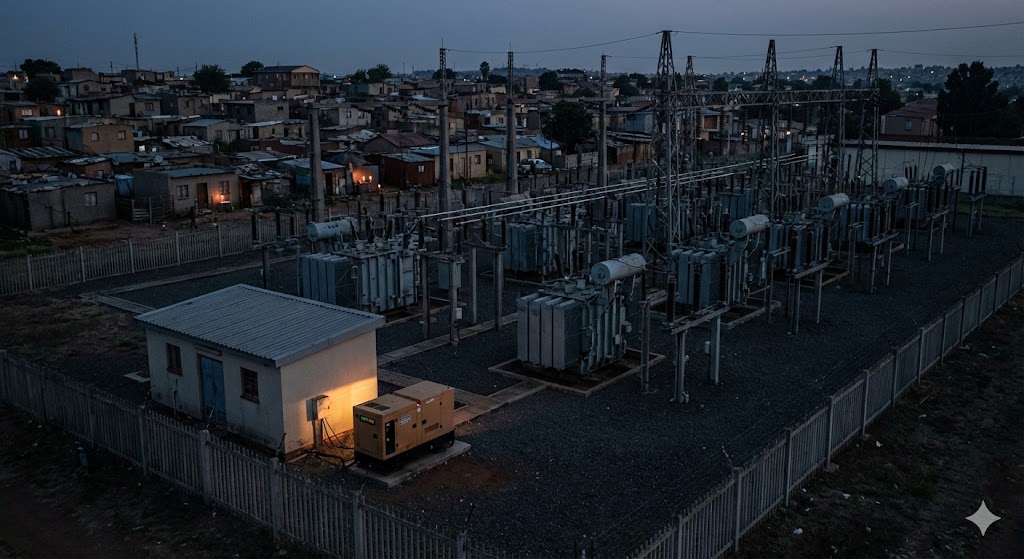
This is where the numbers turn uncomfortable. IRENA and the ILO estimate renewable energy supported at least 16.6 million jobs worldwide in 2024. Africa accounted for roughly 344,000, just over 2 percent. Meanwhile, the latest Tracking SDG7 report puts the number of people worldwide still without electricity at 655 million, more than 560 million of them in sub-Saharan Africa. Sit with that pairing. The continent holding the overwhelming majority of the world's remaining electrification challenge also holds one of the smallest shares of the workforce currently building the industry meant to solve it.
Listen to how we actually talk about this, though. Megawatts, investment, solar farms, transmission corridors, climate finance, critical minerals, and universal access. All necessary, none of it wrong. But a national energy target is rarely followed by an occupational one. If a country announces 10 gigawatts of new solar, how many protection engineers does that imply? How many system operators does a grid carrying far more variable generation need? How many people trained to negotiate a power purchase agreement, or diagnose a battery seven years after installation?
The IEA's most recent workforce survey, which included more than 700 energy companies, unions, and educators, found that more than half reported critical hiring bottlenecks, and roughly 60 per cent said labour shortages were already threatening project timelines, system reliability, or cost. The agency estimates graduates entering energy-relevant occupations need to rise by about 40 percent globally just to stop the mismatch from widening further by 2030. Those shortages exist inside economies with mature utilities and established technical colleges. Africa is attempting a far larger relative expansion from a much thinner institutional base.
Nigeria shows the gap between a jobs number and a workforce plan
Nigeria deserves fairness here. Our Energy Transition Plan does recognise employment, estimating up to 340,000 net jobs by 2030 and 840,000 by 2060, with our NDC separately putting the power sector's own share at roughly 170,000 by 2030. It isn't accurate to say we've ignored skills entirely; the ETP commits to skills and knowledge-transfer partnerships with industry and research institutions. But a jobs forecast is not yet a workforce plan. When I see 340,000, I want to know what those people will actually need to know how to do.
How many grid planners? How many technicians who can diagnose a fault, not just install a panel? How many regulators, now that electricity regulation is moving into state-level institutions across the country? Which universities are responsible for producing them, against what competency standard, on what timetable? Those are delivery questions, and I don't think we've built the institutional machinery to answer them yet.
A skilled person is not the same thing as a capable system
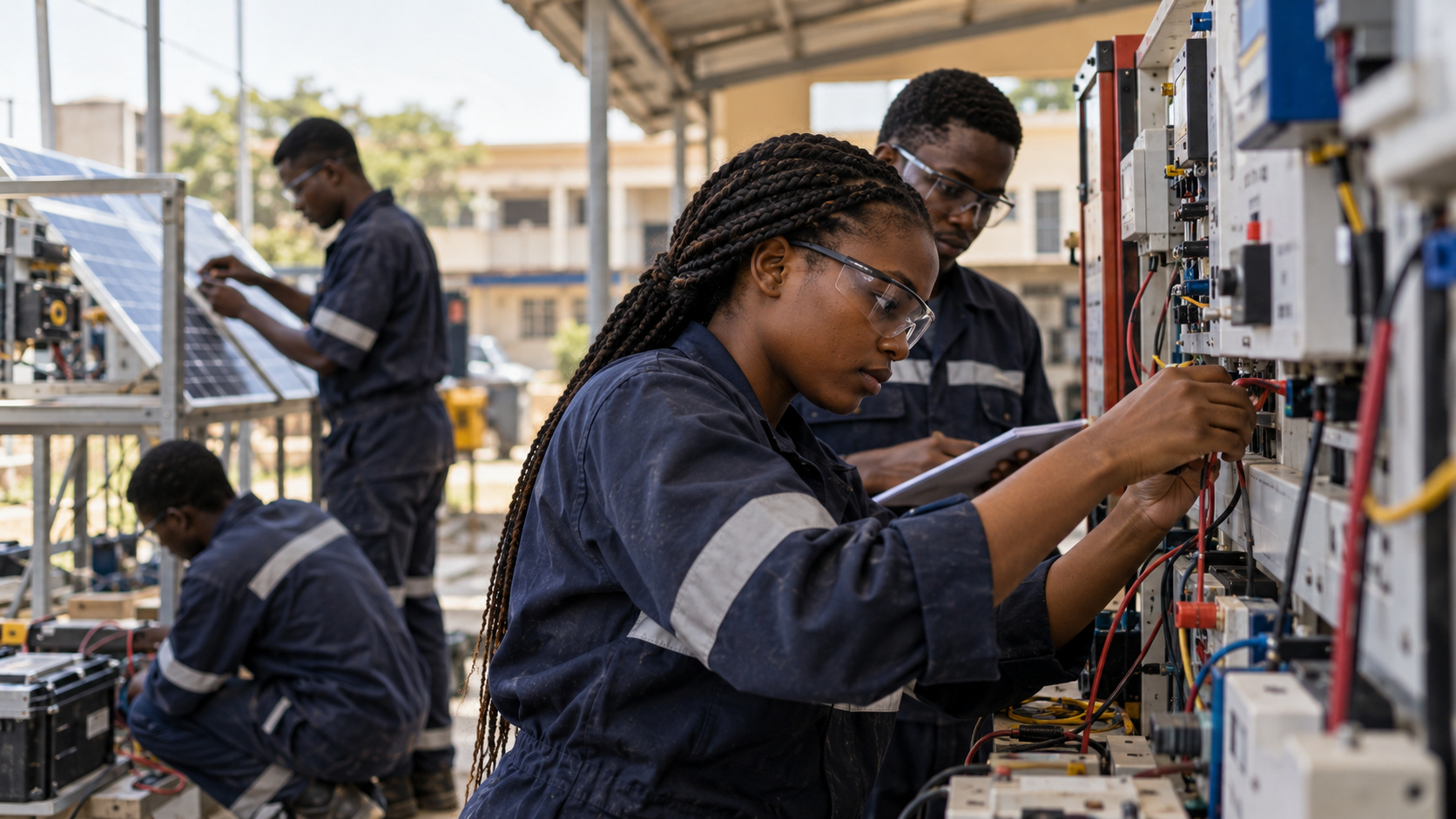
I think the phrase "skills gap" is often too small for the problem. You can train an excellent engineer and place her inside an institution that cannot procure spare parts or retain experienced staff. Capability sits at three levels: individual, what a person knows; organisational, what a utility or regulator can repeatedly deliver; and system, whether those institutions work together well enough to design, finance and operate something as complex as an energy grid. Africa needs all three, which is why I've come to prefer the phrase human infrastructure.
A transmission line is infrastructure because the system cannot function without it. A functioning system operator is infrastructure for the same reason, and it's why I think the right question for any major energy project isn't simply how many jobs it creates, but what Africans will be able to do after it that they couldn't do before, once the crane and the foreign commissioning team have gone home.
Even Mission 300 is starting to say this out loud
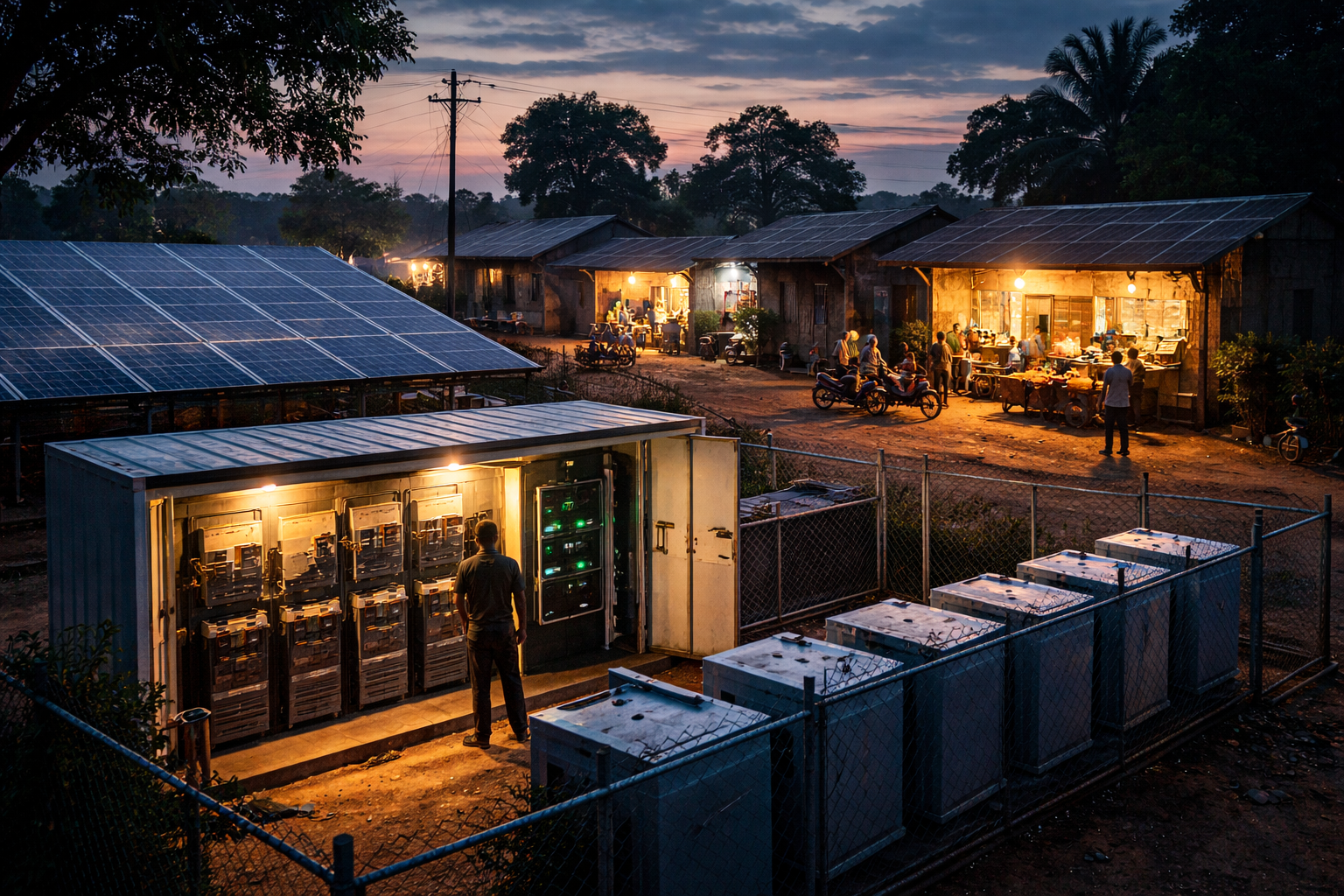
There are signs this is shifting. Mission 300, the World Bank and African Development Bank's effort to connect 300 million Africans to electricity by 2030, announced in June 2026 that it had already connected more than 50 million people across 40 countries, delivering access at nearly double its original pace. The World Bank has started stating the workforce implication directly: delivering at that scale requires, in its own words, a skilled workforce across the entire energy supply chain. That sentence matters, because someone has to survey the route, wire the household, operate the mini-grid, collect and analyse the data, repair the transformer a decade later. The faster that build-out moves, the less room there is to treat workforce planning as something bolted on afterwards.
This is why I built Energy Transition Africa
ETA exists because I believe there is still a dangerous distance between the scale of our ambitions and the capability required to deliver them, and I mean that expansively: technical, operational, regulatory, financial, digital, and the communication capability required to make increasingly complex energy systems understandable enough to govern. We're still early in this work, and I won't pretend otherwise. But technology can be imported, and capital can cross borders; no country can outsource the capability to understand and run its own energy system indefinitely. Someone has to be in the control room at two in the morning when something fails, and someone has to teach whoever replaces them. Twenty years from now, I don't think the measure of this transition will simply be how many gigawatts went up. It will be whether, while building them, we also built the African capability to design, finance, regulate, operate and improve the system ourselves. The panels will need replacing. The people who know what to do next are the infrastructure that actually lasts.