Africa’s Critical Minerals Boom Won’t Change Our Future Unless We Build Factories Not Just Mines
When the world talks about the clean-energy transition, Africa suddenly finds itself at the centre of the conversation. Not because we are the world’s largest emitters, we are not. And not because we hold disproportionate responsibility, we do not. Africa is at the centre because the minerals the world needs to decarbonise are overwhelmingly beneath our soil.
Cobalt, lithium, manganese, nickel, graphite, rare earths, the building blocks of batteries, electric vehicles and renewable power systems are flowing from African mines into global supply chains at a pace the continent has never experienced. The energy transition is, by design or by destiny, a mineral-intensive transition. And Africa is mineral-rich.
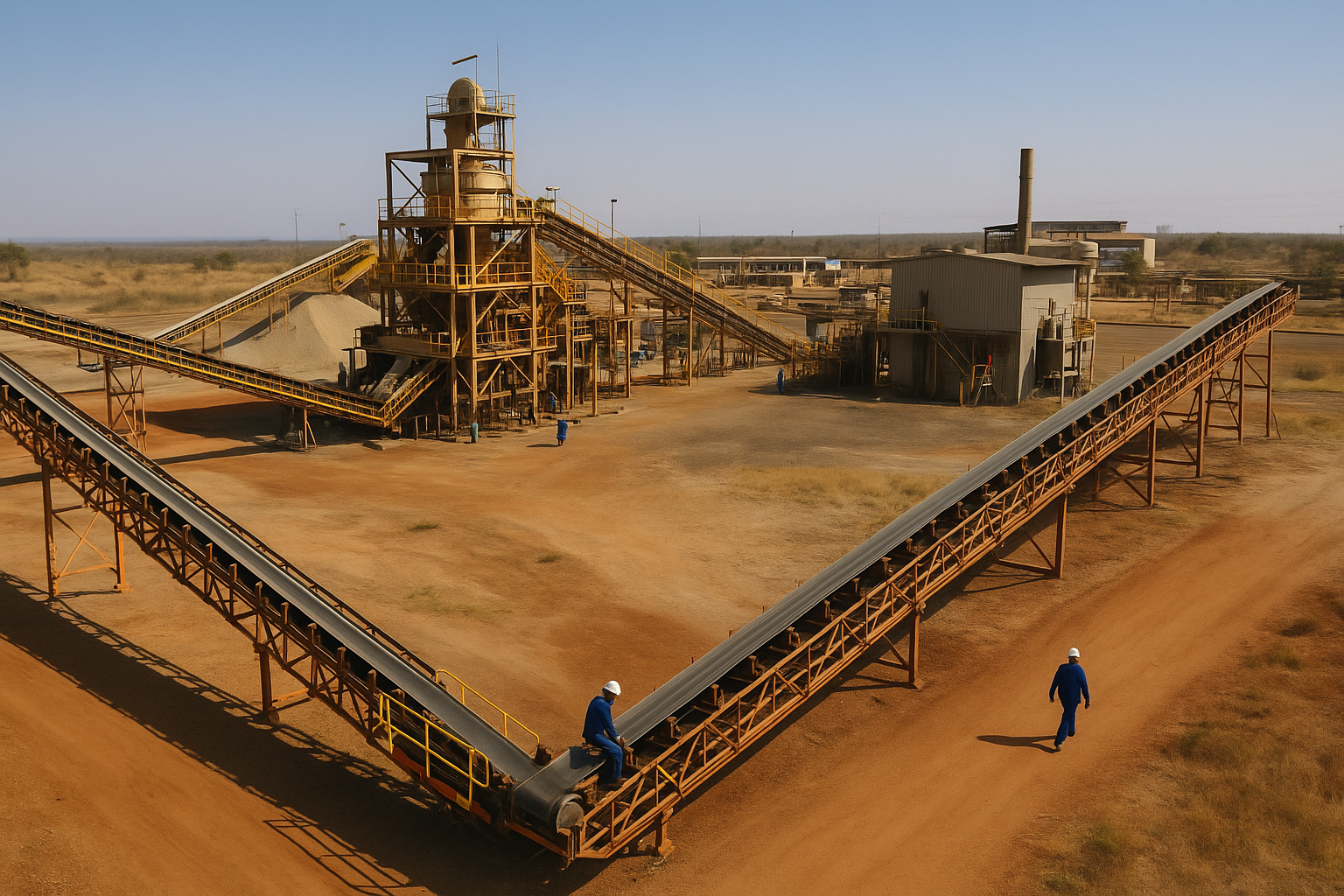
But there is a fundamental truth that must be repeated until it shapes policy: a mineral boom is not the same as development. Mines alone have never transformed a nation. What transforms nations are industries, the processing plants, precursor facilities, cathode factories, battery assembly lines, EV component plants and industrial clusters that convert raw resources into real economic power.
Africa stands on the edge of a new mineral age. The question is whether this era will look any different from the last.
The world wants Africa’s minerals but not Africa’s factories
The numbers tell the story plainly.
Africa holds around 30% of the world’s proven critical mineral reserves, according to the IMF. The continent possesses an estimated 55% of global cobalt reserves, 38% of manganese, 80% of platinum, and more than a quarter of the world’s natural graphite. Africa is also emerging as the world’s largest source of new lithium supply, with new mines in Zimbabwe, Namibia and the DRC accelerating production far faster than analysts forecast.
The world is knocking on our door, governments, automakers, battery manufacturers and commodity traders are all competing for access. But what they want is familiar: to dig, ship and refine elsewhere.
This is the oldest African story of all.
What Africa exports in abundance are raw materials.
What Africa receives in return are the lowest economic returns in the value chain.
UNCTAD has warned repeatedly that Africa captures less than 5% of the value of its own minerals once they enter global supply chains. The continent may hold the ores powering the global green transition, but the high-value refining, processing and manufacturing remain overwhelmingly in Asia, Europe and the United States.
The risk is clear: Africa could once again become the world’s quarry, not a manufacturer, not a value-creator, not an industrial leader.
And this time, the stakes are even higher, because the minerals leaving the continent are not fuelling colonial industries or 20th-century factories, they are fuelling the industries of the future.
The boom is real, but so is the vulnerability
Africa’s mineral boom is economically significant. Countries such as the DRC, Zambia, Zimbabwe, South Africa, Namibia, Tanzania and Morocco are at the centre of a global minerals race reshaping geopolitics.
But booms are deceptive.
They create growth without transformation.
Revenue without resilience.
Jobs without security.
A future without diversification.
Raw mineral exports are tied to volatile prices. When prices fall, and they will, budgets shrink, mines close, livelihoods collapse, and governments scramble. African history is, unfortunately, littered with these cycles.
Without industrialisation, Africa remains an observer rather than an architect of global markets.
This is the opposite of what the energy transition demands.
Factories, not just mines: the new African imperative
Industrialisation is no longer optional. It is the price of sovereignty in the clean-energy economy.
If Africa wants to move from price-taker to price-maker, we must build industries, not just mines.
We already have early signs that this transformation is possible.
Morocco: a blueprint for value addition
Morocco is not simply exporting minerals. It is building a battery industry.
- The Gotion High-Tech gigafactory in Kenitra, valued at $5.6 billion, aims for an annual battery cell production of up to 100 GWh, the first of its kind in Africa.
- Morocco has integrated this into its automotive sector, now the continent’s largest, supported by renewable power and strong industrial policy.
It is not perfect, but it is a direction, a model of what mineral-driven industrialisation can look like.
South Africa: battery ambition meets policy direction
South Africa is moving from mineral exporter to battery industrial hub, planning a 32 GWh battery manufacturing plant in the Coega Special Economic Zone. The government’s EV White Paper sets incentives for local battery manufacturing, supported by deep pools of skilled labour and industrial infrastructure.
Challenges remain, especially in electricity reliability, but the direction is again unmistakable: value addition, not raw extraction.
DRC–Zambia: from copper and cobalt to EV components
The DRC and Zambia, holding some of the world’s richest copper and cobalt deposits, are no longer content with exporting ores. Their joint initiative to build an EV battery value chain backed by the African Development Bank and international partners aims at producing precursor materials and cathodes within the region.It is a rare act of cross-border industrial imagination.
And exactly the type of collaborative model Africa needs.
The world is changing, and Africa must change with it
Europe, the United States and China are rewriting industrial policies to secure minerals and expand domestic manufacturing. The US Inflation Reduction Act, the EU Critical Raw Materials Act and China’s industrial strategy all point to a single trend:
Countries want to control the minerals and the manufacturing.
Africa cannot simply be a supplier in this new global equation.
We must be a producer.
But for that to happen, several conditions must shift.
What it takes to move from extraction to industrialisation
1. Reliable, affordable power
Factories cannot run on hope. They need stable electricity, something uneven across African markets. Countries that can offer green baseload power will lead.
2. Regional value chains
No African nation can do everything. The future belongs to regional blocs:
- DRC + Zambia → copper/cobalt refining
- South Africa → precursor materials + packs
- Morocco → cells + EV assembly
- East Africa → processing + logistics hubs
This is how competitiveness is built.
3. Industrial policy that stays the course
Investors need certainty, long-term policies, predictable tax regimes, special economic zones, procurement plans and clear local-content mandates.
4. Skills, skills, skills
A battery industry requires chemists, metallurgists, mechatronics engineers, technicians, logistics planners and quality-control professionals. Africa has the youth. It needs the training.
5. Environmental and community protections
Industrialisation cannot repeat the harms of mining towns that were left with polluted rivers and barren land. Communities must be co-owners, not casualties.
Why this moment is Africa’s once-in-a-century opening
For the first time in modern history:
- Africa holds the minerals the world cannot transition without.
- It has renewable energy potential to power industrialisation competitively.
- The continent has a young population to staff the factories of the future.
- It has growing regional bodies capable of negotiating smarter deals.
- Africa has global leverage, something rare in the past century.
But leverage without strategy becomes luck.
And luck is not a development model.
The world will not wait for Africa to industrialise.
If we do not build factories, others will, using our minerals.
The choice before us
If Africa remains just a supplier of raw minerals, then the energy transition will be something happening to us, not with us or for us.
We will watch EVs roll off assembly lines abroad while mining towns at home remain unchanged.
We will see global profits rise while African value stays low.
We will lose yet another opportunity to shape our own destiny.
But if Africa builds factories, refineries and industrial corridors, if governments stand firm, investors commit long-term, and communities are treated as partners, then the mineral boom becomes a development boom.
This is Africa’s opportunity to rewrite history.
Whether we take it is up to us.