|
Obtenez votre Trinity Audio joueur prêt...
|
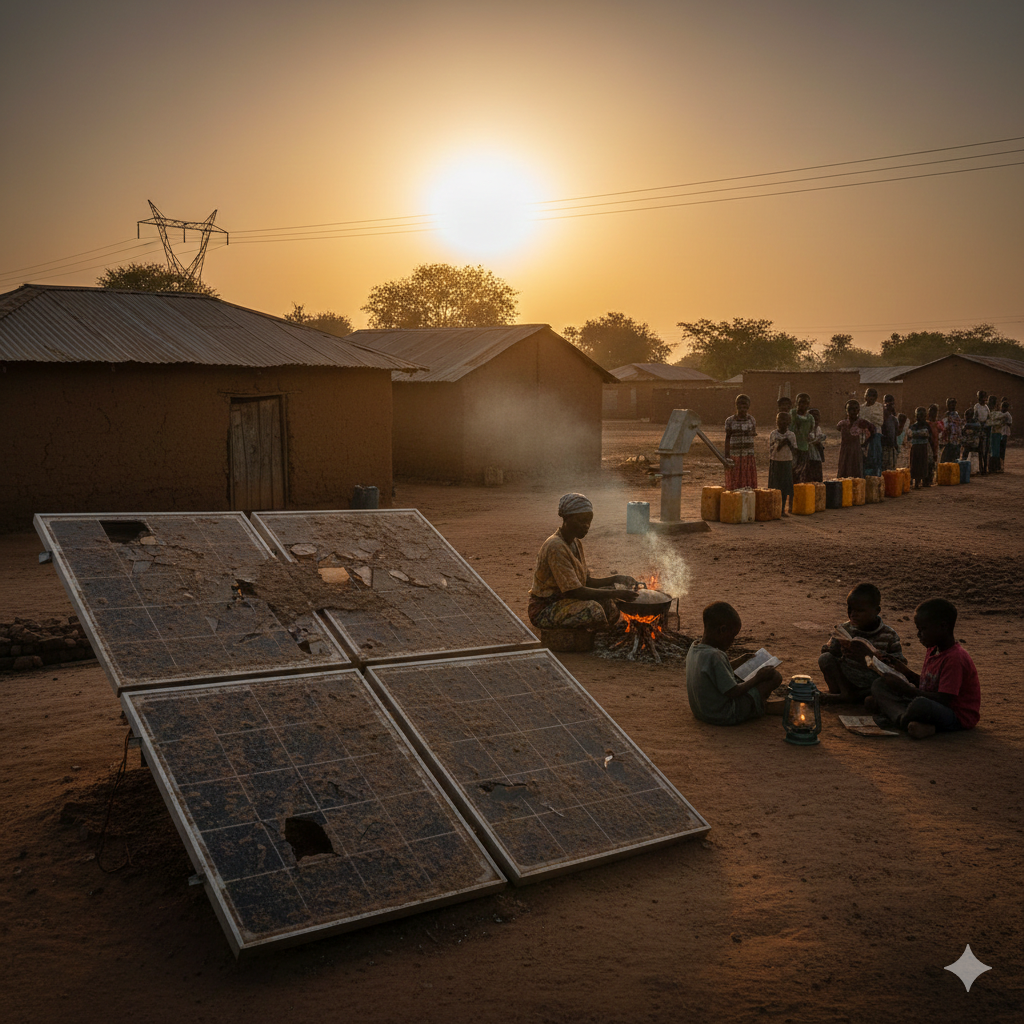
The statistic is now familiar enough to sound almost ritualistic. Africa receives around 2% of global clean energy investment, despite hosting nearly a fifth of the world’s population, the fastest-growing energy demand, and some of the best solar and wind resources on earth.
The number is often presented as evidence of injustice, sometimes as neglect, and occasionally as hypocrisy. But after years of watching how energy systems actually function, or fail, across the continent, I have come to believe that the statistic tells a deeper, more uncomfortable story.
The question isn’t simply why Africa gets so little clean energy investment. The harder question is this: what does that 2% reveal about how the global energy and finance system really works? Because capital, unlike rhetoric, is brutally honest.
Opportunity isn’t Africa’s problem
Let us be clear about what Africa doesn’t lack. Africa doesn’t lack renewable resources; the International Energy Agency estimates that the continent holds 60% of the world’s best solar potential, much of it untapped.
Africa does not lack demand; electricity consumption is set to rise faster here than anywhere else over the next two decades. Africa does not lack need; hundreds of millions still live without reliable power.
Nor does Africa lack ambition; Governments publish transition plans, net-zero pledges, and renewable targets with impressive regularity. Conferences are full of optimism, and strategies are thick with intention. So if opportunity alone determined investment flows, Africa would be at the centre of the global clean energy story. It is not.
Capital doesn’t fund ambition, it funds systems
The truth is this: capital does not flow to moral claims or development narratives. It flows to systems that can absorb risk, enforce contracts, and deliver returns.
This isn’t cynicism; it is just how finance works. Clean energy investment requires:
- grids that can evacuate power,
- utilities that can pay,
- regulators that can enforce tariffs,
- currencies that can be hedged,
- and political systems that do not unravel deals mid-cycle.
Where these conditions exist, investment follows, even in countries with far fewer natural advantages than Africa. Where they do not, capital hesitates no matter how compelling the climate case. This is why the 2% figure persists.
The grid problem nobody likes to foreground
In global climate discussions, generation dominates the conversation: solar capacity, wind auctions, and installed megawatts. But Africa’s binding constraint is not generation. It is the grid.
Across much of the continent, transmission and distribution networks are:
- overstretched,
- poorly maintained,
- financially insolvent,
- and politically entangled.
Losses routinely exceed 20–30%. Utilities struggle to collect revenue, tariffs are frozen for political reasons, and payment arrears accumulate quietly until they become crises. Investors know this.
A solar plant connected to a weak grid isn’t a climate solution; it is a balance-sheet risk. Power that cannot be evacuated or paid for becomes stranded capital.
This is why so many projects stall after financial close, or require layers of guarantees that make them expensive and rare.
Utilities: the credibility problem at the heart of the transition
Every clean energy project ultimately depends on one thing: a credible counterparty. And in much of Africa, that counterparty is a state-owned utility under chronic financial stress.
When utilities cannot pay generators on time, investors respond predictably. They demand sovereign guarantees, multilateral backstopping, foreign-currency offtake, or higher tariffs. Many walk away.
This isn’t a failure of goodwill but a failure of solvency. And as long as utilities remain politically constrained but commercially exposed, Africa’s clean energy transition will remain structurally underfunded. No amount of ambition can substitute for balance-sheet repair.
Why donors and MDBs struggle to close the gap
Multilateral development banks (MDBs) and donors are often blamed for Africa’s investment shortfall. Sometimes fairly, but the constraint they face is systemic as well. MDBs can de-risk projects, offer guarantees, and provide concessional finance. What they cannot do is manufacture credible power systems overnight.
Without domestic reform in tariff realism, loss reduction, governance changes, concessional finance becomes a sticking plaster. It lowers the cost of capital, but does not change the underlying risk profile.
This is why so much climate finance remains project-based rather than system-wide. Projects are manageable. Systems are political.
The illusion of “bankable projects”
A phrase that circulates endlessly in transition discussions is “bankable projects”. Africa, we are told, lacks a pipeline of bankable clean energy projects.
I have always found this misleading. Africa does not lack bankable projects. It lacks bankable systems. A solar plant can be perfectly engineered and still fail financially if:
- the grid collapses,
- the utility delays payment,
- the currency depreciates sharply,
- or political pressure forces tariff renegotiation.
In such contexts, bankability becomes an illusion created by guarantees rather than reform. Capital knows the difference.
Currency risk: the quiet deal-breaker
Another under-acknowledged barrier to clean energy investment in Africa is currency risk, a technical issue with profound consequences.
Most renewable energy projects on the continent earn revenue in local currency, but their capital costs, debt servicing, and equipment imports are denominated in dollars or euros. In countries with volatile exchange rates, this mismatch creates a difficult risk, often impossible to hedge at a reasonable cost.
For investors, the problem is not theoretical. A well-performing solar plant can become financially distressed overnight if the local currency depreciates sharply. No amount of sunshine compensates for a collapsing exchange rate.
Guarantees and concessional finance can soften this risk temporarily. They can delay losses or shift them onto public balance sheets. But they do not eliminate the underlying exposure. Over time, repeated currency shocks erode confidence and inflate required returns, making projects unviable.
Until domestic capital markets deepen, local-currency lending expands, and regulatory frameworks support long-term financial instruments, Africa will continue to lose clean energy investment—not because projects are unattractive, but because currencies remain unstable.
Why ambition without sequencing backfires
Africa’s energy transition plans are often ambitious, and that ambition is understandable. The climate emergency demands urgency, and energy poverty demands acceleration. But ambition without sequencing can backfire.
When governments announce aggressive renewable targets without first fixing grids, utilities, and regulatory frameworks, they create a gap between promise and delivery. Investors respond optimistically at first. They explore opportunities, commission studies, and engage ministries, and then they encounter weak transmission networks, insolvent utilities, tariff uncertainty, and political interference.
At that point, many retreat. The damage is cumulative. Each stalled project chips away at credibility, and over time, countries acquire a reputation not for potential but for almost-project schemes that look compelling on paper but fail at execution.
Capital has a long memory. It remembers delays, renegotiations, and unpaid invoices. Ambition is essential. But without careful sequencing, system reform first, scale second, it becomes counterproductive, raising expectations that systems cannot yet meet.
The 2% figure as a mirror, not an insult
Seen in this light, Africa’s 2% share of global clean energy investment is not an insult. It is a mirror that reflects the gap between aspiration and execution, between projects and systems, and between announcements and delivery.
And those fundamentals are political. They depend on tariff decisions, governance reform, fiscal discipline, and the willingness to confront failure rather than adapt around it, which cannot be solved by pledges alone.
The 2% figure is uncomfortable precisely because it reveals what rhetoric often obscures: capital is responding rationally to signals on the ground. If Africa wants a larger share of global clean energy investment, the task is not to demand more sympathy, but to change what the mirror reflects.
Conclusion: the transition capital is waiting for
Africa’s clean energy moment isn’t missing because the world does not care; rather, it is, because systems are not yet ready to carry it.
Capital is not withholding investment out of malice. It is responding to signals from grids, utilities, currencies, and institutions.
Until those signals change, the 2% figure will remain stubbornly intact. The lesson is uncomfortable, but necessary:
The energy transition is not built by ambition alone, but by institutions that work, systems that endure, and politics that confront failure rather than adapt around it.
When Africa fixes that, capital will not need to be persuaded. It will arrive.
Suivre Transition énergétique en Afrique pour plus de mises à jour :


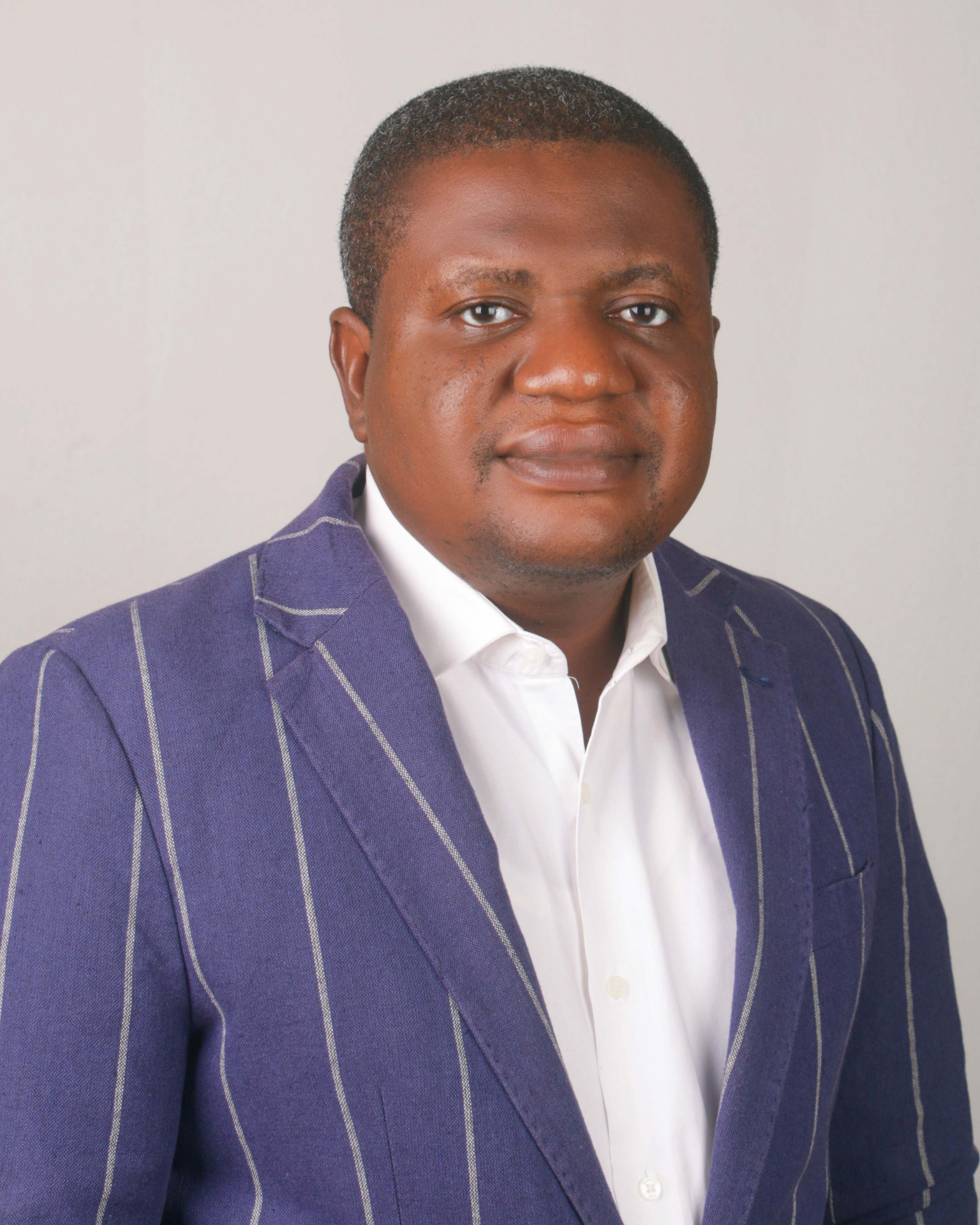
Vincent Egoro est un analyste de la transition énergétique en Afrique, spécialisé dans les enjeux liés à la justice climatique, à la sortie des énergies fossiles et à la gouvernance des ressources minérales critiques. Il analyse, à travers une approche systémique, comment les transitions énergétiques transforment les moyens de subsistance, les compétences et le pouvoir au sein des sociétés africaines. Vincent est responsable du programme Afrique au sein du Resource Justice Network.

 FR
FR  EN
EN