|
Obtenez votre Trinity Audio joueur prêt...
|
Africa sits at the centre of the global energy transition’s material foundations. The continent holds an estimated 30% of the world’s reserves of key transition minerals, including cobalt, manganese, platinum-group metals, bauxite, graphite, and significant lithium potential. These minerals underpin batteries, grids, electric vehicles, electrolysers, and renewable energy systems.
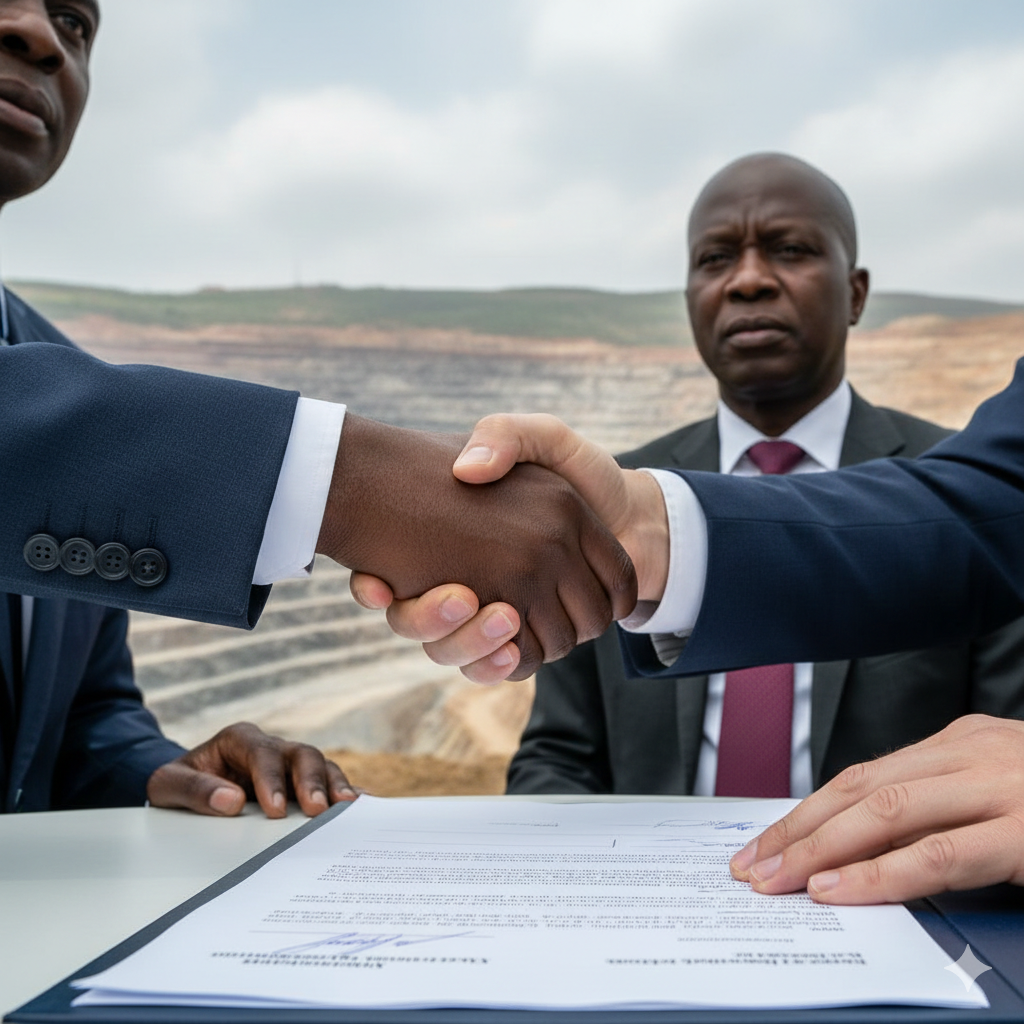
Yet as demand accelerates, the structure of engagement with Africa’s mineral wealth is changing in ways that should concern policymakers. Rather than coordinated multilateral frameworks or continent-wide bargaining positions, the dominant trend is now bilateral deal-making: country-by-country, asset-by-asset, negotiated under time pressure and framed as “strategic partnerships”. This shift redistributes power, often away from African producers.
Pourquoi cela est important maintenant
Three developments have converged in early 2026 to sharpen the risk.
First, the Democratic Republic of Congo (DRC) has publicly offered U.S. investors access to assets spanning copper, cobalt, lithium, and manganese, as part of Washington’s push to diversify critical mineral supply chains away from China. It is reported that these discussions are explicitly tied to geopolitical supply security rather than climate cooperation alone.
Second, at the World Economic Forum in Davos, African officials and analysts issued repeated calls for greater continental coordination on minerals, warning that fragmented bilateral deals risk undermining Africa’s negotiating leverage and long-term development objectives.
Third, the Union africaine has intensified efforts to operationalise its Green Minerals Strategy, signalling recognition at the continental level that minerals governance must move beyond extraction toward value addition, sustainability, and industrialisation.
Together, these signals point to a pivotal moment. Africa’s minerals are no longer just commodities; they are strategic assets in a contested global transition. How Africa negotiates now will shape outcomes for decades.
The bilateral turn: what is actually happening?
The shift toward bilateralism is driven by three external dynamics.
1. Supply-chain anxiety in advanced economies
Major economies now frame critical minerals as matters of national security, not simply trade. This has produced a preference for direct state-to-state arrangements, often tied to export controls, industrial subsidies, and geopolitical alignment.
2. The weakening of multilateral climate governance
As global climate cooperation fragments, mineral supply has moved faster than climate finance or industrial coordination. Countries seeking secure access are bypassing multilateral forums in favour of bespoke agreements.
3. Africa’s urgent capital needs
Many African governments face fiscal pressure, infrastructure gaps, and limited access to affordable finance. Bilateral mineral deals promise fast capital, infrastructure, and political visibility, even if long-term terms are unfavourable.
The result is a growing patchwork of agreements, often negotiated in isolation, with limited transparency and weak alignment to continental strategy.
What is lost when Africa negotiates country-by-country?
1. Pricing power and market discipline
When producers negotiate individually, they compete against one another for investment. This weakens Africa’s ability to influence pricing, contract terms, and market standards.
In contrast, coordinated approaches, whether formal or informal, can stabilise expectations, discourage a race to the bottom, and improve fiscal outcomes. Fragmentation reverses this logic.
2. Value addition and industrial policy
Bilateral mineral deals typically focus on secure supply, not local processing or manufacturing. While memoranda often reference “value addition”, enforceable commitments are rare.
The International Energy Agency has repeatedly noted that most value in critical mineral supply chains accrues at the processing and manufacturing stages, not extraction.
Without coordinated conditions, such as shared beneficiation thresholds or processing incentives, African countries struggle to insist on downstream investment.
3. Infrastructure lock-in
Mineral deals frequently shape infrastructure decisions: rail corridors, ports, power supply, and logistics. When negotiated bilaterally, these investments often prioritise export efficiency over domestic integration, reinforcing enclave development.
Bilateralism and the illusion of speed
Proponents of bilateral deals argue that coordination is slow and impractical. Bilateralism, they say, delivers results quickly. But this is only partially true.
While deals may be signed faster, systemic outcomes are often weaker. Processing capacity remains offshore, domestic power systems remain underdeveloped, employment gains are limited, and fiscal volatility persists. Speed without strategy produces activity, not transformation.
The continental alternative: what coordination could look like in practice
A credible continental minerals stance does not require a single negotiating bloc or identical national policies. It requires alignment on principles, sequencing, and red lines.
1. Shared minimum standards
African producers could agree on baseline requirements for:
- local processing thresholds,
- environmental and labour standards,
- transparency in offtake agreements.
These need not eliminate bilateral deals, but they would discipline them.
2. Regional value chains, not isolated assets
Mineral-rich countries often lack power, infrastructure, or skills for processing. Regional approaches, linking power pools, industrial zones, and corridors, can distribute benefits more evenly.
3. Coordinated engagement with external partners
Rather than reacting to individual offers, African institutions could frame minerals as part of broader transition packages, linking extraction to power investment, skills transfer, and industrial policy.
The role of the African Union and regional bodies
The African Union’s Green Minerals Strategy is an important political signal: it reflects growing recognition that Africa’s mineral endowment must be governed as a strategic asset, not merely a source of export revenue. But strategy alone does not shift outcomes. Implementation does.
The effectiveness of continental coordination will depend on whether regional and continental bodies move beyond vision-setting into practical market-shaping tools.
Three priorities are decisive.
First, strategy must be translated into model contracts, pricing principles, and negotiation guidelines. Without shared templates on offtake terms, beneficiation thresholds, stabilisation clauses, and risk allocation, member states will continue to negotiate in isolation, often under time pressure and informational disadvantage.
Second, continental ambition must be matched with technical negotiation capacity. Many mineral contracts are lost because of asymmetries in legal, financial, and market expertise. Regional institutions can play a critical role by pooling expertise, supporting smaller producers, and providing backstopping during complex negotiations.
Third, minerals policy must be aligned with energy, trade, and industrial agendas, rather than treated as a standalone extractives issue. Without this alignment, corridors move minerals faster, but power systems remain weak, processing capacity remains offshore, and industrial linkages fail to materialise.
Absent these steps, bilateralism will continue to dominate, because it is administratively easier. Fragmentation, in this sense, becomes the default outcome of institutional inertia.
Why this is not an argument against investment
It is important to be explicit about what this argument is pas. This isn’t a call to reject foreign investment, strategic partnerships, or international capital. Africa needs all three. The scale of infrastructure, power, and industrial investment required for the energy transition cannot be met domestically alone.
The risk lies elsewhere. It lies in asymmetry, when urgency on the African side meets patience, capital depth, and optionality on the external side. In such contexts, speed is often mistaken for success, and access to finance is confused with leverage.
Bilateral deals negotiated under fiscal pressure or political urgency tend to:
- prioritise asset access over system development;
- lock in long-term offtake on unfavourable terms;
- and constrain future policy space once markets tighten or technologies evolve.
By contrast, coordinated strategies negotiated from a position of preparedness, clear priorities, credible institutions, and shared red lines do not reduce investment. They improve its quality.
The distinction isn’t between partnership and protectionism. It is between reactive engagement and strategic engagement.
Conclusion: minerals as leverage, not luck
Africa’s critical minerals are a leverage. Handled strategically, they can anchor:
- resilient power systems,
- downstream processing and manufacturing,
- and more stable fiscal and trade positions in a volatile global transition.
Handled fragmentarily, they risk reproducing a familiar pattern: extraction without transformation, infrastructure without industry, and exports without development.
The global energy transition is accelerating. Supply chains are being secured now, not later. And the contractual terms, pricing structures, and governance choices made today will shape Africa’s economic position long after demand peaks and technologies shift.
The strategic question facing African policymakers is therefore whether Africa engages from a position of strategy, coordination, and choice, or from one of urgency and fragmentation.
In the end, minerals reward neither moral claims nor geological luck. They reward organisation. And organisation, unlike geology, is a policy choice.
Suivre Transition énergétique en Afrique pour plus de mises à jour :





 FR
FR  EN
EN