
|
Getting your Trinity Audio player ready...
|
For more than a decade, the global energy transition has been sold as a story of technology. We are told solar panels are getting cheaper, wind turbines are getting taller, and batteries are improving every year. From conference stages to reports, the message has been consistent: deploy enough clean generation and the rest will follow.
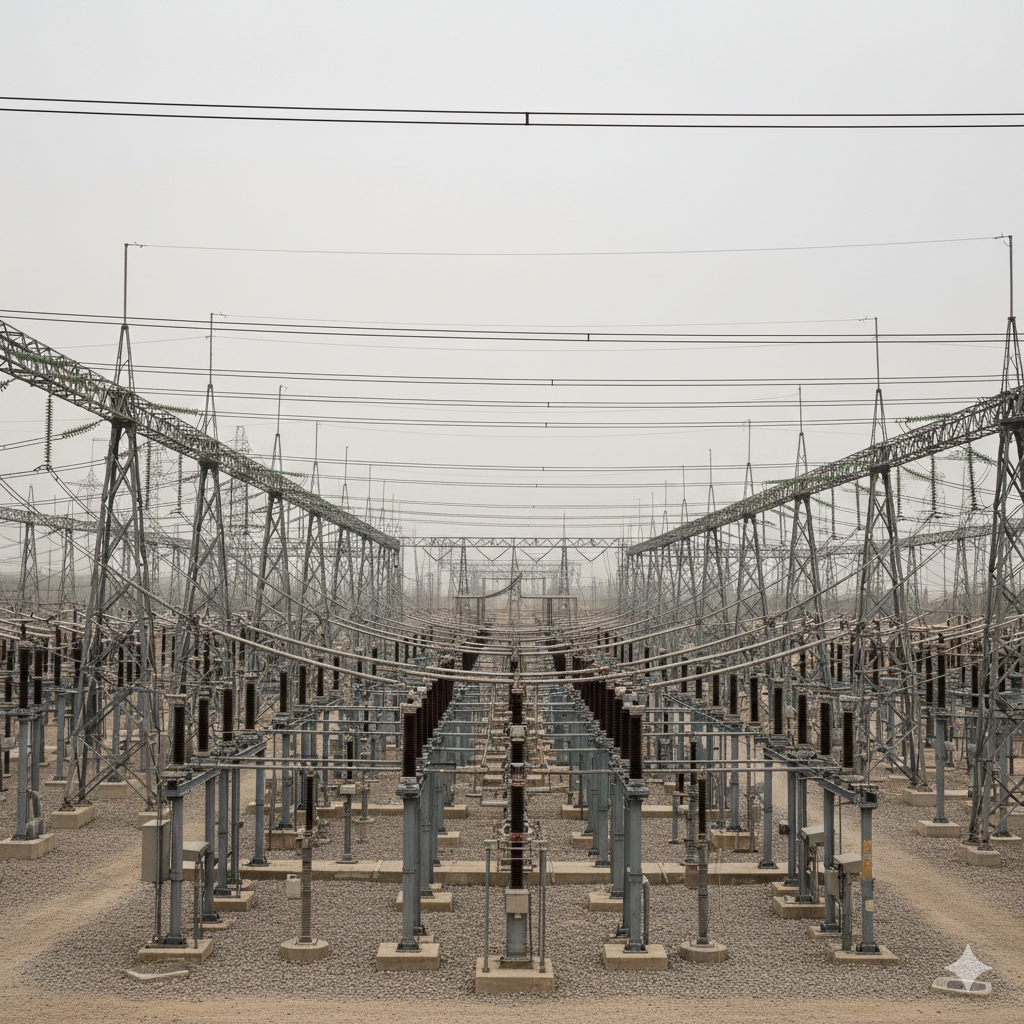
But it hasn’t. According to the International Energy Agency, more than 2,500 gigawatts of power projects are currently stuck in power grid connection queues worldwide. Generation plants, batteries, electrolysers, and data centres, all technically ready but unable to connect. That figure is larger than the entire installed power capacity of China and the United States combined.
So this isn’t a shortage of solar panels, but that of power grids. I have spent years watching African countries announce renewable targets they can’t absorb, power plants they can’t evacuate, and reforms that never quite reach the wires. The IEA’s latest findings confirm what power engineers and utility managers have known for years: the energy transition is no longer constrained by ambition or technology, but by power systems.
To understand why the grid, not generation, has become the binding constraint, we need to look beyond megawatts and into the plumbing of electricity itself.
Why 2,500 GW of projects are stuck globally
The figure is startling because it cuts across geography and income levels. From Europe to the United States, from Latin America to Asia, projects are piling up in connection queues, not because the grid cannot take them.
The IEA shows that connection delays have become systemic. In many advanced economies, developers now wait five to ten years for grid access approvals. In emerging markets, the wait can be indefinite. The reason is simple: electricity grids were built for a different era.
Most grids were designed around centralised, predictable generation; large coal, gas, or hydro plants feeding stable demand. The energy transition has flipped that logic. Power now comes from many locations, at variable output, and demand is changing just as quickly, driven by electric vehicles, heat pumps, and data centres.
Grid planning has not kept up; transmission investment has lagged generation investment for years, permitting processes remain slow, fragmented, and politically fraught. In many countries, grid operators lack both the regulatory mandate and the financial incentives to expand ahead of demand.
The result is a paradox: we have more potential clean power than ever, but less ability to use it. This is a structural bottleneck, because the IEA estimates that global grid investment must rise by around 50% by 2030, from roughly USD 400 billion today, simply to keep pace with rising electricity demand.
The transition has reached a stage where electrons are cheap, but moving them isn’t.
What “grid readiness” actually means
Grid readiness is often treated as a technical footnote, including transformers, substations, and lines. In reality, it is a complex blend of engineering, regulation, finance, and governance.
A power grid is “ready” when it can do three things simultaneously: connect new capacity quickly, move power efficiently, and operate flexibly under stress. Most grids today fail on at least one of these fronts.
First, connection readiness. Many systems lack transparent, time-bound processes for new connections. Developers enter queues without certainty on timelines or costs. In some cases, grid operators allocate capacity on a first-come basis rather than by system value, clogging networks with speculative projects.
Second, transmission adequacy. Power must move from where it is generated to where it is consumed. Renewable energy often sits far from demand centres. And without long-distance transmission, generation piles up in the wrong places. Curtailment rises, prices diverge, and investors lose confidence.
Third, system flexibility. Modern grids must balance variable supply with variable demand in real time. This requires storage, demand response, interconnections, and updated grid codes. Many systems still operate with rigid rules designed for fossil generation.
The IEA is explicit: grid readiness is now the decisive factor in the energy transition. Without it, adding more solar panels doesn’t reduce emissions or costs. It simply adds to congestion. For Africa, this concept is particularly important because the continent’s grid challenge is often misunderstood.
Why Africa’s grid problem is structural, not technical
Africa is frequently described as lacking generation. In truth, it lacks power systems that work.
Across the continent, grids are thin, fragmented, and financially weak. Transmission networks are limited, distribution losses routinely exceed 20–30%, and utilities struggle to recover costs, invest, or maintain infrastructure. Tariffs are often set below economic levels, and political interference distorts planning.
This isn’t a failure of engineering knowledge. African engineers understand grids as well as anyone. It is a failure of institutions and incentives.
Many African power grids were built piecemeal, tied to donor projects or emergency power plants rather than long-term system planning. Investment prioritised megawatts over megavolt-amperes. Generation was celebrated; wires were ignored.
The result is a system that cannot absorb even modest amounts of new capacity without stress. Renewable projects face long delays despite the reliability of solar, because networks are weak. Industrial loads are rationed. While self-generation fills the gap, raising costs and drains foreign exchange.
What makes this structural is that the constraints reinforce each other. Weak grids undermine utility revenues, weak utilities cannot invest in grids, and governments then hesitate to raise tariffs, fearing political backlash. The cycle continues.
The IEA’s global grid warning lands particularly hard in Africa because the continent is entering the Age of Electricity with systems built for scarcity, not abundance.
The danger of mistaking access for readiness
One of the most persistent misunderstandings in African energy discourse is the conflation of access with system strength.
Connection statistics suggest progress: Millions of households have been electrified through grid extensions, mini-grids, and solar home systems. Yes, this matters, but access doesn’t equal readiness.
A household counted as “connected” may receive electricity for only a few hours a day. Voltage may be unstable, outages may be frequent, and businesses plan around failure, not supply. From an economic perspective, this isn’t electrification in the sense the IEA is describing.
The Age of Electricity is more than just light. It is about reliable, scalable power that underpins productivity. It is about grids capable of supporting factories, data centres, cold chains, and mineral processing plants.
Africa’s energy challenge has evolved. It is no longer primarily about reaching the unconnected, but also about building systems strong enough to sustain growth. Without that shift in thinking, Africa risks celebrating access gains while remaining excluded from the electricity-driven economy.
Why grids, not panels, will decide Africa’s transition
Solar panels will continue to get cheaper, batteries will improve, and wind will expand. But none of these guarantees success.
What will decide Africa’s energy future is whether governments and financiers are willing to do the unglamorous work of fixing power grids: reforming utilities, raising investment, modernising regulation, and planning for reliability rather than crisis.
This is harder than installing solar panels. It is slower and politically sensitive. But it is unavoidable. The IEA’s message is clear: the transition will stall where grids fail. For Africa, that isn’t a warning about the future, but a clear description of the present.
If the continent wants to industrialise, add value to its minerals, and participate in the digital economy, it must treat grids as strategic infrastructure, not technical afterthoughts. The energy transition will not be won on rooftops alone. It will be won or lost in substations, control rooms, and balance sheets.
The takeaway I cannot ignore
The energy transition has outgrown its own story. It is no longer a race to deploy technology. It is a test of systems.
The IEA’s grid backlog is the central signal of where the transition is heading. Power systems are becoming the bottleneck everywhere, but nowhere more consequentially than in Africa.
If Africa enters the Age of Electricity with weak grids, it will remain energy-poor in an electrified world. Solar panels are necessary, but power grids are decisive.
Follow Energy Transition Africa for more updates:



Vincent Egoro is an Africa-focused energy transition analyst working at the intersection of climate justice, fossil fuel phase-out, and critical minerals governance. He brings a systems lens to how energy transitions reshape livelihoods, skills, and power across African societies. Vincent serves as Head of Africa at Resource Justice Network.

 EN
EN  FR
FR