
|
Getting your Trinity Audio player ready...
|
For most of the past decade, climate finance has been discussed as a moral equation.
If African countries showed ambition, net-zero targets, transition plans, long lists of renewable projects, and finance would follow. Promises would unlock pledges, and pledges would unlock capital. That era is ending.
I have sat in rooms where African ministers spoke passionately about climate vulnerability, historical injustice, and development needs, only to leave without firm financing commitments. I have also watched countries with fewer speeches, fewer press releases, and less rhetorical ambition secure capital. The difference was in systems and not morality.
Today, climate finance is flowing less to those who promise the most, and more to those who can deliver electrons, collect revenue, honour contracts, and manage political risk. In other words, to countries whose power systems work, or are being credibly fixed.
Why this shift is happening now
Three recent developments make this shift impossible to ignore.
1. The weakening of multilateral climate frameworks
In January 2026, the United States formally withdrew from the UN Framework Convention on Climate Change (UNFCCC), raising legal and diplomatic questions about the future of global climate cooperation.
Regardless of one’s view of the decision, the signal is clear: multilateral climate finance is becoming less predictable. Pooled funds, collective enforcement, and shared rules are weakening. And capital is adapting accordingly.
2. Ghana’s quiet credibility move
Around the same time, Ghana announced it had cleared $1.47 billion in energy-sector arrears, a move that immediately improved investor confidence in its power sector.
There was no grand climate summit announcement, no rhetoric, just a balance-sheet decision. That decision mattered more to financiers than any speech.
3. Nigeria’s signalling moment
Nigeria, long associated with grid instability and policy inconsistency, announced a $2 billion climate and energy transition fund, signalling a shift toward structured, domestically anchored transition finance.
The fund alone will not fix Nigeria’s power sector. But the signal that transition finance must be institutionalised, not improvised, was unmistakable.
Why ambition is no longer enough
African countries aren’t short of ambition, net-zero pledges, nationally determined contributions, energy transition plans, hydrogen strategies, or minerals roadmaps.
What they are often short of is delivery credibility. From the perspective of financiers, ambition without systems creates three risks:
- Revenue risk – Can the utility pay?
- Political risk – Will contracts be honoured?
- Execution risk – Will the grid absorb new capacity?
If these questions cannot be answered convincingly, finance stalls, no matter how compelling the climate narrative. This isn’t cynicism. It is risk management.
How grid failure undermines climate credibility
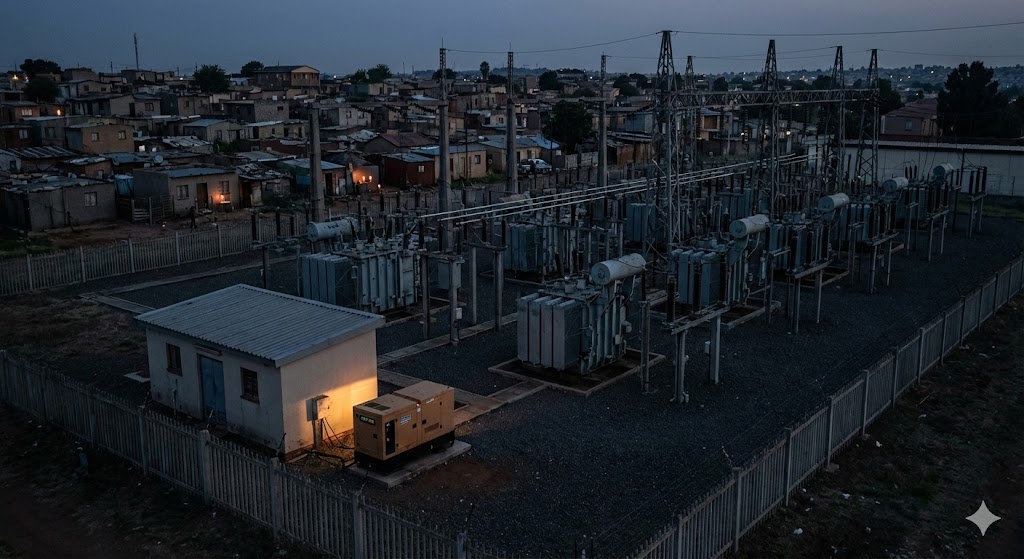
I grew up in a country where power cuts were normalised. Where generators were considered a basic household asset, and businesses learned to survive despite the grid, not because of it.
That lived experience matters. Because from the outside, a grid collapse is a credibility signal. Every time a national grid fails:
- investors question system resilience;
- lenders price in higher risk;
- insurers demand stronger guarantees;
- and transition plans look theoretical rather than real.
Grid instability tells financiers something uncomfortable: that new renewable capacity may be stranded, curtailed, or unpaid for.
The real bottleneck: power systems, not technology
The global clean-energy transition is no longer constrained by technology. Solar, wind, batteries, and grid management tools are proven and falling in cost. The International Energy Agency has repeatedly shown that renewables dominate new power additions globally.
Africa’s constraint is systemic.
- Weak transmission networks
- High technical and commercial losses
- Politicised tariffs
- Under-capitalised utilities
- Contract enforcement uncertainty
These are power-system problems. And climate finance increasingly follows the logic of power systems.
What “bankable transition readiness” really means
Bankable transition readiness is about trajectory, and not merely projection. Financiers look for five signals.
1. Credible utility reform
This means:
- arrears management;
- payment discipline;
- clear regulatory authority.
Ghana’s arrears clearance mattered because it showed political willingness to confront hard truths.
2. Grid realism
Countries that acknowledge grid limits and invest in reinforcement, dispatch reform, and flexibility are taken more seriously than those that publish capacity targets without system plans.
3. Risk allocation clarity
Who bears currency risk? Who guarantees offtake? What happens if politics changes? These questions must be answered in contracts, not press releases.
4. Domestic capital participation
Countries that mobilise pension funds, banks, or local-currency instruments signal seriousness. They show they have “skin in the game”.
Kenya’s move toward sustainability-linked borrowing and green taxonomies is one example of this direction of travel.
5. Political discipline
Perhaps the hardest to quantify, but the most decisive. Do governments stick to reforms when they become unpopular? Do they protect regulators? Do they honour contracts across electoral cycles? Finance follows discipline.
The truth: climate finance is becoming transactional
This shift unsettles many advocates, and rightly so. Climate finance was supposed to be about solidarity, justice. and shared responsibility. But as global politics hardens, finance is becoming transactional:
- less pooled,
- more bilateral,
- more conditional,
- more focused on delivery.
While this isn’t ideal, it is the reality. The danger for Africa is not recognising this shift too late.
What this means for African strategy
The implication isn’t that Africa should abandon moral arguments. Those remain valid, but they must be matched with system-building. Climate ambition must now be expressed through:
- credible power-sector reform;
- investable project pipelines;
- disciplined sequencing;
- and institutional seriousness.
In this new era, a functioning grid is a climate asset.
Conclusion: from promises to performance
Climate finance is no longer a reward for good intentions, but a response to credible performance pathways.
The countries that will attract transition finance in the next decade will be those that can demonstrate persistently that their power systems are becoming more reliable, more transparent, and more bankable.
For Africa, this is a hard truth, but also an opportunity. Because while promises are easy to copy, systems are not.
Follow Energy Transition Africa for more updates:



Vincent Egoro is an Africa-focused energy transition analyst working at the intersection of climate justice, fossil fuel phase-out, and critical minerals governance. He brings a systems lens to how energy transitions reshape livelihoods, skills, and power across African societies. Vincent serves as Head of Africa at Resource Justice Network.


 EN
EN  FR
FR