|
Getting your Trinity Audio player ready...
|
There is a sound I remember from my childhood, not the noise of generators or the crackle of candles, but the soft murmur of neighbours talking in the dark. Entire evenings lit only by moonlight or the faint yellow glow of kerosene lamps. The darkness was not just an absence, it was a world, a way of living and a quiet strength.
And even now, decades later, when I visit communities across the continent, I see that same strength in places that are still waiting for light. The resilience of people who have learned to negotiate with shadows, to stretch possibility into the night, and to create meaning in places where electricity has yet to arrive.
But strength should not be mistaken for acceptance.
Resilience is not a substitute for justice.
And communities living without power are not symbols of endurance; they are victims of an energy system that has failed them.
Today, 600 million Africans still live without electricity, according to the International Energy Agency.
Behind that number are stories the world rarely hears, stories of struggle, ingenuity, loss, and dignity. Stories that remind us that energy poverty is not simply a statistical problem, but a human condition.
What darkness really mean in African communities
When policymakers speak of “off-grid communities,” the conversation quickly turns to costs, grid extension, financing frameworks and megawatt targets. But go into the villages themselves, and you will learn that electricity is not about machines. It is about people.
It is about:
- A mother who times her labour pains with the moon because the clinic has no electricity at night.
- A school where children memorise textbooks because they cannot study after sunset.
- A shopkeeper whose livelihood disappears with every blackout.
- A farmer whose harvest spoils without cold storage.
- A community that feels forgotten because the darkness has lasted for generations.
Energy poverty shapes identity, possibility and destiny.
And yet, communities do more than survive.
They build, they adapt, they create new ways of life.
But should we be roamnitcising survival when we should be interrogating instead?
The world sees “lack of power”. I see leadership in the dark.
In a village in northern Nigeria, I once met a woman who was grinding beans using a grinding stone because she had never known stable electricity. She smiled as she worked, her arms moving in steady circles. When I asked whether she wished for a machine, she laughed softly and said:
“Of course. But until light comes, I will use what I have.” Her words were’nt a resignation but a quiet demand.
In Kenya, I met children who played in fields long after sunset because their eyes had grown used to the outlines of a world without light.
In Sierra Leone, I saw midwives who could deliver babies by torchlight, their hands steady and sure, their strength unspoken.
Across the continent, people have learned to weave meaning into the cracks left by energy poverty. But that does not make the cracks acceptable. It simply makes the people extraordinary.
The burdens communities should never have carried
Energy poverty is not neutral.
It is violent.
According to the World Health Organization, 2.3 million people die each year from household air pollution, primarily from cooking with charcoal, firewood and kerosene.
In communities living without electricity:
- Women inhale toxic smoke daily
- Children suffer from preventable respiratory illness
- Clinics cannot power sterilisation tools or incubators
- Water cannot be pumped reliably
- Jobs remain informal and low-income
- Safety diminishes after sunset
Darkness is not merely inconvenient. It is corrosive, and it eats away at opportunity, dignity and time.
And this is why I have repeatedly argued that energy is not a development input, but a human right. And communities have carried the cost for too long.
Why the world must stop treating these communities as “hard to reach”
There is a familiar phrase in global development reports: “last-mile communities.”
It sounds logistical, but in practice, it becomes an excuse, a polite way of saying: “We don’t know how to reach them, so we won’t reach them yet.”
But these communities are not “last miles.”
They are first lives.
Many of Africa’s energy-poor communities are decades behind national averages not because they are remote, but because policy frameworks were never designed with them in mind.
A strategy that prioritises grid expansion alone will never reach them.
A financing model that rewards large-scale projects will never target them.
A governance approach that ignores local voices will never understand them.
Decentralised systems are Africa’s most realistic path to universal access.
Light must be built where people live and not where planners hope they will move.
The quiet strength I see and what it should inspire
What I admire most in communities without power isn’t just their endurance, but their clarity
They know what many politicians do not say aloud:
- Electricity is dignity.
- Electricity is safety.
- Electricity is learning.
- Electricity is health.
- Electricity is participation.
- Electricity is development.
Communities understand this intuitively because they live the consequences every day. They know that electricity is not a luxury that comes after roads and markets but It is the foundation that makes everything else possible.
And that clarity should guide us.
What Africa owes these communities now
Africa’s energy future cannot be built only in capitals, boardrooms or climate conferences. It must be built in conversation with the people who live furthest from the light. People whose daily darkness has taught them what policymakers sometimes forget; that development begins with illumination.
To honour them, Africa must:
- Prioritise rural electrification, not postpone it
- Fund decentralised systems aggressively
- Electrify all health and education facilities
- Support clean cooking transitions
- Build flexible financing for small community grids
- Involve local voices in every planning stage
- Ensure tariffs are affordable
- Create livelihoods powered by electricity
This is not a technical agenda. It is a moral one.
A final reflection: Strength isn’t a strategy
When I think of the communities living without electricity across Africa, I think of their resilience — but I refuse to romanticise it. Their strength is a testament to human will, but it should not be a requirement for survival.
Strength may carry a community through the night.
But only electricity can change what the morning looks like.
The world speaks often about Africa’s potential.
But potential, like opportunity, needs light.
And until every community across this continent has power; real power, reliable power, and dignified power, the future we imagine for Africa will remain just that: an imagination waiting for illumination.
Follow Energy Transition Africa for more updates:


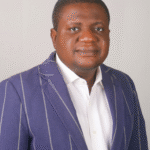
Vincent Egoro is an Africa-focused energy transition analyst working at the intersection of climate justice, fossil fuel phase-out, and critical minerals governance. He brings a systems lens to how energy transitions reshape livelihoods, skills, and power across African societies. Vincent serves as Head of Africa at Resource Justice Network and a volunteer editor at Energy Transition Africa.
 EN
EN  FR
FR